
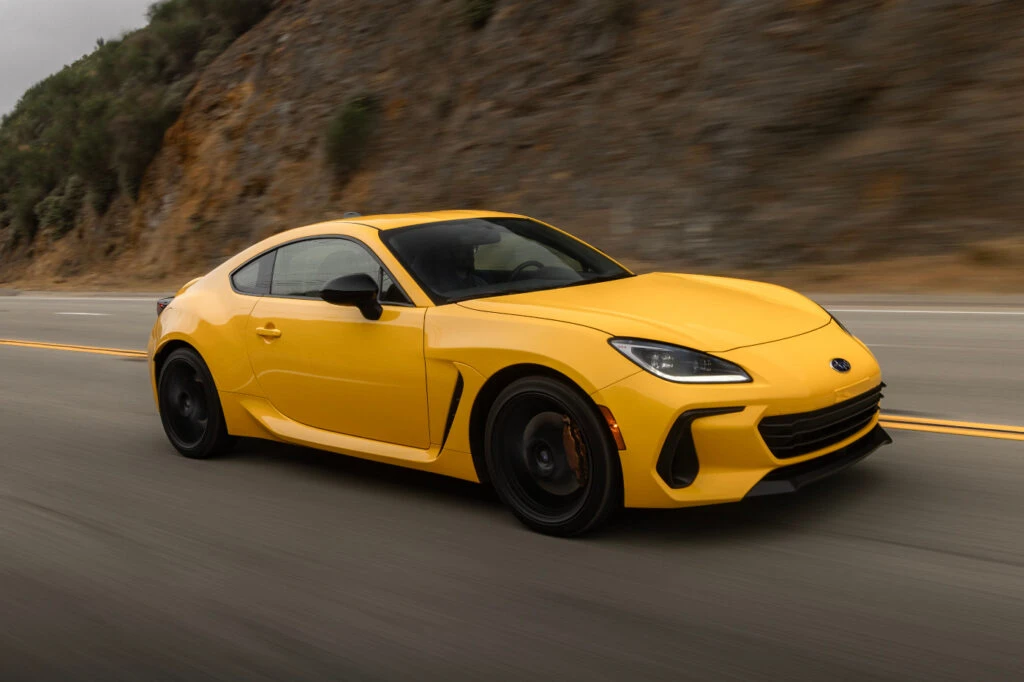
There are two kinds of people in the world. Those who look at the 2026 Subaru BRZ ts and the 2026 Toyota GR86 and say, “They’re basically the same car, and there are those who have driven them. But Subaru and Toyota have done something rather clever. They’ve taken the same ingredients and cooked them differently. Let’s dig in.
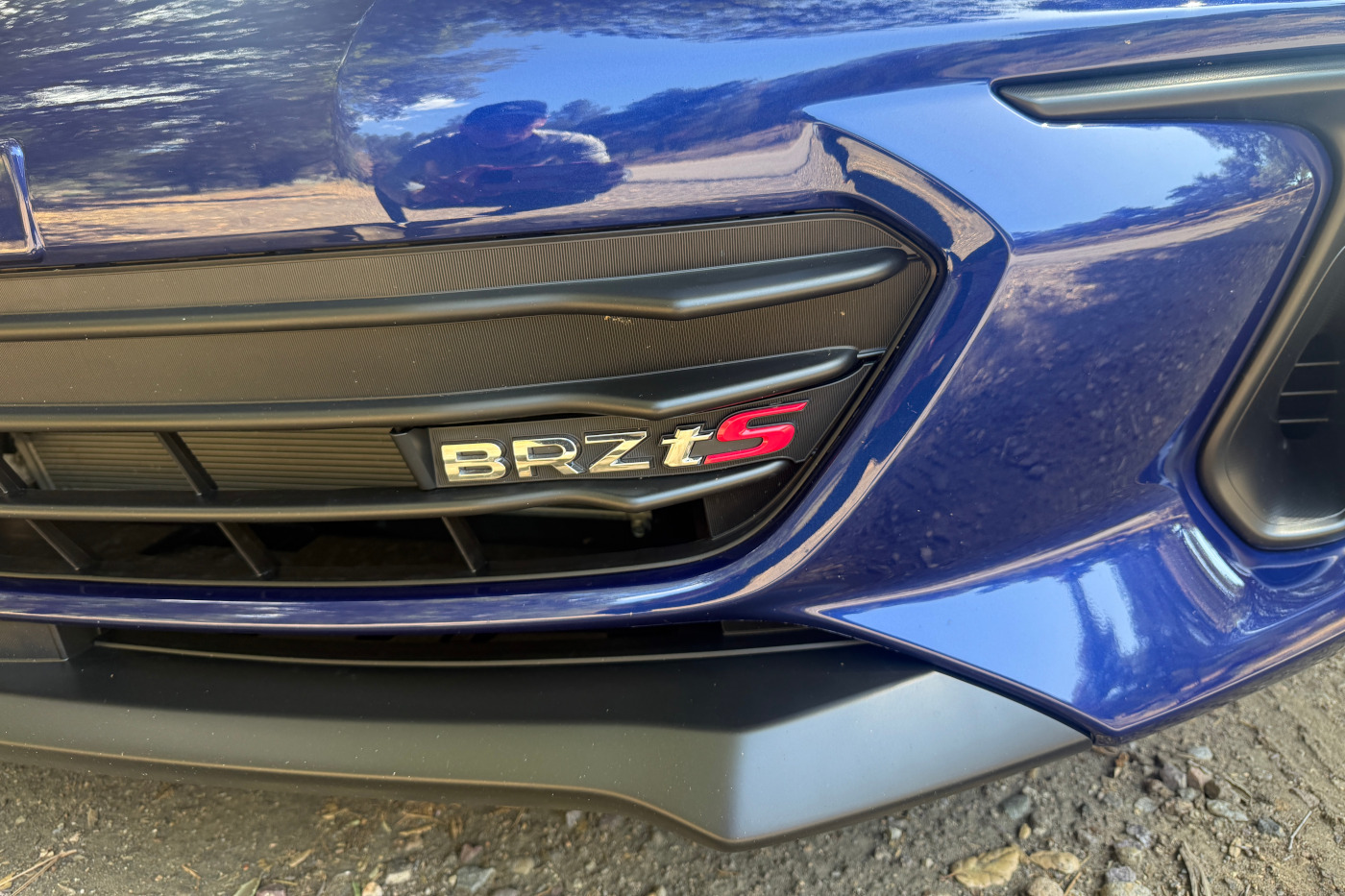
This is the 2026 Subaru BRZ tS — the one that has been sent to STI finishing school. So today we’re going to find out whether Subaru has created the better version of the Toyota GR86… or whether this is simply an extremely complicated way of buying the same car for more money because underneath, these cars are astonishingly similar.
Both use a 2.4-liter naturally aspirated four-cylinder boxer engine producing 228 horsepower and 184 pound-feet of torque. Both drive the rear wheels. Both have a limited-slip differential. The BRZ ts has a six-speed manual only; the Toyota with the performance pack has both a manual and an automatic. Both weigh considerably less than the average electric SUV’s battery, which in 2026 makes them almost an endangered species.
THE BRZ tS
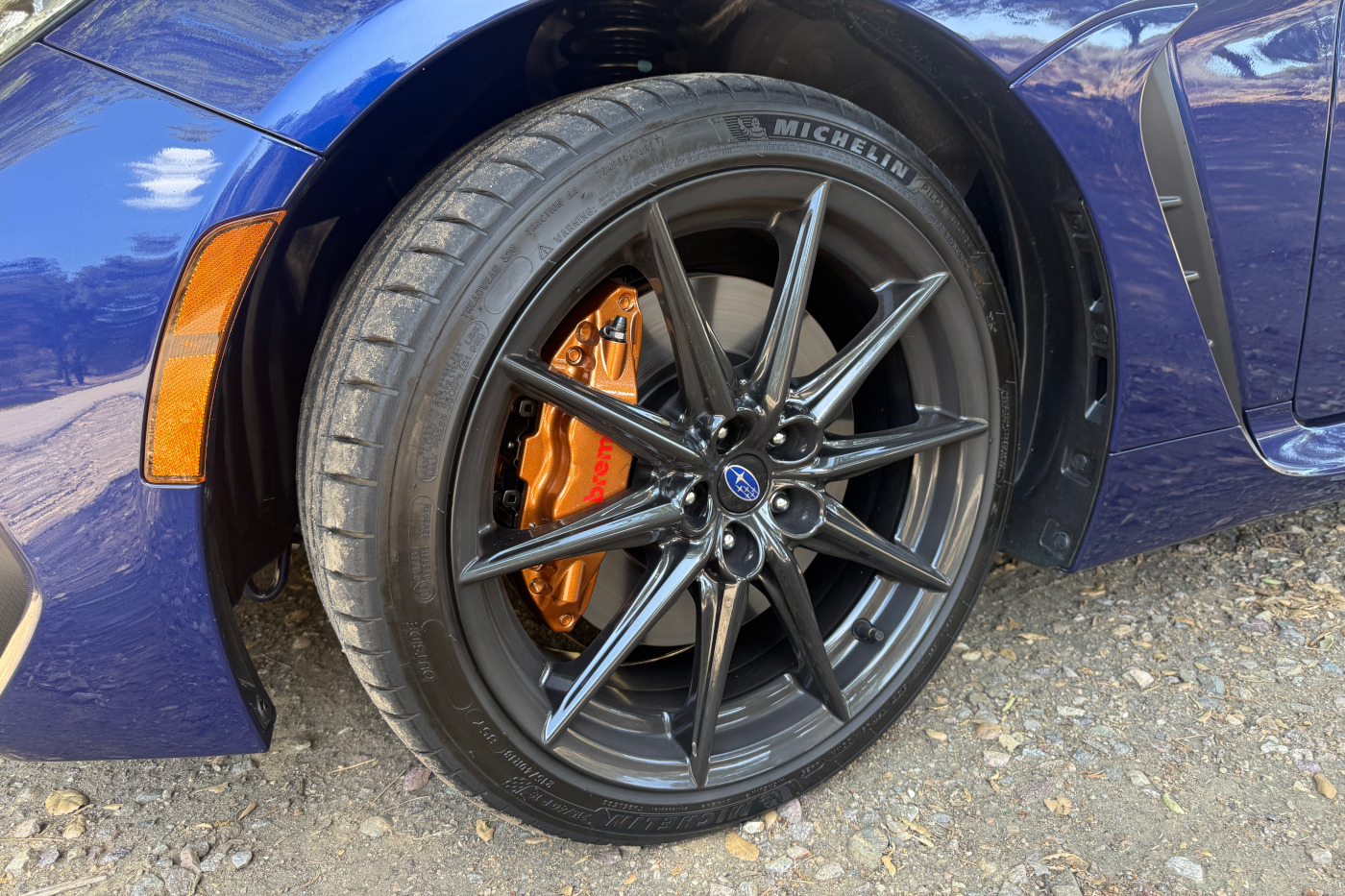
The “tS” stands for “tuned by STI.” Which means Subaru has taken its already rather good sports car and given it the Japanese equivalent of a stern talking-to. The suspension has been developed by Subaru Tecnica International to sharpen the response and improve control. And then Subaru has fitted Brembo brakes with four-piston front calipers and two-piston rears, along with larger ventilated rotors because apparently, the standard brakes weren’t sufficiently good at stopping you from doing something stupid. Then there are the wheels. They’re 18-inch alloys wearing Michelin Pilot Sport 4 summer tires.
Under The Hood
It’s a 2.4-liter naturally aspirated boxer four. No turbo. No supercharger. No hybrid motor secretly doing half the work. Just four cylinders, 228 horsepower and 184 pound-feet of torque. And because it’s naturally aspirated, you have to work for it. This isn’t a car that punches you in the chest at 2,000 rpm. Instead, the engine gets progressively happier as the revs rise. And that is rather important. Because the BRZ and GR86 aren’t really about straight-line speed, but you can expect 0–60 in about 5.8 seconds
Suspension
The Subaru has traditionally been tuned with stiffer front springs and a softer rear setup. The result is a more neutral, planted, and predictable car. The Toyota goes the other way. Softer at the front. Stiffer at the rear. And that gives the GR86 a greater willingness to rotate. The GR86 feels playful. You turn in. You get on the throttle. And the rear begins to participate. The BRZ is more composed but no less fun. The BRZ also has an interesting little advantage underneath. Its front steering knuckle is forged aluminum, while the GR86 uses a steel unit. That reduces unsprung weight on the Subaru, but not by much.
The Subaru uses Hitachi dampers, and the Toyota uses Sachs dampers. The Hitachi units on the BRZ tS feature special STI tuning specifically concentrated on the front axle, whereas Sachs performance package dampers upgrade all four corners of the GR86. The GR86 has received revised throttle calibration, giving it a more direct response and making throttle blipping easier.
The BRZ is smoother and more linear.
Styling
Then there is styling. The BRZ looks friendly. The front end has that slightly smiley appearance. It looks like it has just discovered there is cake in the office. The GR86 looks like it has been told there is no cake. It has a sharper, more aggressive front end and more angular detailing.
Driving
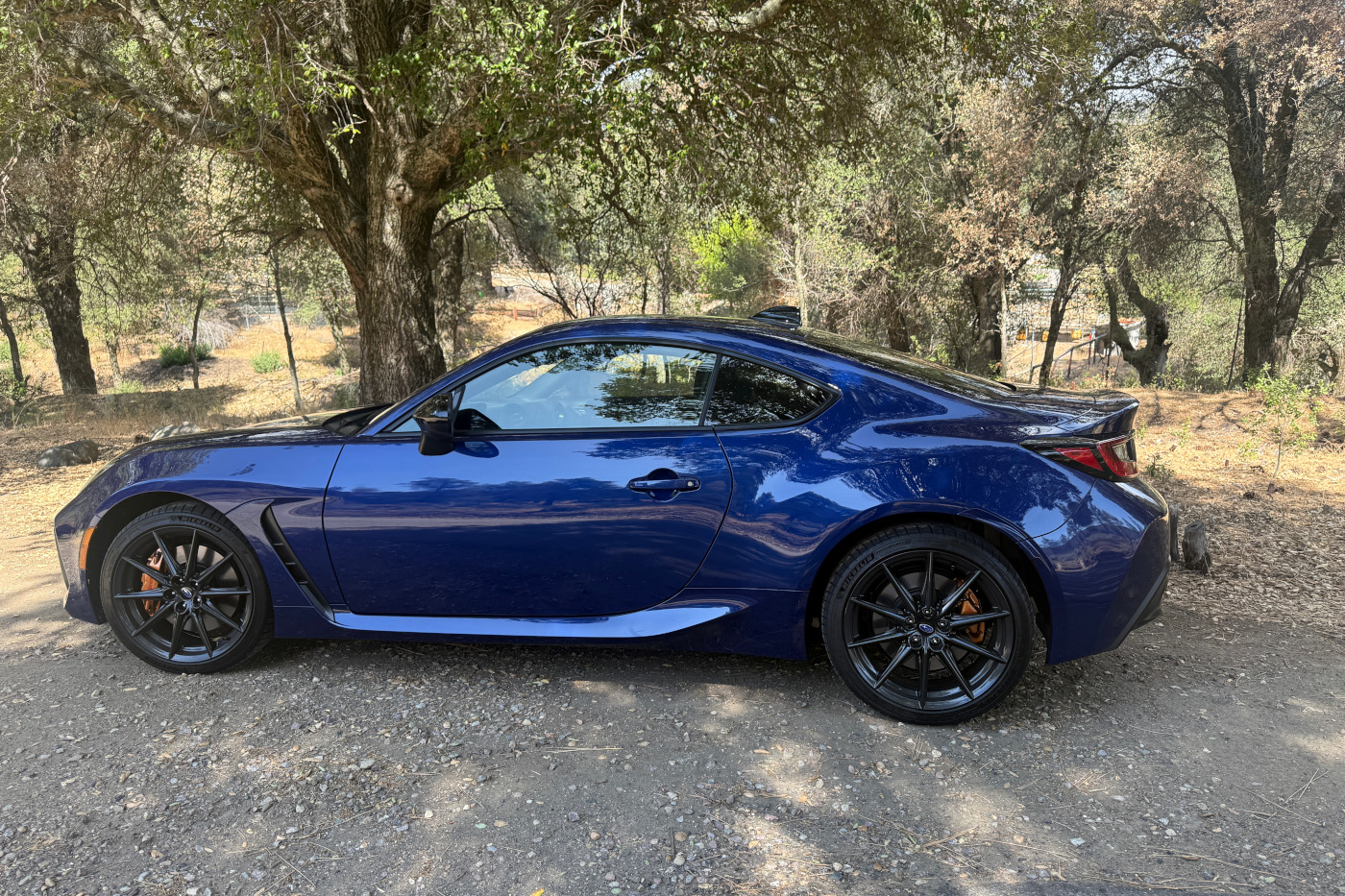
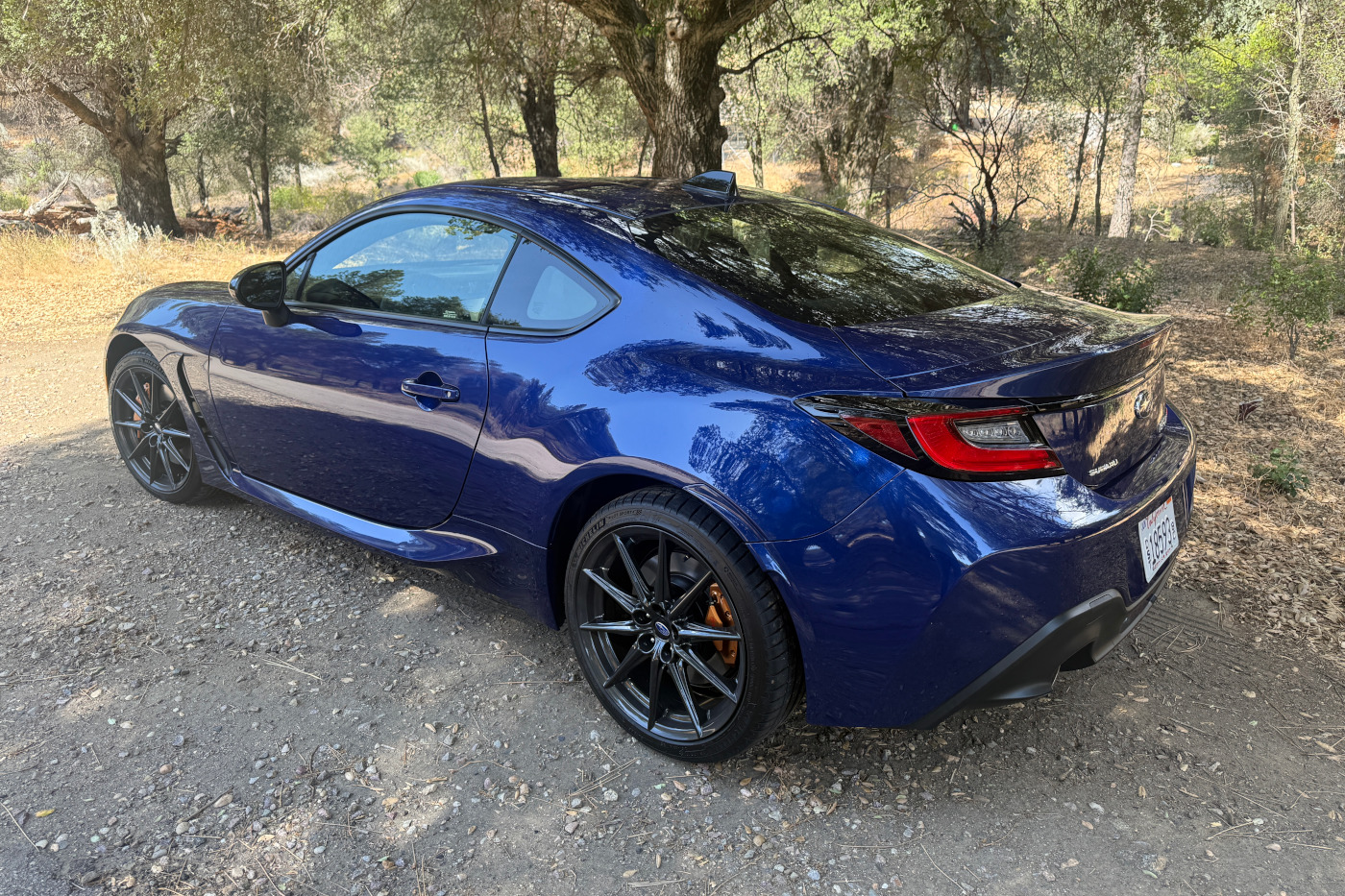
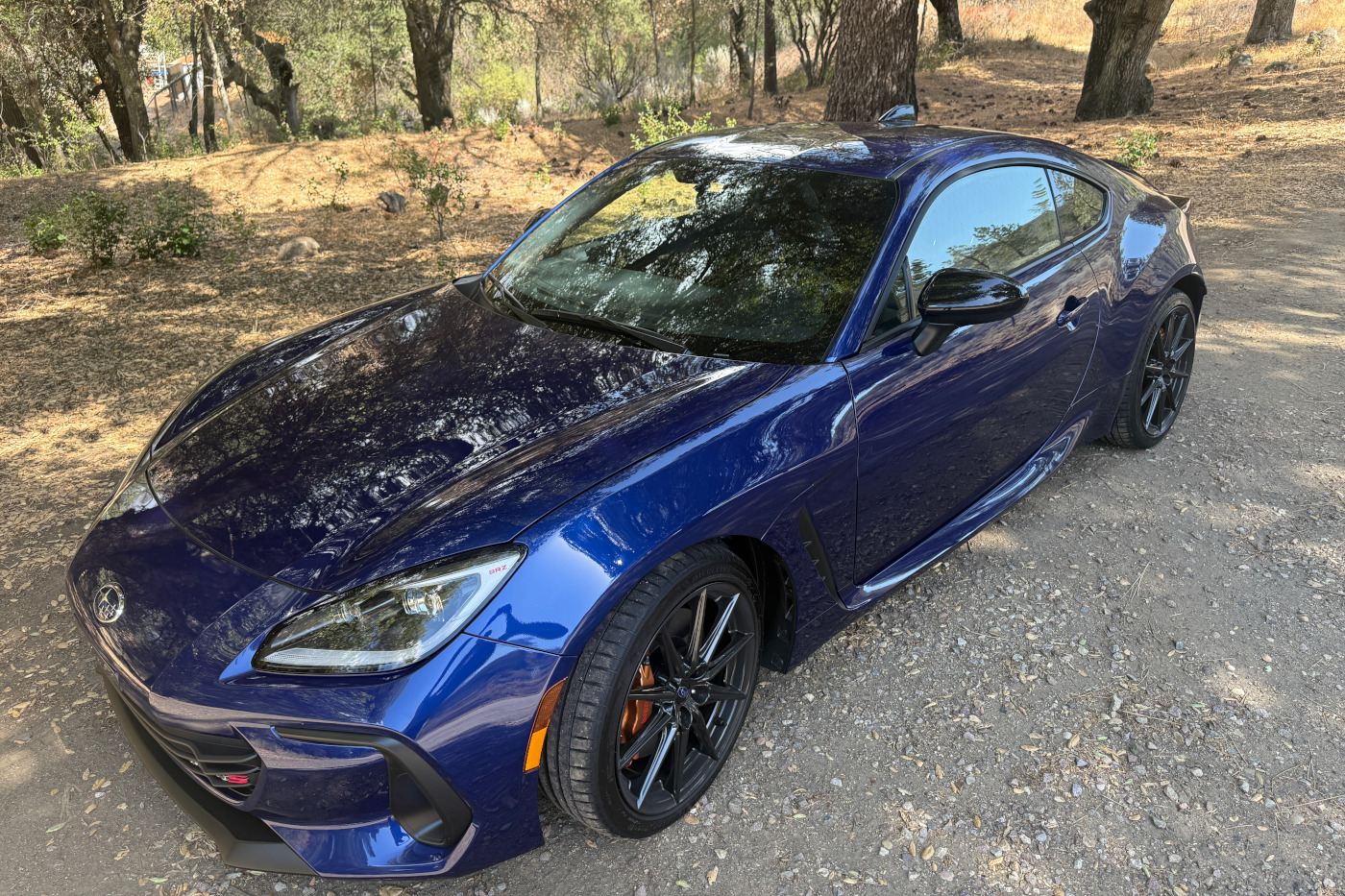
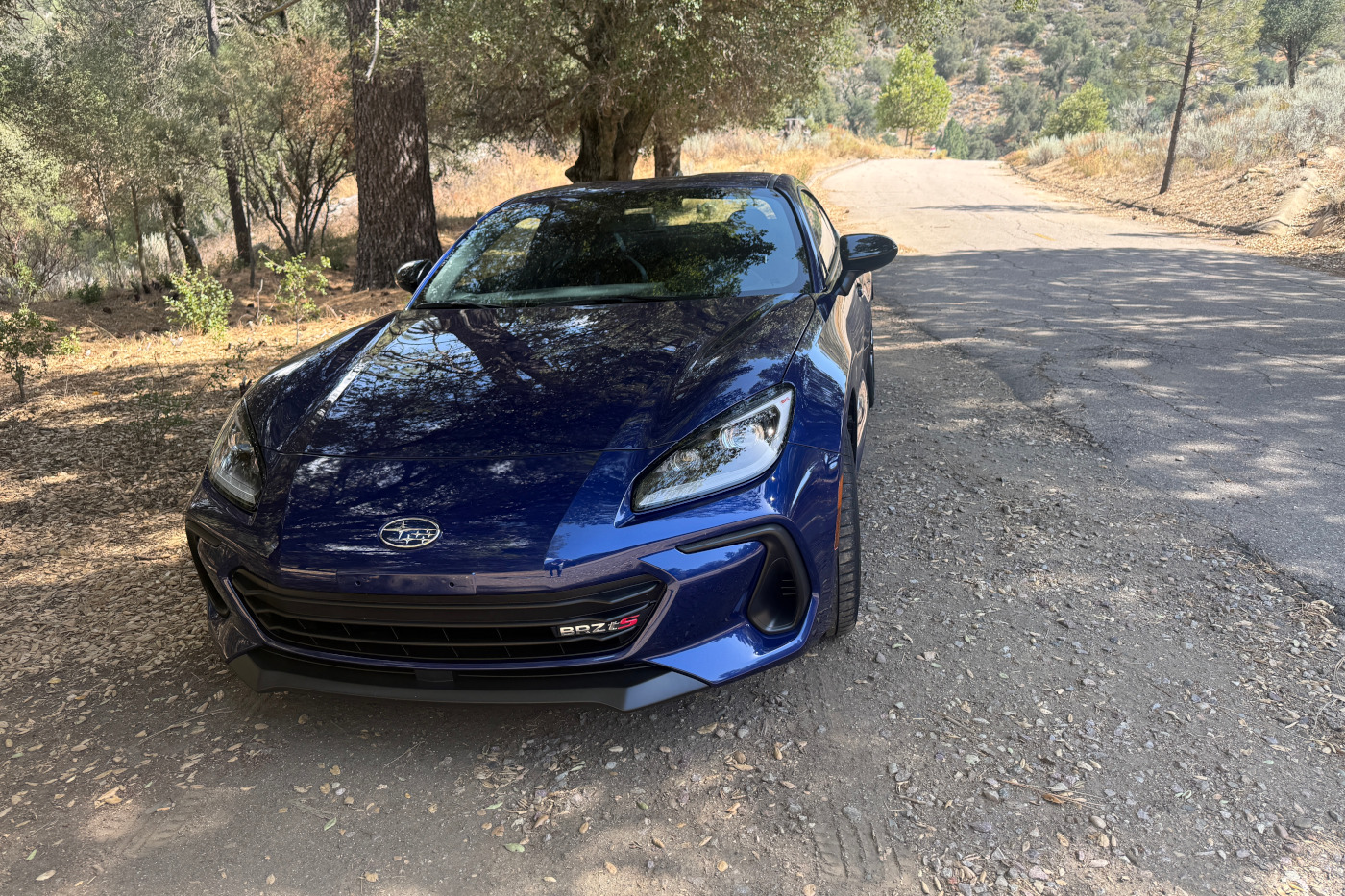
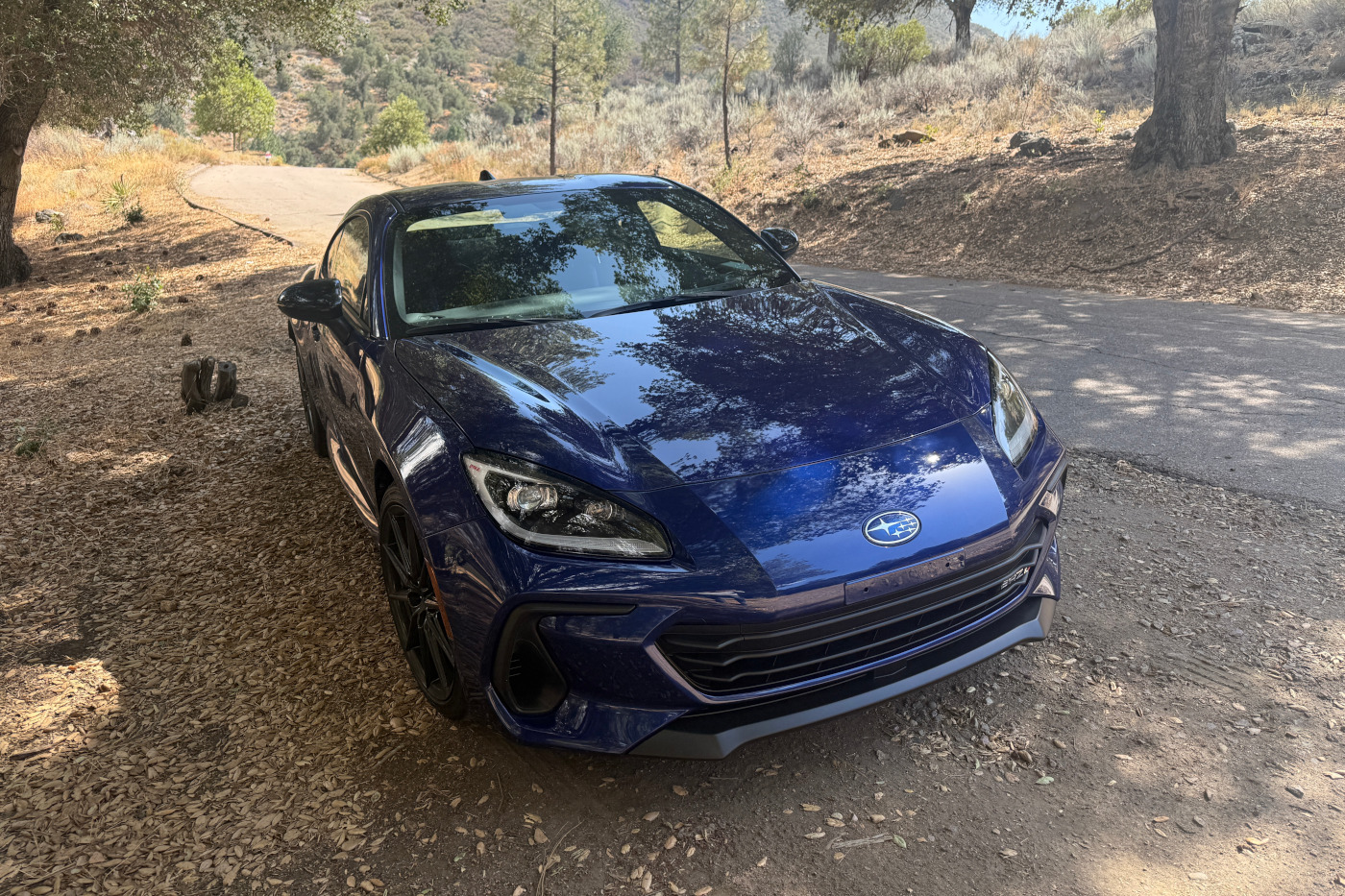
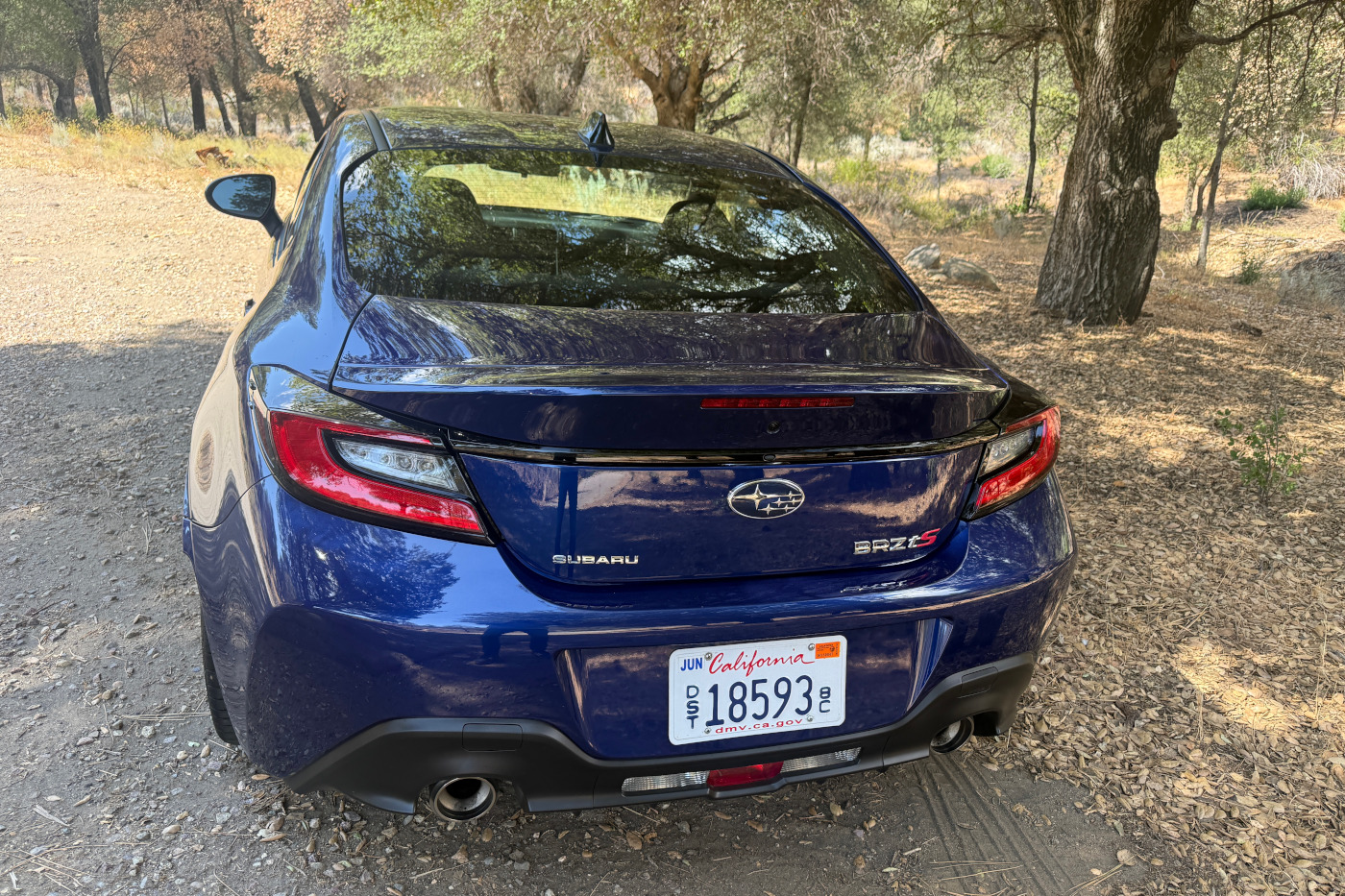
Settle into the bucket seat and, despite the rather obvious absence of electric motors, you can get yourself perfectly comfortable. Ahead of you is a bonnet that slopes away so dramatically it seems to be trying to escape. Then you press the accelerator, which is where things get interesting. The BRZ tS doesn’t have any more power than the standard car, which is Subaru’s polite way of saying, “We haven’t made it faster. We’ve simply made it better at being fast.” And frankly, that’s much more useful.
The tS suspension changes make the car feel properly planted. Yes, the ride is firm. In fact, calling it firm is rather like calling a brick “structurally enthusiastic.” But even over broken pavement, it doesn’t crash about or bounce around like a shopping trolley with a wonky wheel. Then you reach a corner, and you discover what all the fuss is about. You can throw the BRZ tS into a bend at a speed that would make most sensible SUVs start composing their wills, and it simply grips. Those Michelin Pilot Sport 4S tires are magnificent. The steering, the seating position and the excellent visibility all conspire to make placing the car on the road almost ridiculously easy. You see the apex. You hit the apex. You get back on the throttle, and then you do it all again. The stupid grin, meanwhile, is fitted as standard.
There’s only one transmission available in the tS: a six-speed manual. And while it isn’t the finest manual transmission I’ve ever encountered, it is precise, slick and satisfyingly mechanical. The clutch takes up beautifully, and the pedals are spaced exactly where they need to be for a proper heel-and-toe downshift. Throw the car into a tight corner, and there’s almost no body roll. You sit low, close to the ground, which has the rather useful effect of making 50 mph feel like 150. This is important because it means you don’t actually have to break the speed limit to feel like a complete lunatic.
There are two drive modes: Sport and Track. But frankly, I’m not entirely sure why. You already have two drive modes; they’re called your left foot and your right foot. And then there’s your right hand. Get all three working together and the BRZ becomes wonderfully fluid. It darts from corner to corner with a confidence that makes you wonder whether Subaru has quietly repealed several laws of physics. And there’s a practical benefit to all this grip and composure as well. When you come across a dawdling mobile chicane on a two-lane road, overtaking is considerably less likely to involve clenched buttocks and a brief conversation with God.
Then there are the brakes. Oh, the brakes. They are superb. The pedal has a lovely feel, there’s plenty of initial bite, and—most importantly—they don’t appear to have any interest in turning themselves into soup after repeated hard stops. The front rotors have grown from 11.6 inches to 12.8, while the rears are now 12.4 inches—an extra inch of stopping power at the back, which is precisely the sort of thing you appreciate when you’ve spent the previous ten minutes behaving like an overexcited teenager.
There is, however, one problem: it’s noisy very noisy; you have to turn the stereo up to hear your music, assuming you can still remember what music is. But I didn’t care because every time I accelerated, I could hear the exhaust, and every time I heard the exhaust, I grinned. Like an idiot. Which, as it turns out, is exactly how you’re supposed to drive a BRZ tS.
Inside
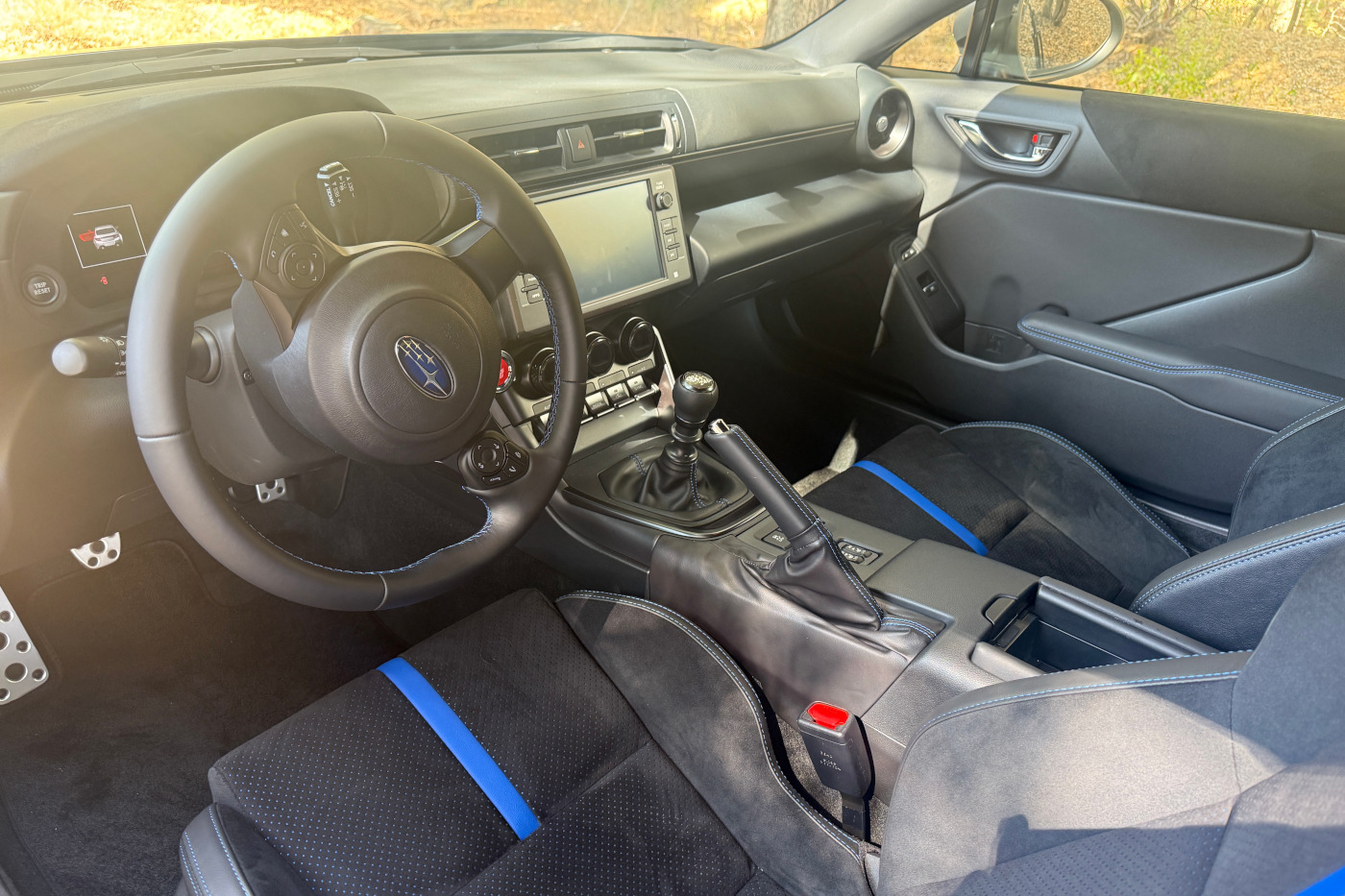
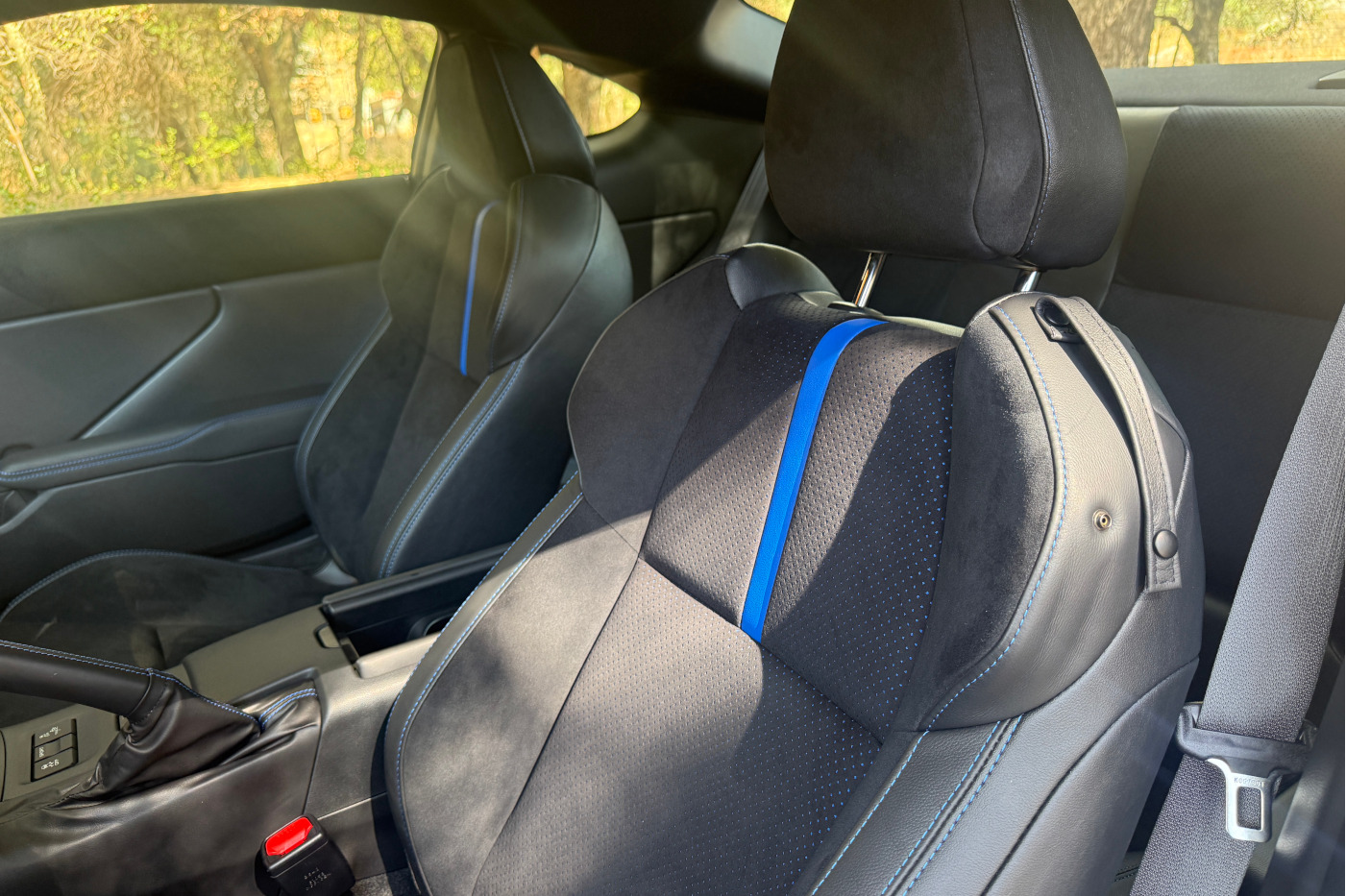
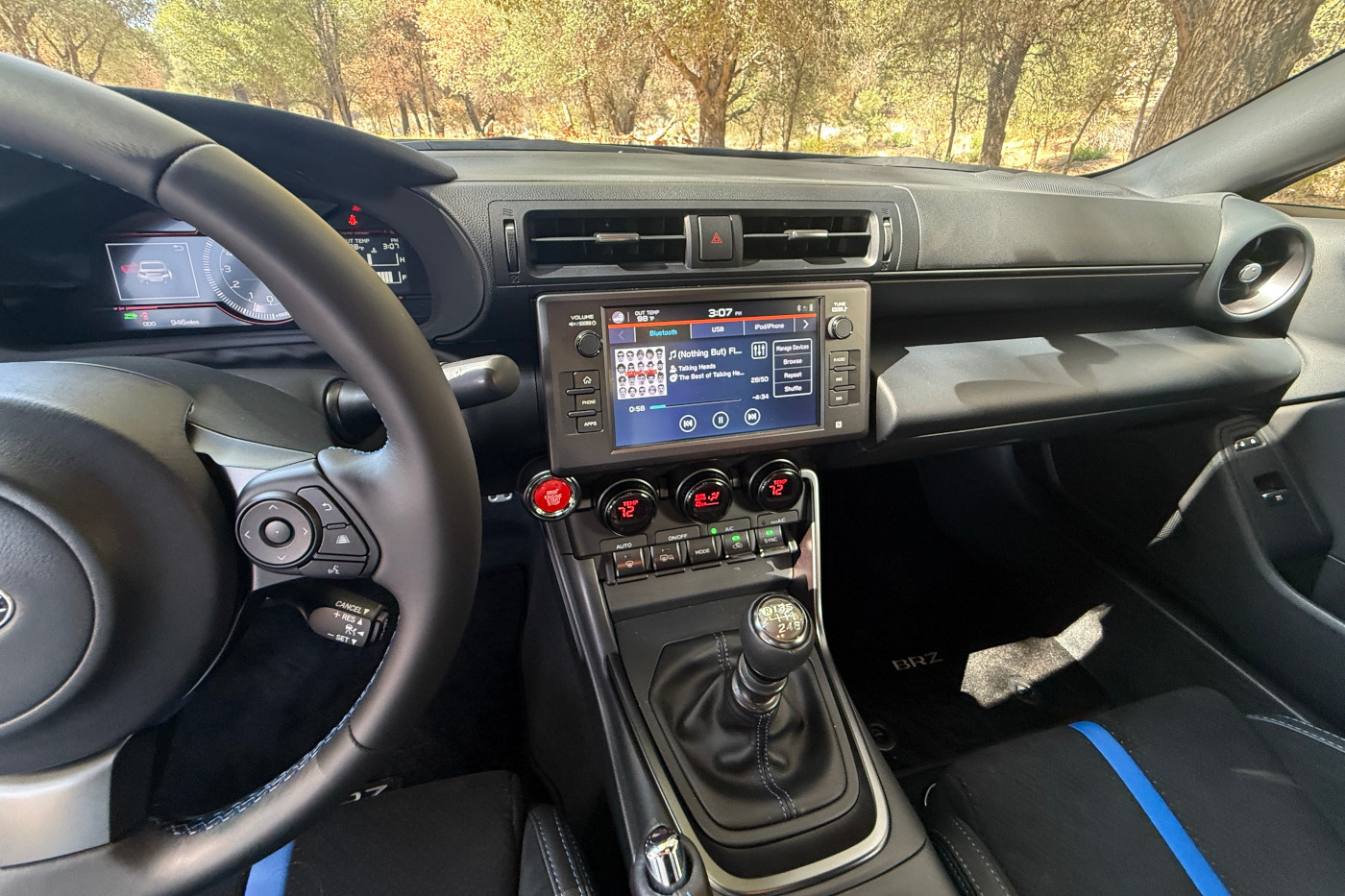
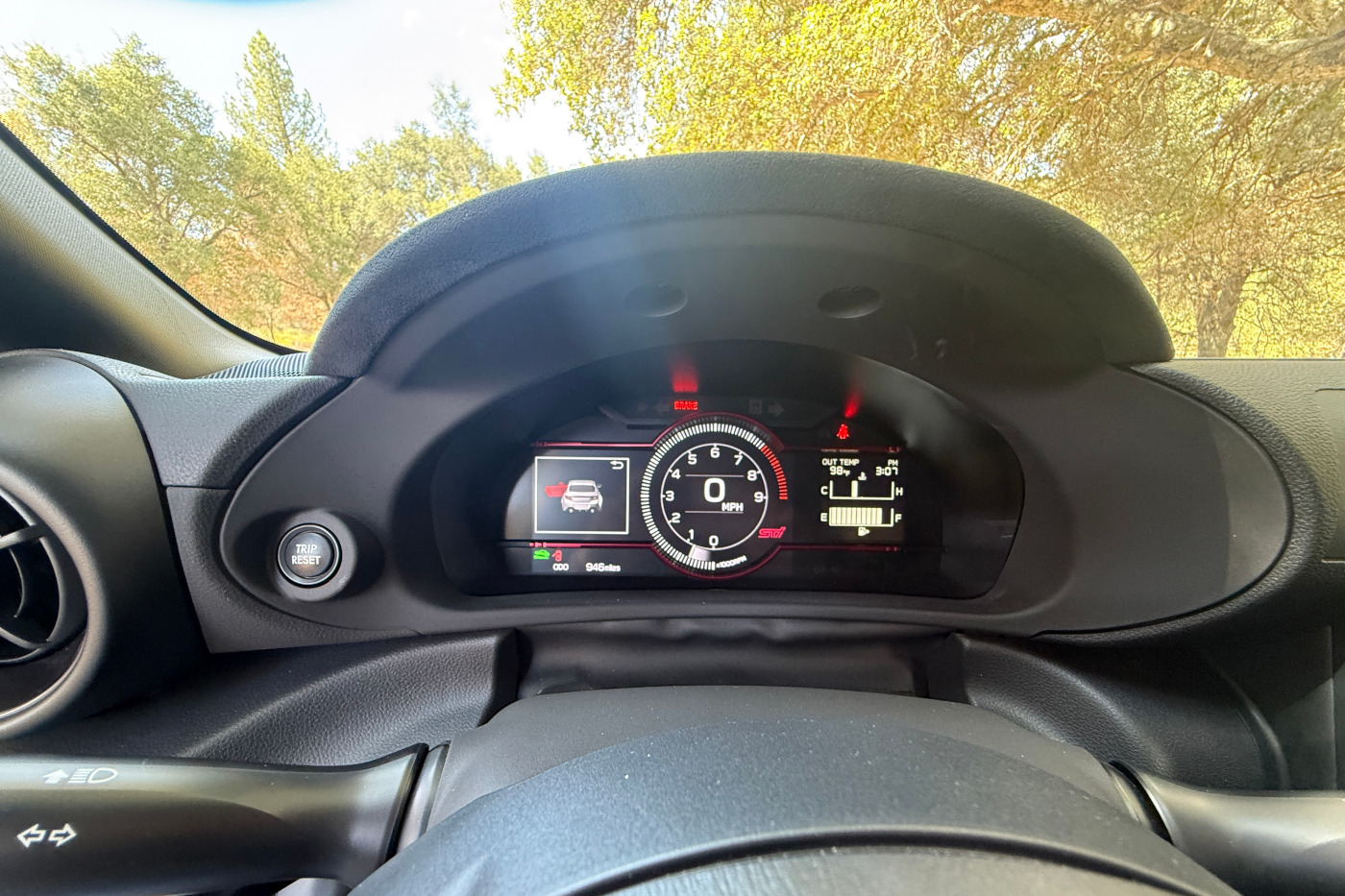
Inside, they’re much closer. Neither is particularly luxurious. And that’s a compliment. You sit low. The driving position is excellent. The steering wheel is in approximately the right place. The controls are where you expect them to be, and you get actual physical buttons instead of having to swipe through three menus just to turn the heated seats on. The BRZ tS adds its own sporty touches, including blue interior accents and contrast stitching. But neither car is trying to be a luxury coupe. They’re trying to be sports cars. And thank goodness for that.
Price
The 2026 Subaru BRZ tS costs $38,360, while the Toyota GR86 fitted with its Performance Pack comes in at $37,195. So, for the princely sum of $1,165, Subaru is essentially saying: “Yes, ours is better. And we’ve found an extra $1,165 down the back of the sofa to prove it.”
VIDEO REVIEW
Verdict – So which is better?
And this is the interesting bit. Because if you simply compare the numbers, there isn’t much between them. Same engine. Same power. Same torque. Same basic architecture. Same rear-wheel-drive philosophy. And similar performance. But the personalities are different. The GR86 is the mischievous one. It’s playful. It’s willing to rotate. It feels slightly more eager to have a laugh in and it’s a bit cheaper. This BRZ tS, however, feels more polished; the STI suspension gives it greater composure, and the whole thing feels more deliberately engineered for someone who spends a suspicious amount of time looking at the next corner.
So which one would I buy? Well…This is awkward because the sensible answer is the Toyota, but I’d have the BRZ tS because it’s sharper and more focused.
2026 Subaru BRZ tS Numbers
BASE PRICE: $35,345
PRICE AS TESTED: $36,465
VEHICLE LAYOUT: Front-engine, rear-wheel-drive, 4-passenger, 2 door coupe
ENGINE: 2.4-liter DOHC 16-valve flat-4
POWER: 228 hp @ 7,000 rpm
TORQUE: 184 lb-ft @ 3,700 rpm
TRANSMISSION: 6-speed manual
0-60 MPH: 5.8 seconds
CURB WEIGHT: 2,815 lbs
CARGO VOLUME: 6.9 ft³
FUEL ECONOMY Combined/city/highway: 22/20/27 mpg
OUR OBSERVED: 21.7 mpg
PROS: Terrific handling, superb fun, improved braking
CONS: Still needs more power, slightly more expensive than the GR86 w/PP
2026 Subaru BRZ ts Review
