
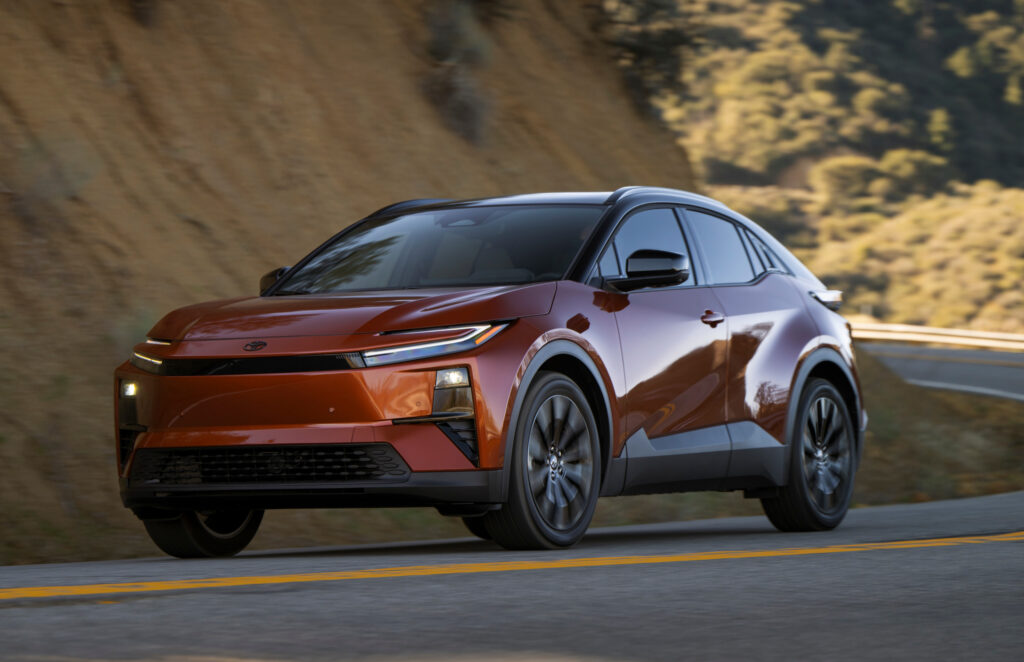
This is the 2026 Toyota C-HR. And Toyota has done something rather unexpected. They’ve taken what was once a rather sensible little crossover and given it way more power than it should have: all–wheel drive and electric power, and a 0–60 time faster than a Golf GTI.
Ten years ago, the C-HR arrived with just 144 horsepower, which meant calling it sporty was a bit like calling a garden snail an athlete. And a lot has changed since then. TikTok has gone from a slightly embarrassing app where people filmed themselves dancing in bedrooms to a global phenomenon. The new C-HR? Well, it’s still small, but now it’s electric, surprisingly quick, properly well-equipped, and, Toyota tells us, supposed to be its sportiest electric SUV. That’s quite a claim. So the big question is: Has Toyota finally built the first proper EV hot hatch? Well… let’s find out.
Exterior
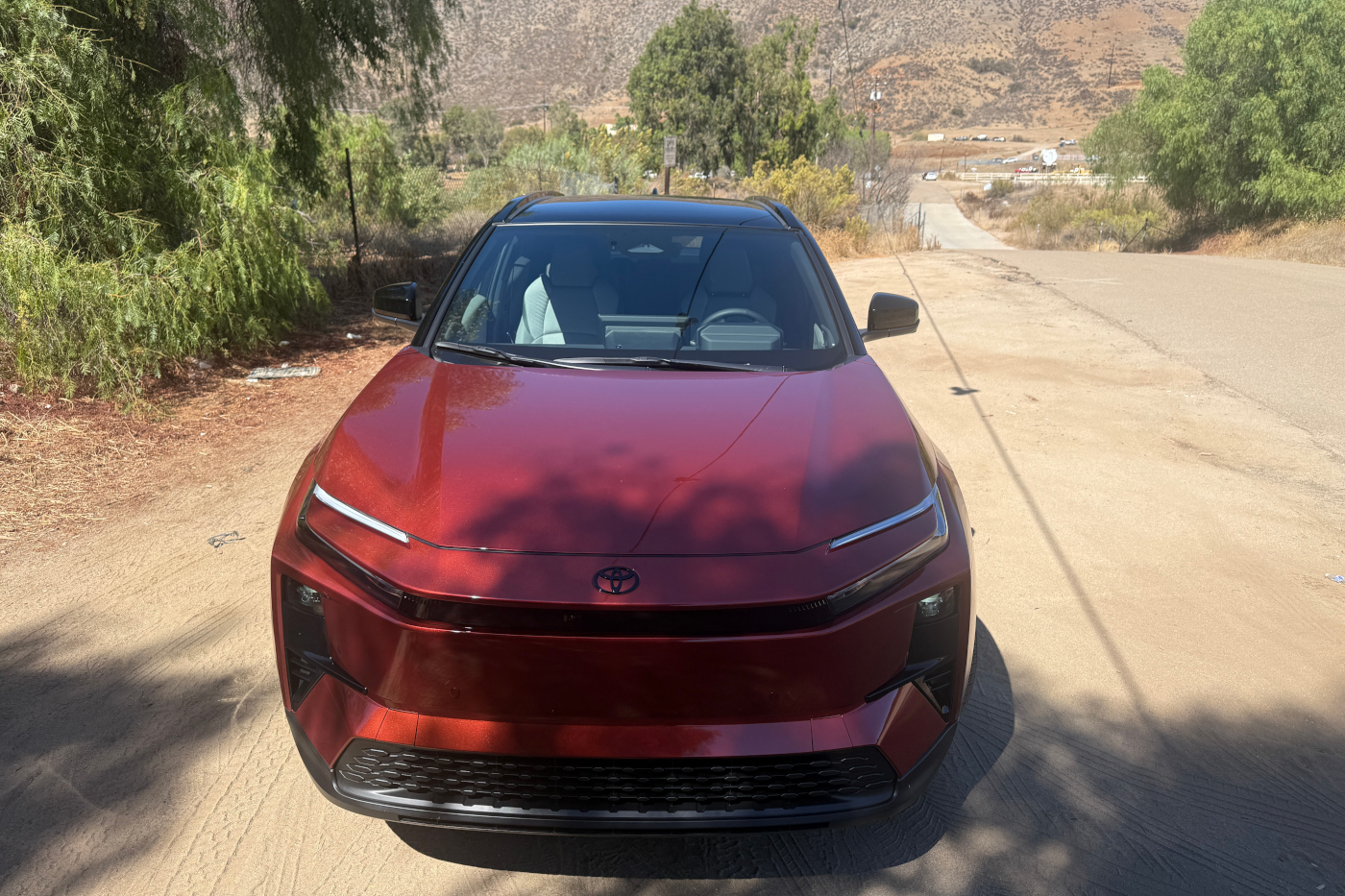
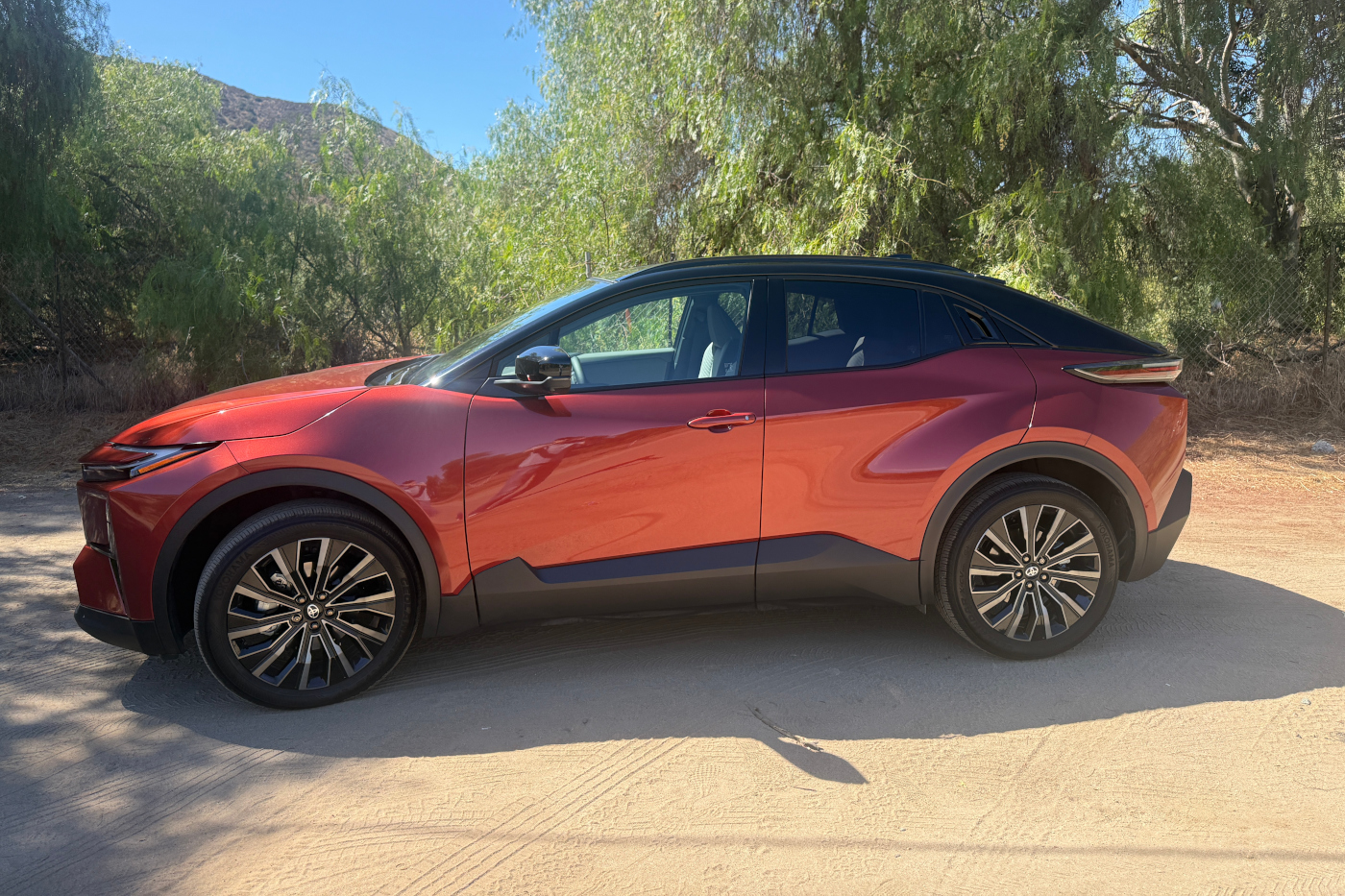
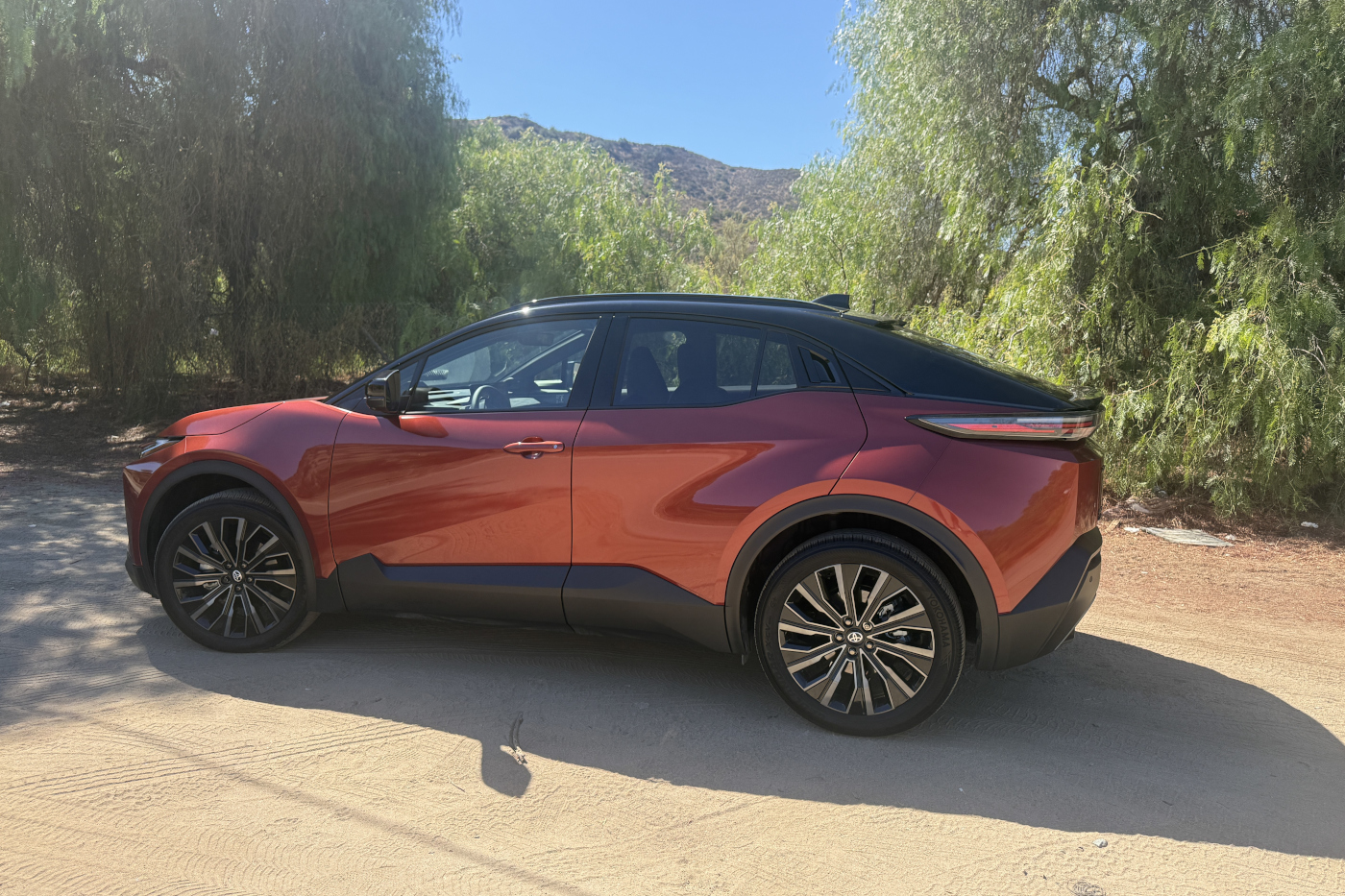
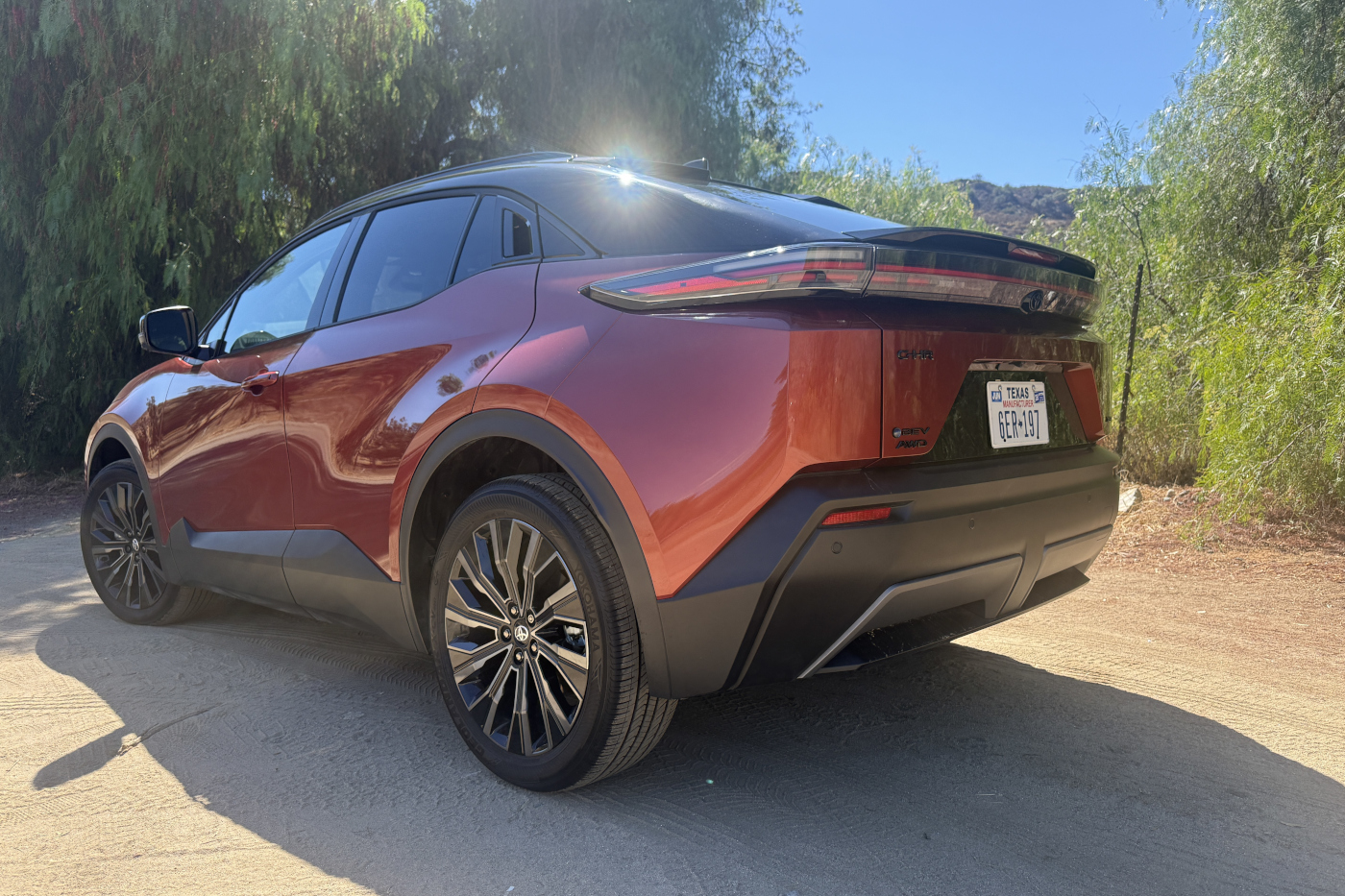
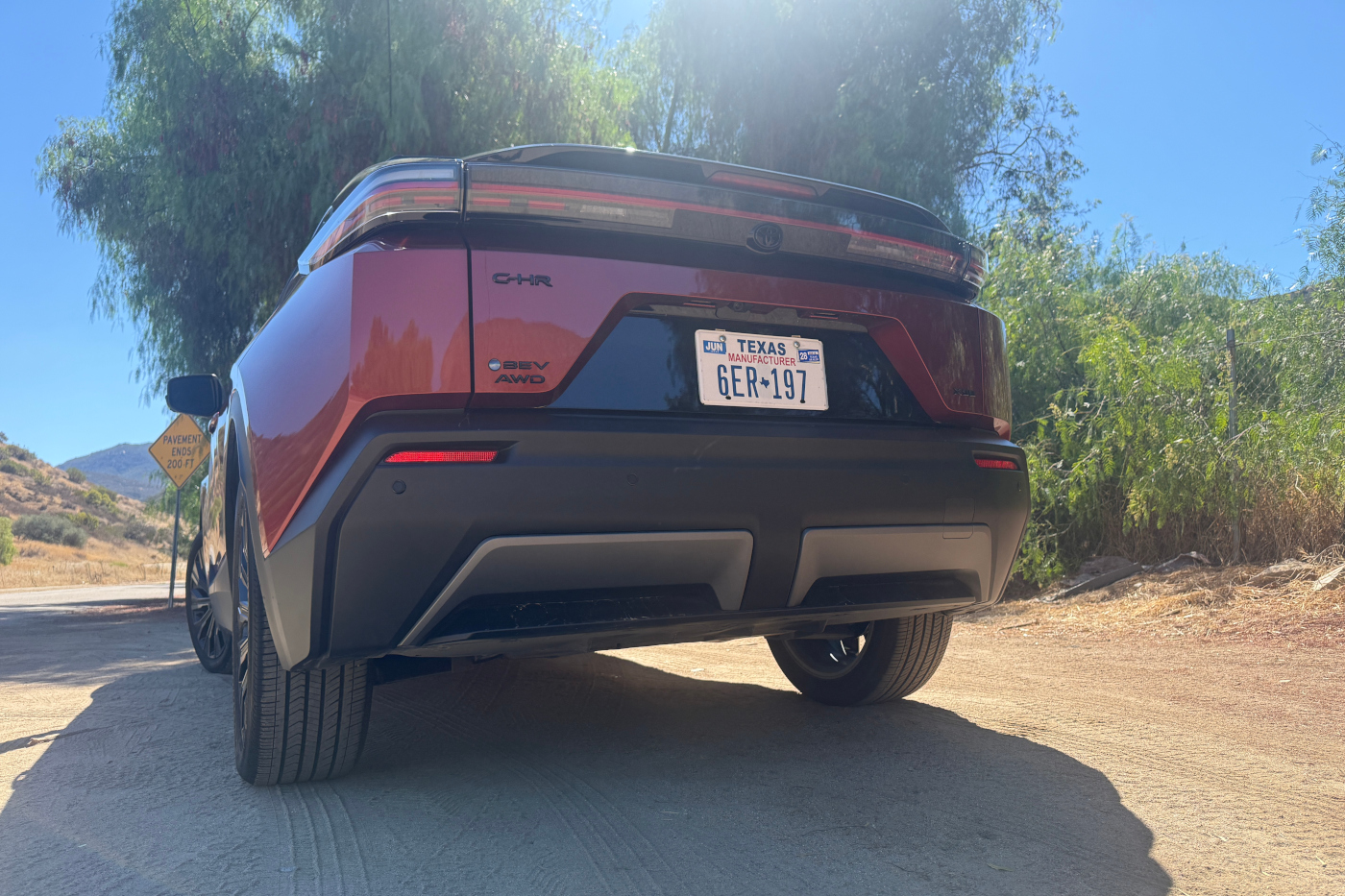
First of all, you’ve got to give Toyota credit; the C-HR looks nothing like a boring little electric appliance. And that’s important because one of the problems with EVs is that designers seem to think electric cars should all look like they’ve been designed by someone who’s only ever seen a washing machine. The C-HR isn’t like that. It’s low. It’s wide. It’s covered in sharp creases, and it has this rather aggressive, almost concept-car look. It’s basically saying: “Yes, I’m electric… but I’ve still got somewhere to be.”
Underneath all that styling is a car that’s closely related to Toyota’s bZ and bZ Woodland. But the C-HR is smaller. The wheelbase is 3.9 inches shorter than those cars, and the overall length is considerably shorter than the bZ, and that’s actually one of the things I like about it. It doesn’t feel like Toyota simply took an enormous electric SUV and put it through a photocopier at 80 percent. It’s genuinely compact but there’s a surprise under the floor.
Power
Because Toyota has given the C-HR the more powerful dual-motor all-wheel-drive system from the larger bz, that means…338 horsepower. In a C-HR. The result is a 0-to-60 time of 4.4 seconds.
Wheels and Tires
The XSE comes with 20-inch wheels wrapped in Yokohama Geolandar 235/50 tyres, which is a rather elaborate way of saying Toyota has fitted it with some enormous dinner plates and then covered them in rubber. They certainly look the part, filling the wheel arches nicely and giving the car a more purposeful stance. And the Geolandar tyres are designed to cope with the sort of real-world driving most owners will encounter, rather than simply looking pretty outside a coffee shop.
Range and Charging
Now let’s talk about the thing everyone asks about with an EV. Range. The battery has around 67 kWh of usable capacity.Toyota says the base SE can do up to 287 miles. The XSE drops to 273 miles because of those larger 20-inch wheels which is pretty decent. Charging is reasonably competitive. The C-HR uses the NACS connector, and DC fast charging peaks at 150 kilowatts. In testing, 10 to 90 percent will take about 32 minutes. It also has an 11-kW onboard charger, a full Level 2 charge takes roughly 7½ hours. So plug it in overnight……and it’s ready to go in the morning.
Driving
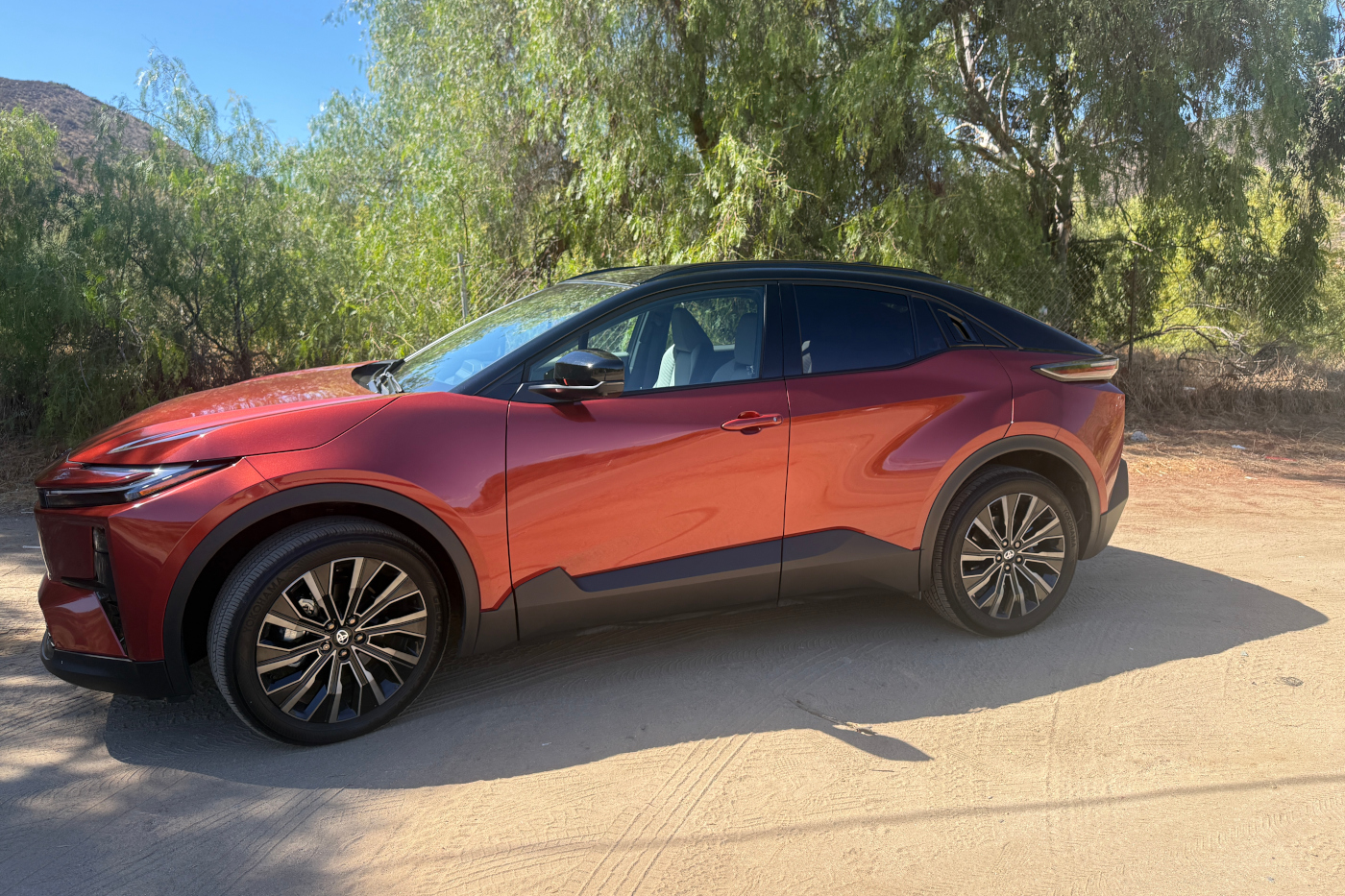
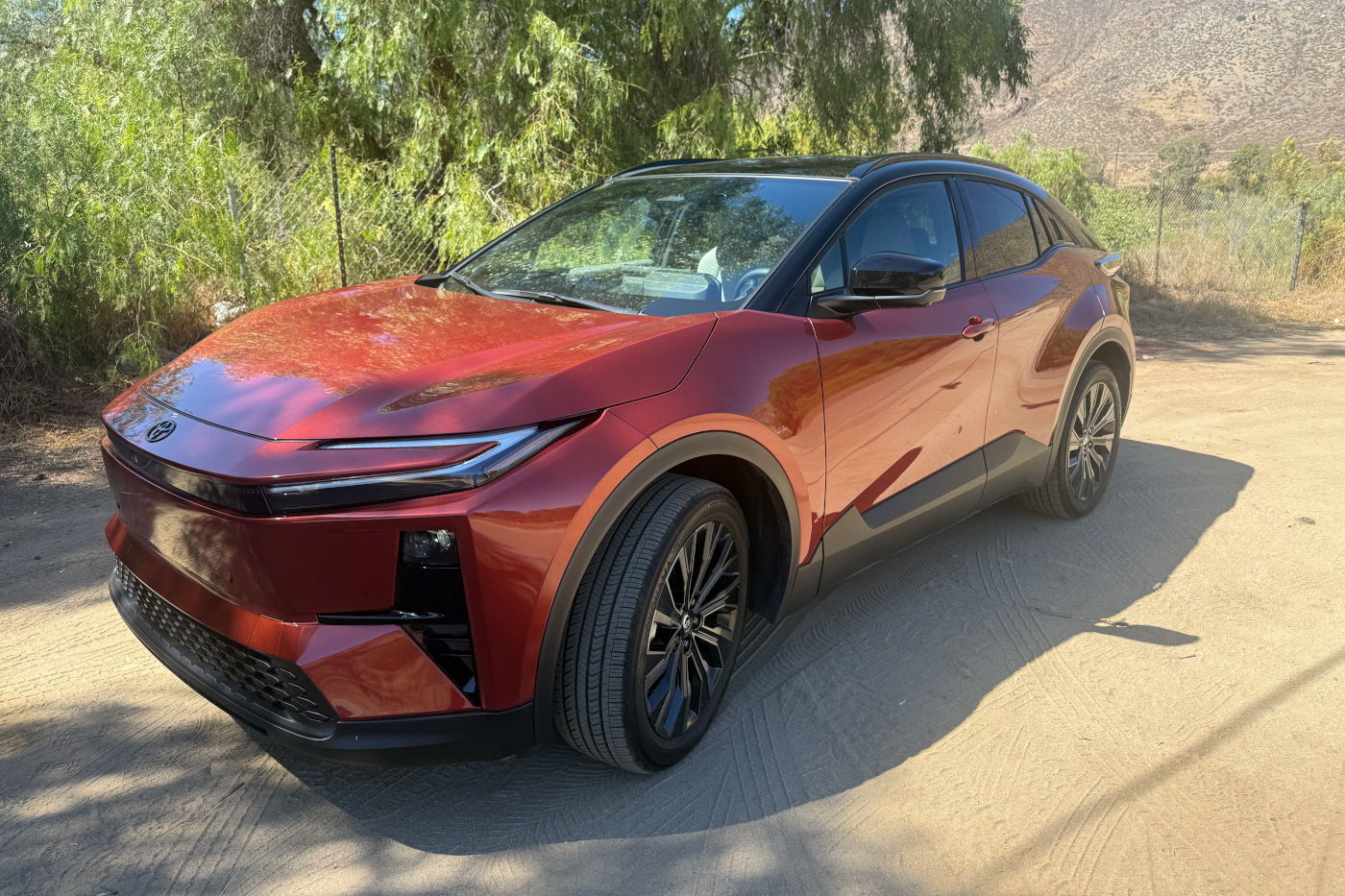
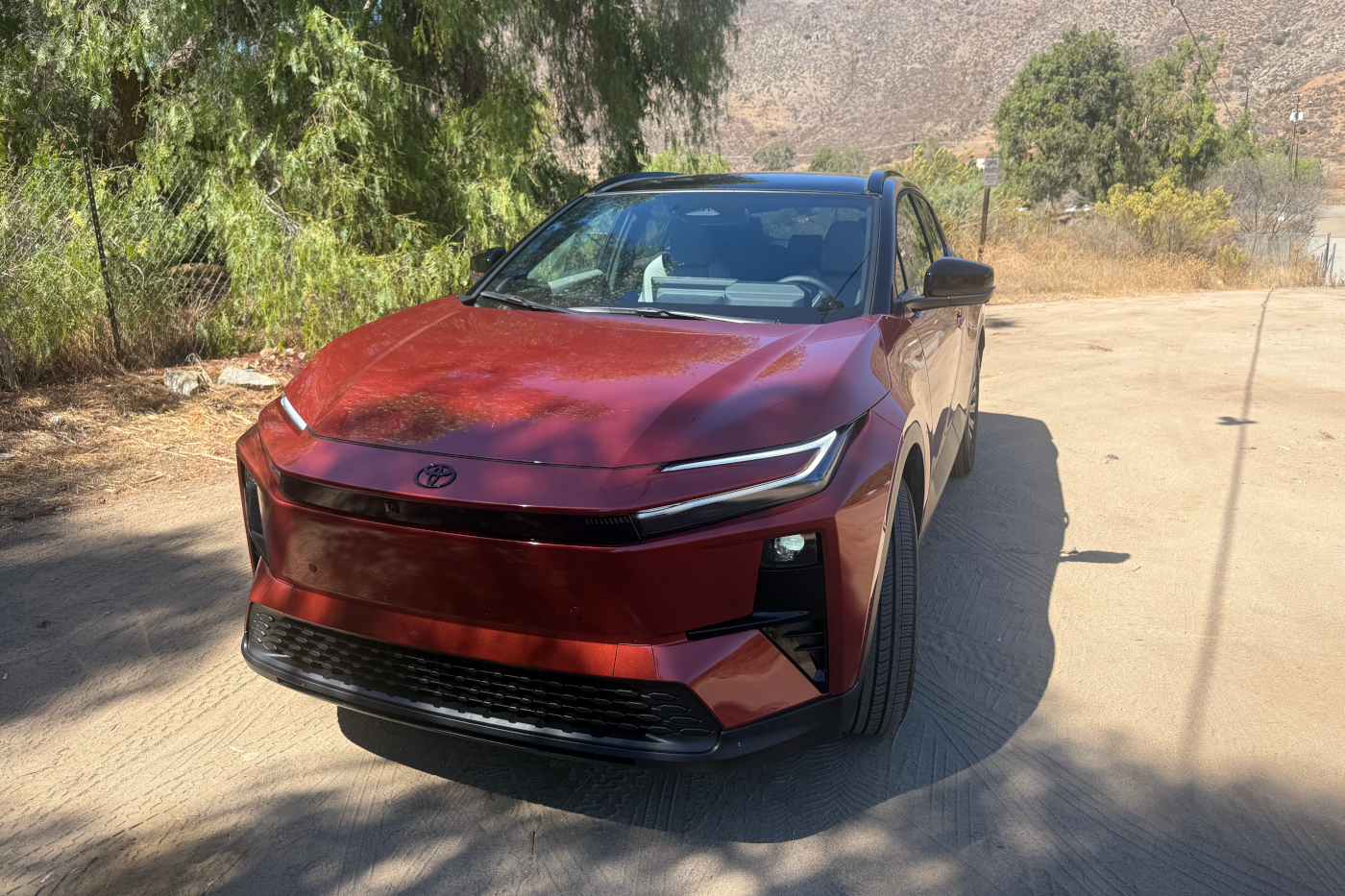
And when you put your foot down, it doesn’t so much accelerate……as suddenly become very interested in what’s happening approximately three counties away. It’s properly punchy and because it’s electric, there’s none of that waiting around for a gearbox to decide what it’s doing. You press the accelerator. And…WHOOSH. You’re gone. It’s particularly useful when you’re joining a freeway or overtaking. You don’t have to plan the maneuvers three business days in advance. Just press the pedal and the C-HR gets on with it. There is, however, a slight problem. Once you get beyond about 60 mph, the acceleration starts to tail off. Zero to 80 takes around 7.2 seconds. So it launches like a scalded cat……and then the cat remembers it has somewhere else to be.
Still, in the real world, there’s more than enough performance. And let’s be honest. How much acceleration do you actually need? Probably not 338 horsepower but I’m very glad Toyota gave it to us anyway.
Handling
Now, here’s where things get interesting. Because Toyota calls this its sportiest electric SUV. And I’m not entirely convinced. The steering is accurate but it doesn’t tell you much. There’s very little feedback coming through the wheel and then there’s the body roll. There is quite a lot of it.
The C-HR has around eight inches of ground clearance……which is excellent if your daily commute involves crossing the Andes. It’s less useful if you’re trying to pretend you’re driving a sports car. Push it into a corner, and you’ll get some understeer. Push harder, and the tires will start complaining. But this isn’t a Tesla Model 3 Performance wearing a Toyota badge. And frankly…that’s okay, because most people buying a C-HR aren’t going to spend their weekends attacking mountain passes. They’re going to Costco. They’re going to work. They’re taking the kids to school. And for that sort of driving…The C-HR is actually very good.
Interior
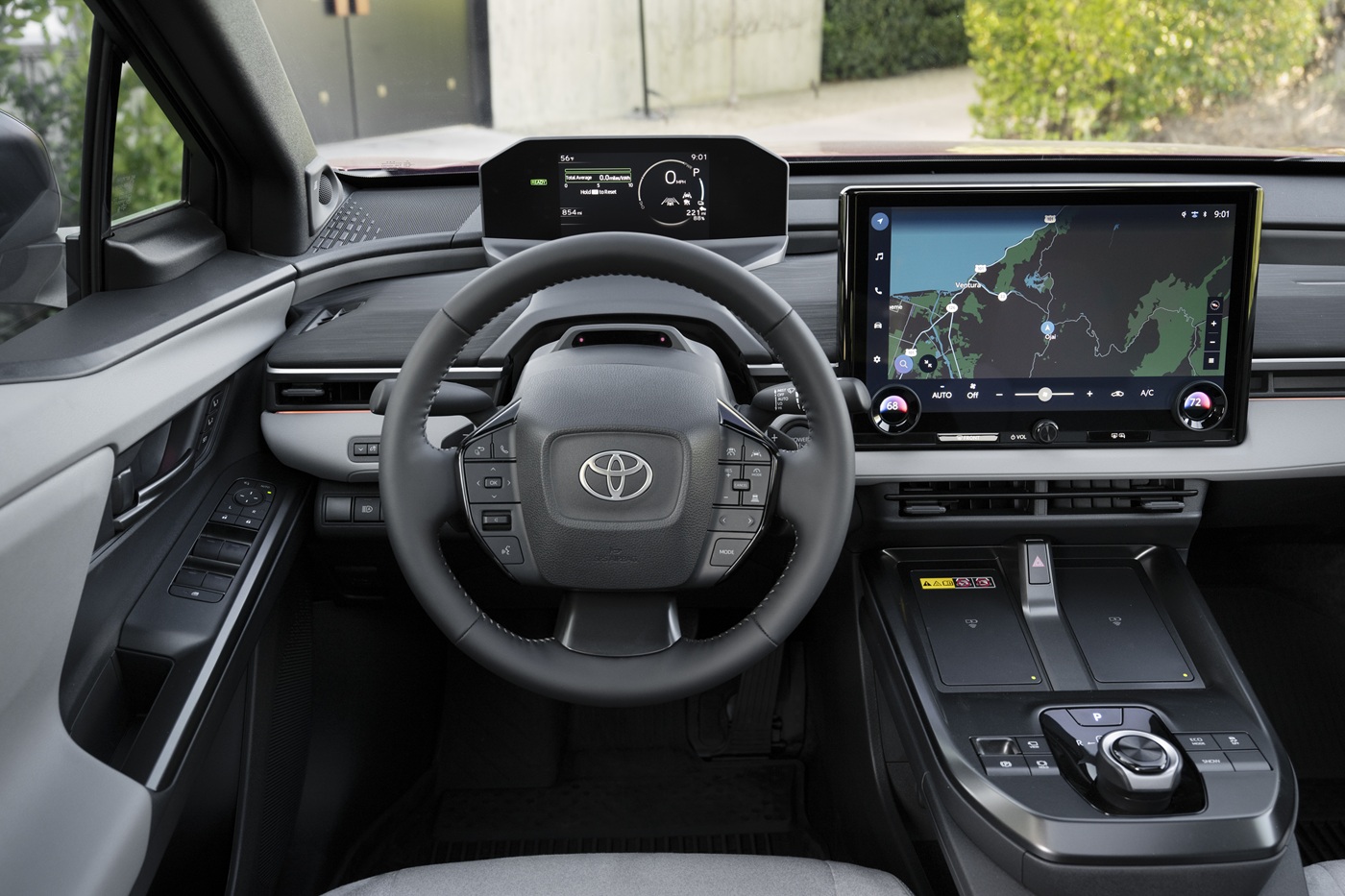
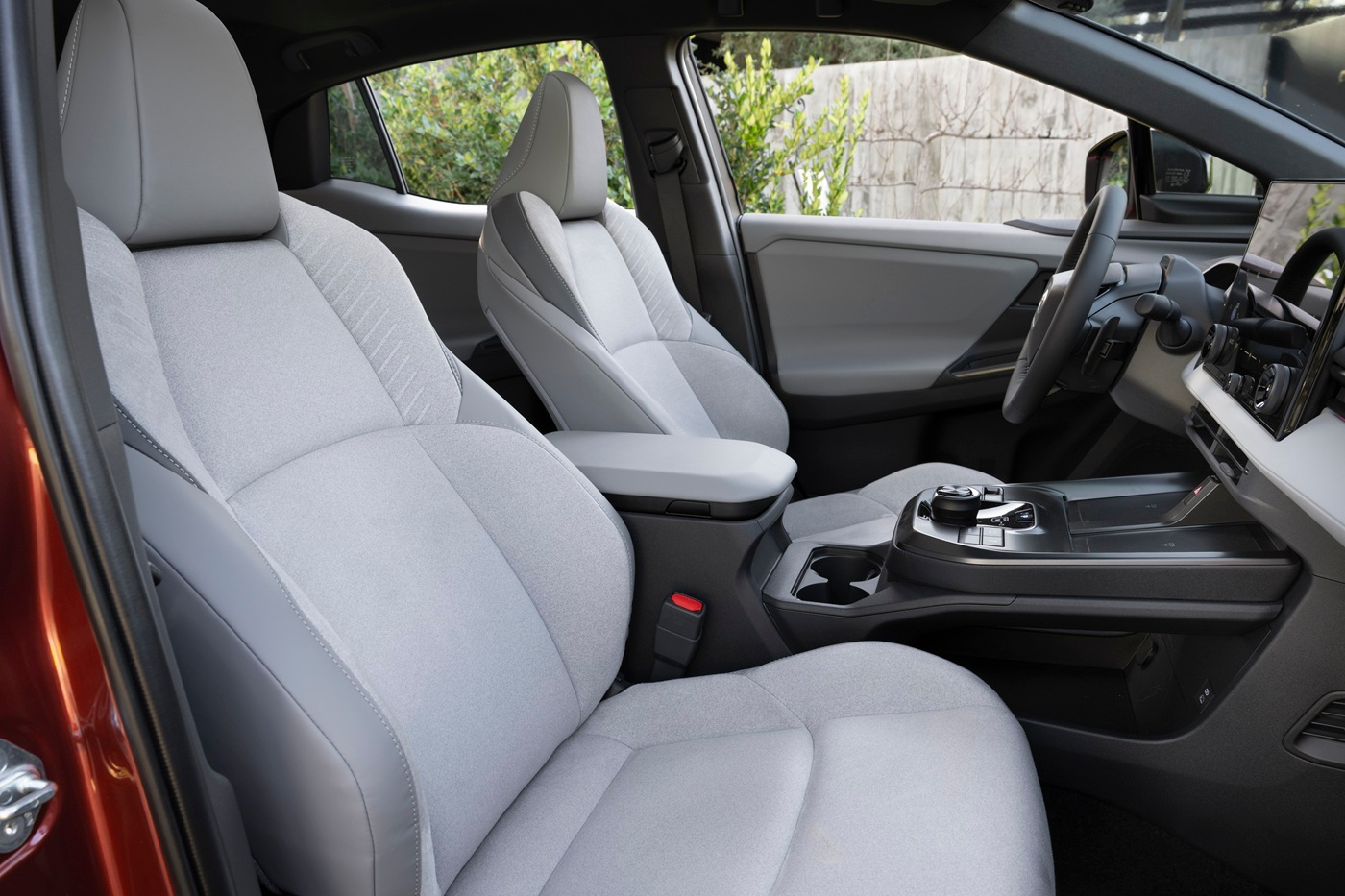
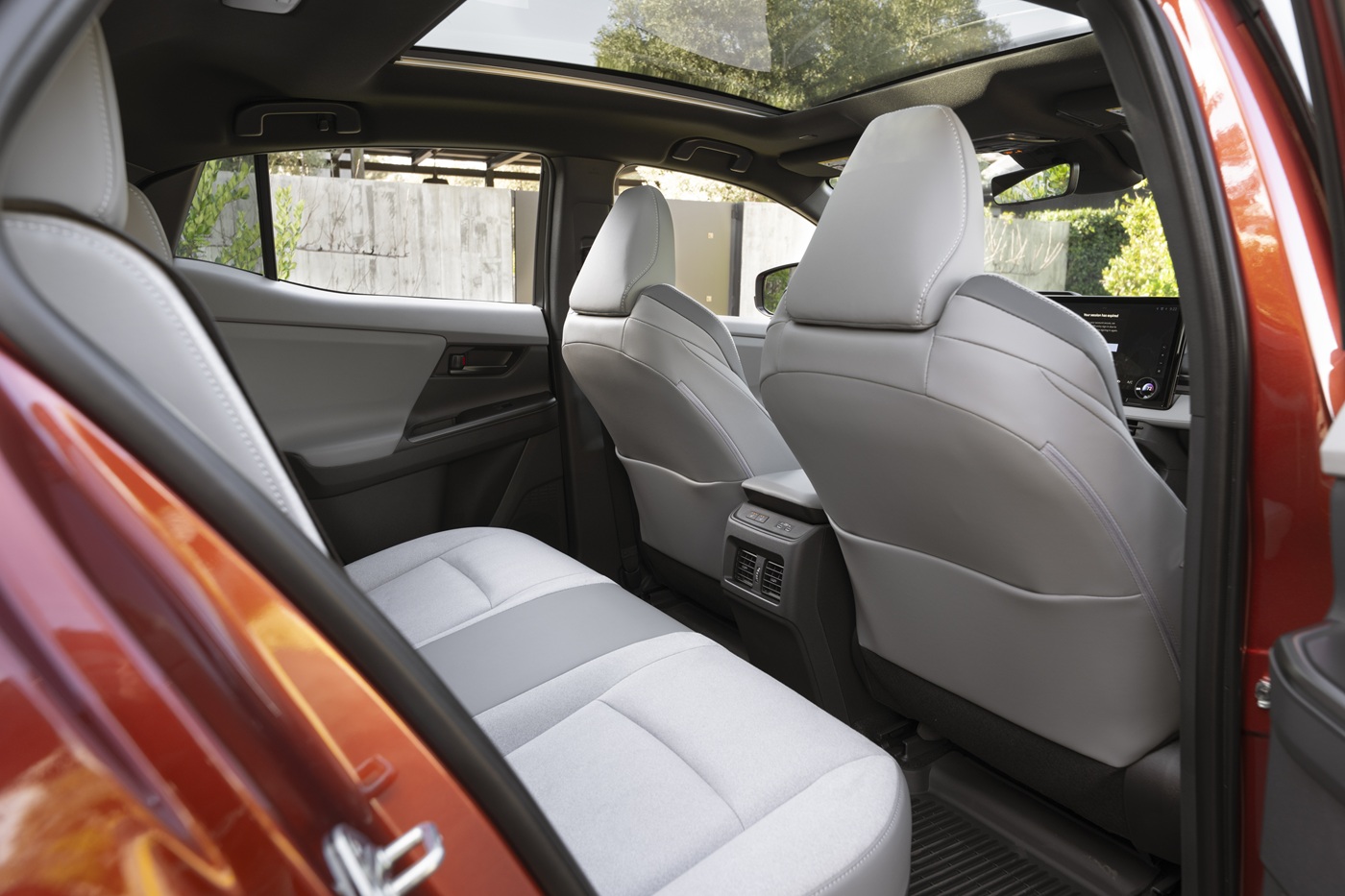
Inside, the C-HR follows the same basic formula as Toyota’s other EVs. You have a 14-inch touchscreen……a digital instrument cluster……and a pretty clean dashboard and thankfully, Toyota hasn’t gone completely insane with touchscreens. There are still physical controls. Actual buttons. Things you can press without having to take your eyes off the road and navigate through three menus to turn the air conditioning down by half a degree. The XSE is particularly nice. You’ve got suede inserts and SofTex upholstery. And it gives the cabin a much more premium feel. For the money, it’s a pretty nice place to sit.
My XSE tester had the faux suede seats and they are actually very nice.
Rear Seats
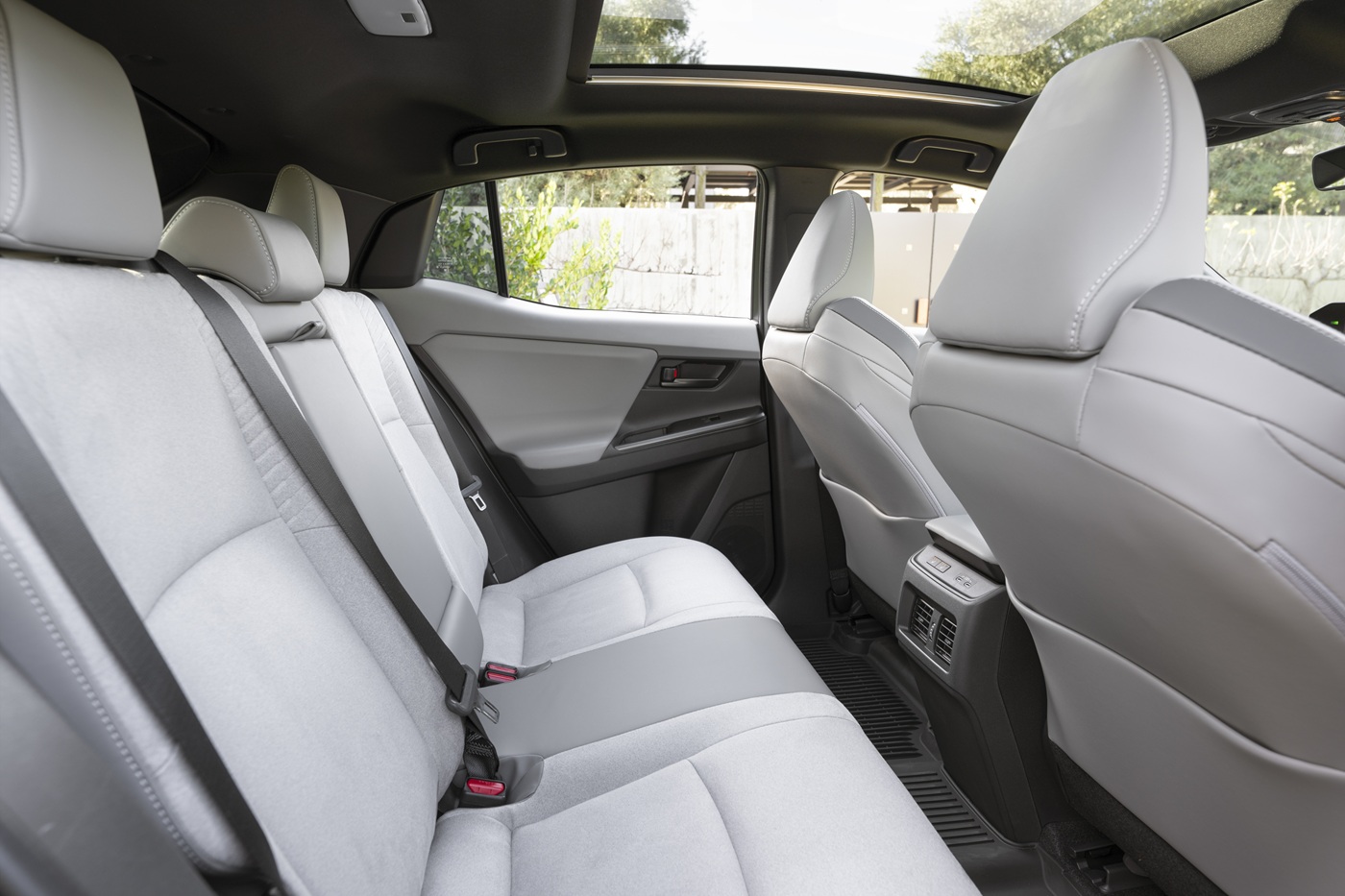
The rear seats are a little more complicated. There’s decent legroom……but there’s not much room for your feet underneath the front seats and the seat cushions are relatively short and flat, so taller passengers end up sitting with their knees slightly higher than they’d probably like. Then you’ve got that sloping roof which eats into headroom. On the plus side, the XSE offers heated rear seats. And both versions get rear air vents and USB-C ports. So at least your passengers can be slightly uncomfortable while charging their phones.
Cargo Space
Cargo space is actually pretty impressive considering the C-HR’s compact dimensions. There’s only around one to three cubic feet less room behind the rear seats than the larger bZ. Fold those seats down……and you’ve got up to 60 cubic feet of cargo space. You’ve also got a power liftgate and a pretty generous list of standard equipment.
Price
The 2026 Toyota C-HR XSE is $39,000. My tester had a couple of options including the JBL Premium Audio for $1,000, the two-tone color for $500, and the wheel locks for $339. The total price is $42,979, which is actually pretty interesting because you’re getting…338 horsepower, All-wheel drive, a reasonably well-equipped interior, and a decent range. For less money than many of its competitors.
VIDEO REVIEW
Verdict
So…is the 2026 Toyota C-HR the first proper EV hot hatch? Well…Almost. It’s certainly hot-hatch quick.But it isn’t really a hot hatch. The steering isn’t particularly communicative, there’s quite a bit of body roll and push it too hard, and the front tires will remind you that this is still a crossover. But that’s not really the point. The C-HR is quick when you want it to be…Comfortable when you don’t… Quiet…Well-equipped…and genuinely interesting to look at.
Compared with the original C-HR from a decade ago, it’s a completely different animal. Back then, you got 144 horsepower. Now you get 338. Back then, the C-HR was a quirky little crossover. Now it can hit 60 mph in 4.4 seconds. That’s quite some transformation. So no… It isn’t quite the first true electric hot hatch. But it’s getting dangerously close.
2026 Toyota C-HR Numbers
BASE PRICE: $39,000
PRICE AS TESTED: $42,979
VEHICLE LAYOUT: 5-passenger, 4-door crossover
DRIVETRAIN: Synchronous electric motor with integrated transaxle at front and rear
COMBINED POWER: 338 hp
TRANSMISSION: F/R: direct-drive
0-60 MPH: 4.4 seconds
BATTERY PACK: Liquid-cooled lithium-ion, 74.7 kWh
PEAK CHARGE RATE: 150 kW
RANGE: 273 miles
CURB WEIGHT: 4,322 lb
CARGO SPACE: 30 ft³, 60 ft³ with seat area
PROS: Seriously quick, decent range, nice interior on XSE trim
CONS: Range takes a hit with 20-inch wheels
2026 Toyota C-HR Review
