
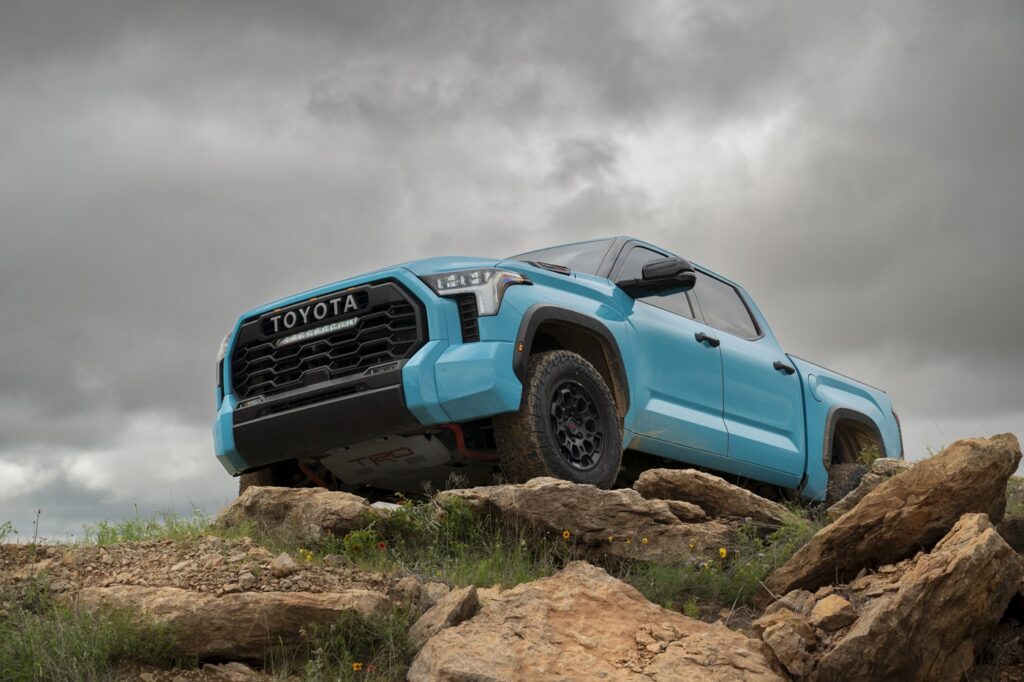
Toyota has quietly done something rather naughty with the Tundra. While everyone was distracted by yet another touchscreen the size of a studio apartment, the engineers slipped into the engine bay with a laptop, added a larger intake and a louder exhaust, then wandered off pretending nothing had happened.
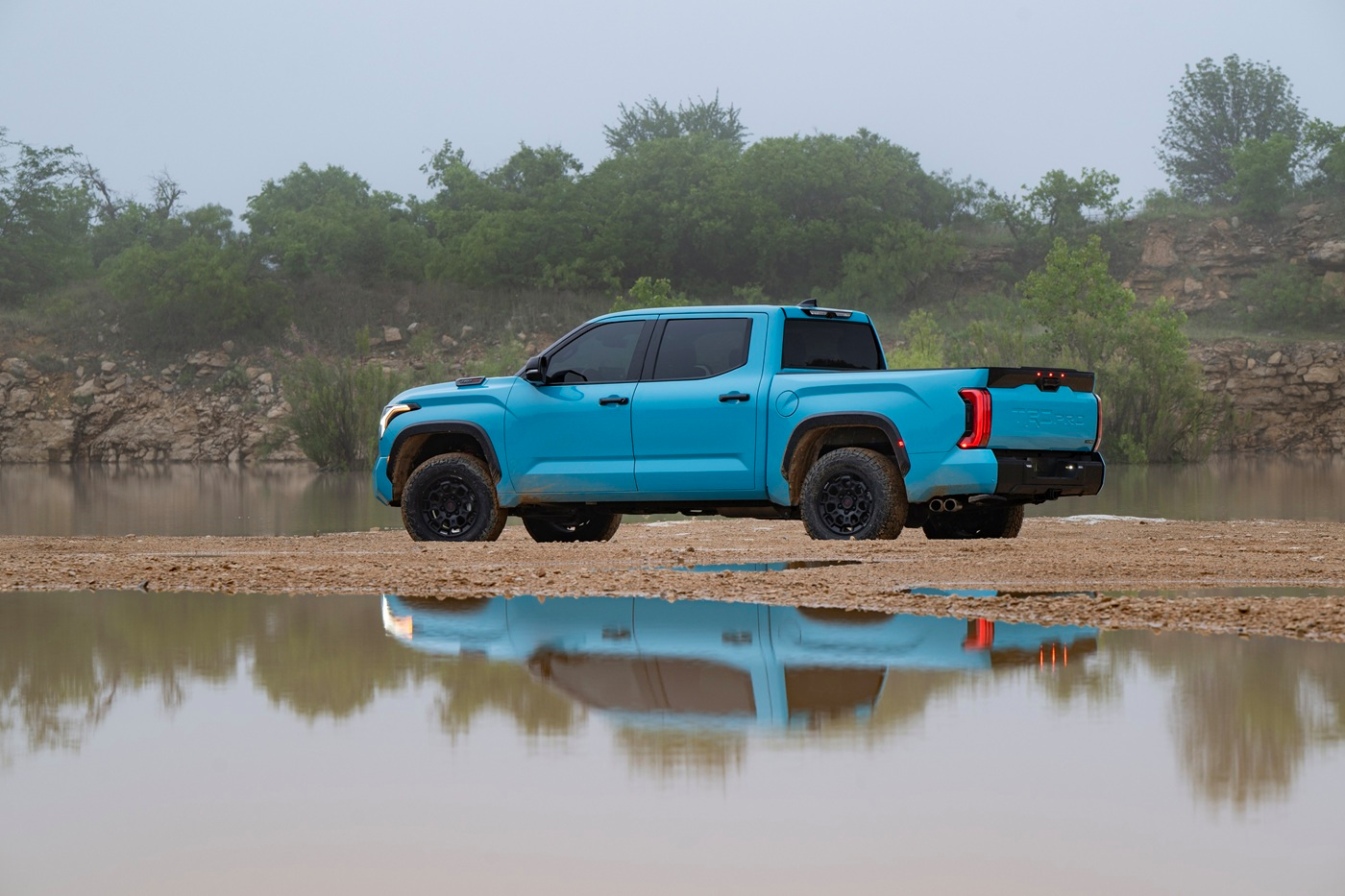
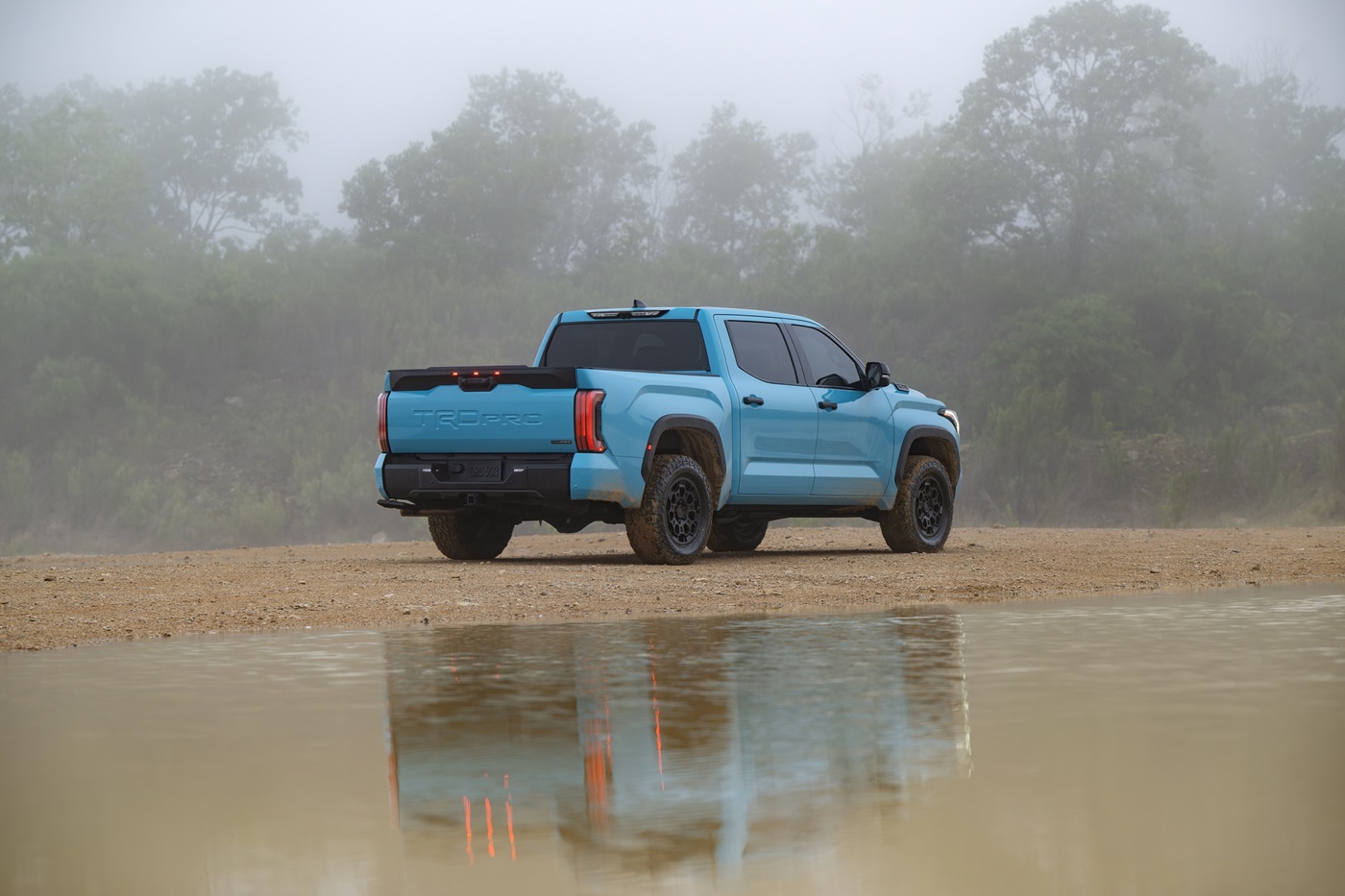
This is the 2026 Toyota Tundra TRD Pro with TRD Performance Package, and Toyota isn’t exactly shouting about the upgrades either, which is surprising because this is a company that normally sticks TRD logos on anything. The only clue is a tiny TRD Performance badge on the tailgate that disappears beneath the truck’s already excessive collection of bold lettering.
Looks
Under The Hood
The twin-turbo 3.4-liter V6 now produces 466 horsepower in hybrid form—29 more than before. Non-hybrid versions gain 32 horsepower, while torque remains a colossal 583 lb-ft, which is enough to drag small buildings off their foundations without breaking into a sweat. Things are more interesting under here. You get twin TRD-branded airboxes which feed each turbo like oversized lungs preparing for an Olympic sprint, while underneath lurks a new cat-back exhaust ending in one enormous trapezoidal tailpipe. Of course, there’s a catch. Hidden behind the fuel flap is a sticker demanding premium petrol only. So congratulations—you’ve paid extra for a truck that now insists on drinking the expensive stuff. Fifteen miles per gallon is about what you’d expect from something with the aerodynamic finesse of a detached garage.
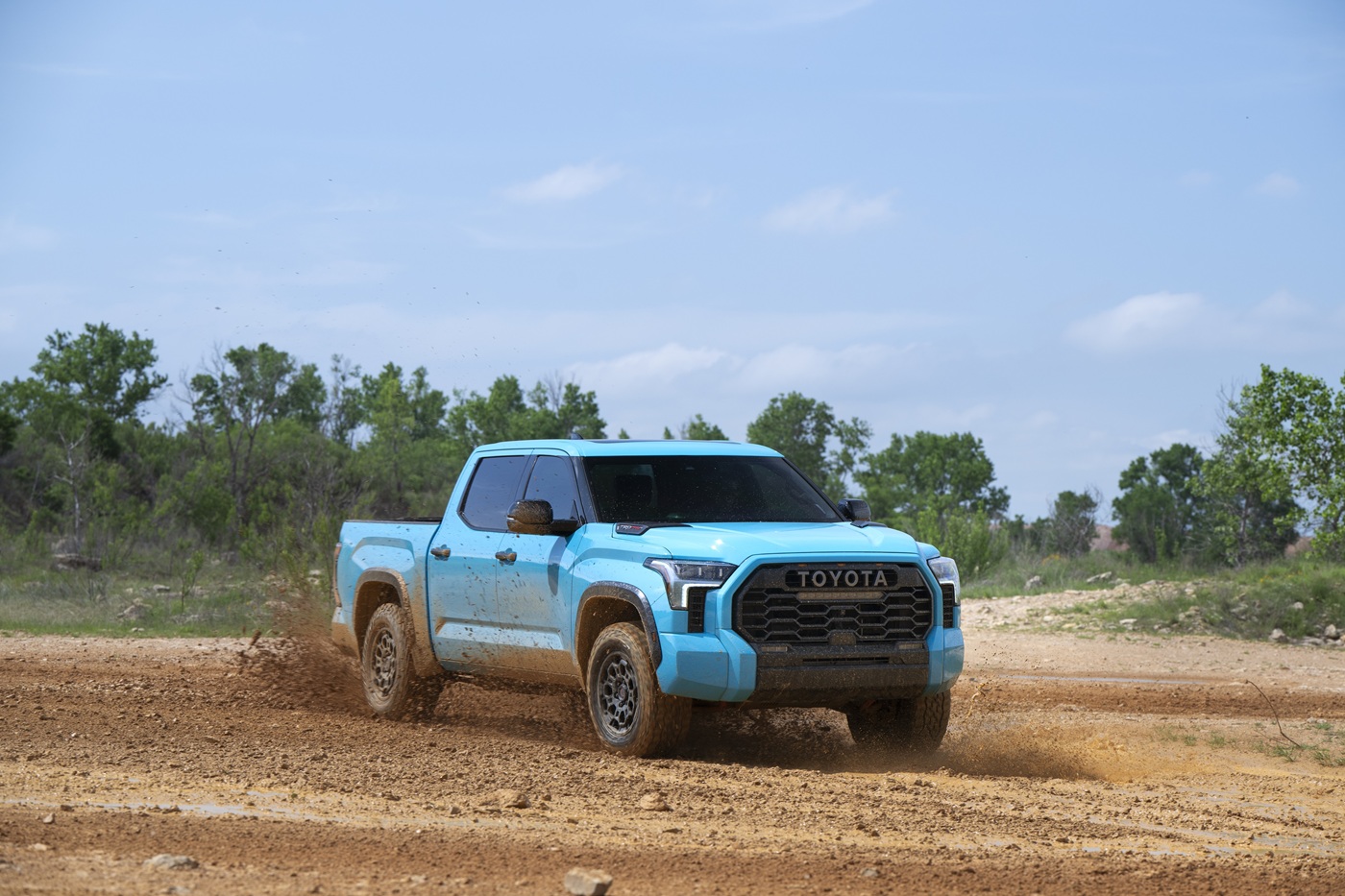
The ten-speed automatic transmission likes to stay constantly busy; it’s always swapping ratios whether you asked it to or not. At full throttle, the shifts are quick, but not smooth, and around town, it has all the grace of a forklift wearing roller skates. Mash your foot from a stop, and it will go from 0-60 in 5.6 seconds.
Cat-Back Exhaust
Sadly, Toyota seems to believe that louder automatically means better. The new exhaust certainly has plenty to say, but after an hour on the highway, you’ll be wishing it had learned the value of silence. It drones relentlessly, filling the cabin with the sort of booming soundtrack usually associated with an angry washing machine washing a sack of bricks. To make matters even stranger, Toyota still pipes fake engine noise through the speakers because, apparently, the real exhaust wasn’t annoying enough.
Wheels, Tires, and Brakes
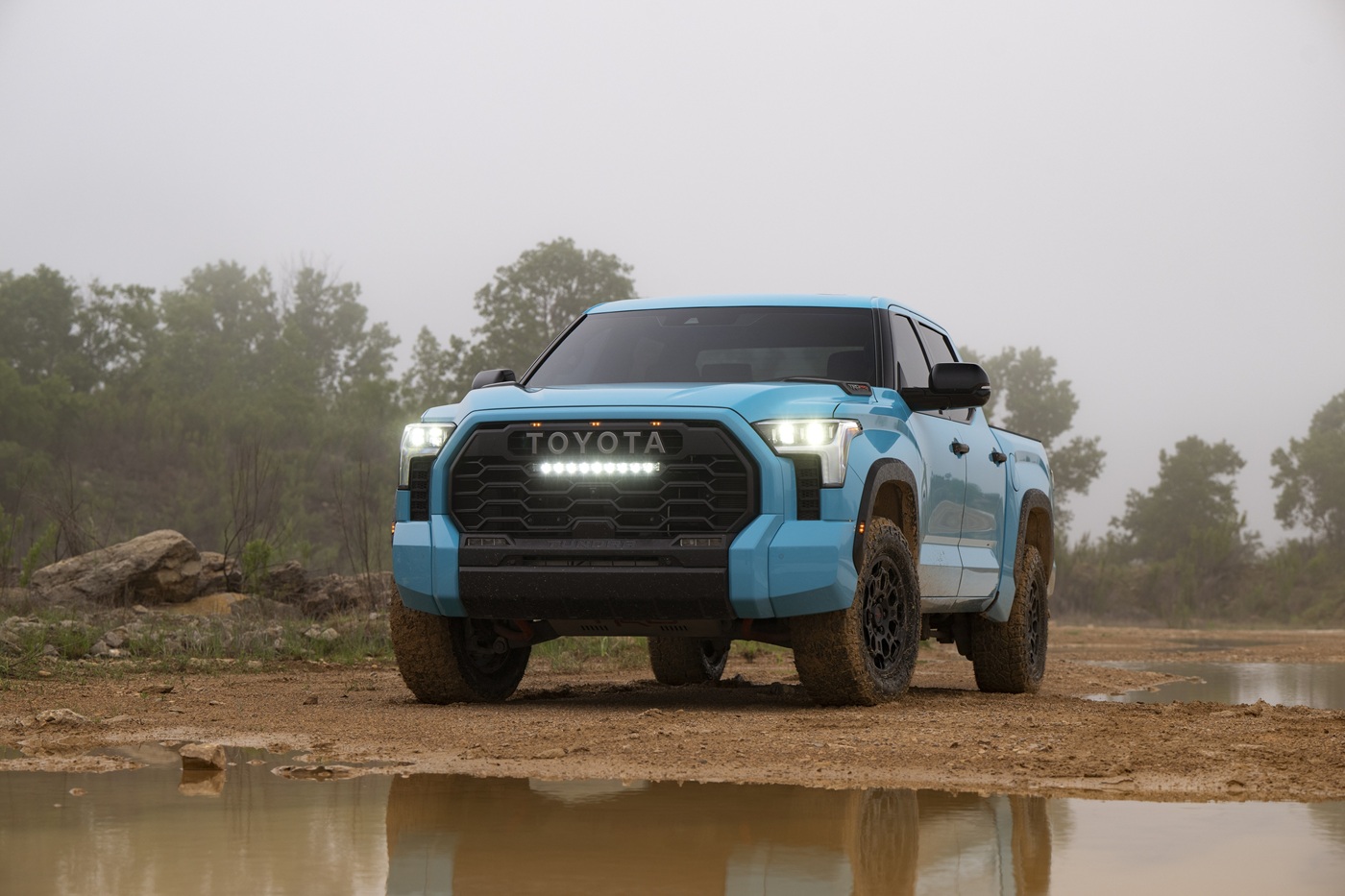
The Tundra rolls around on a set of chunky 18-inch wheels wrapped in 285/65 Falken Wildpeak all-terrain tyres, which look like they were designed to climb Everest, cross the Sahara, and then pop to Costco on the way home. They give the truck that wonderfully menacing “I’ll drive over your ornamental shrubbery if necessary” stance while still behaving surprisingly well on tarmac. And when it’s time to haul this two-and-a-half-tonne steel wardrobe to a halt, Toyota has fitted 13.9-inch ventilated discs at the front and 13.6-inch ventilated discs at the rear. They’re big enough to stop a runaway rhinoceros, with a reassuring pedal feel that inspires confidence whether you’re towing a boat, descending a mountain pass, or simply avoiding the Prius driver who’s just remembered their exit at the very last second. It’s all wonderfully over-engineered, exactly as a proper pickup should be.
Off Road
The 2026 Toyota Tundra TRD Pro offers up to 11.2 inches of ground clearance. It has a 1.1-inch factory front lift and TRD-tuned Fox internal bypass shocks, giving it a 26.2-degree approach angle and a 24.2-degree departure angle. The breakover angle is not so good at 22-23 degrees.
Core Off-Road Systems
- Multi-Terrain Select (MTS): Regulates wheel spin and adjusts engine torque to match the surface. Available settings include Mud, Sand, Rock, Dirt, and Auto. [1, 2]
- Crawl Control (CRAWL): Operates as an off-road cruise control in 4-Low. You can set it to low, medium, or high, allowing the truck to modulate the throttle and brakes so you can focus exclusively on steering.
- Electronically Locking Rear Differential: Standard on the TRD Pro, it locks the rear wheels together to ensure power is sent to both sides equally, maximizing traction in slippery or uneven conditions.
- Downhill Assist Control (DAC): Helps maintain a controlled, low-speed descent on steep, slippery inclines.
- Multi-Terrain Monitor (MTM): Uses front, side, and rear cameras to display obstacles on the dashboard screen, which is especially useful when navigating tight, technical trails.
Bed
Round the back, and Toyota has done something rather clever. Instead of making the cargo bed out of the same thin sheet metal that turns into modern art the first time you throw a toolbox into it, they’ve made it from a composite material. That means it shrugs off dents, laughs in the face of rust, and generally behaves as though it’s expecting a lifetime of abuse. On the posher models, the tailgate lowers itself at the press of a button.
You also get plenty of tie-down points, bright LED lighting for those inevitable late-night unloading sessions, and a household-style power outlet, which means you can run tools, charge batteries, or keep your coffee machine going if the camping trip has become a little too civilized.
And if you’ve splashed out on the surround-view camera system, Toyota will even show you a live video feed of the bed while you’re driving. It’s wonderfully reassuring. Instead of pulling over every twenty miles to discover whether your expensive mountain bike has departed for a new owner somewhere back on the freeway, you simply glance at the screen and see that everything is still exactly where you left it.
Driving
Interior
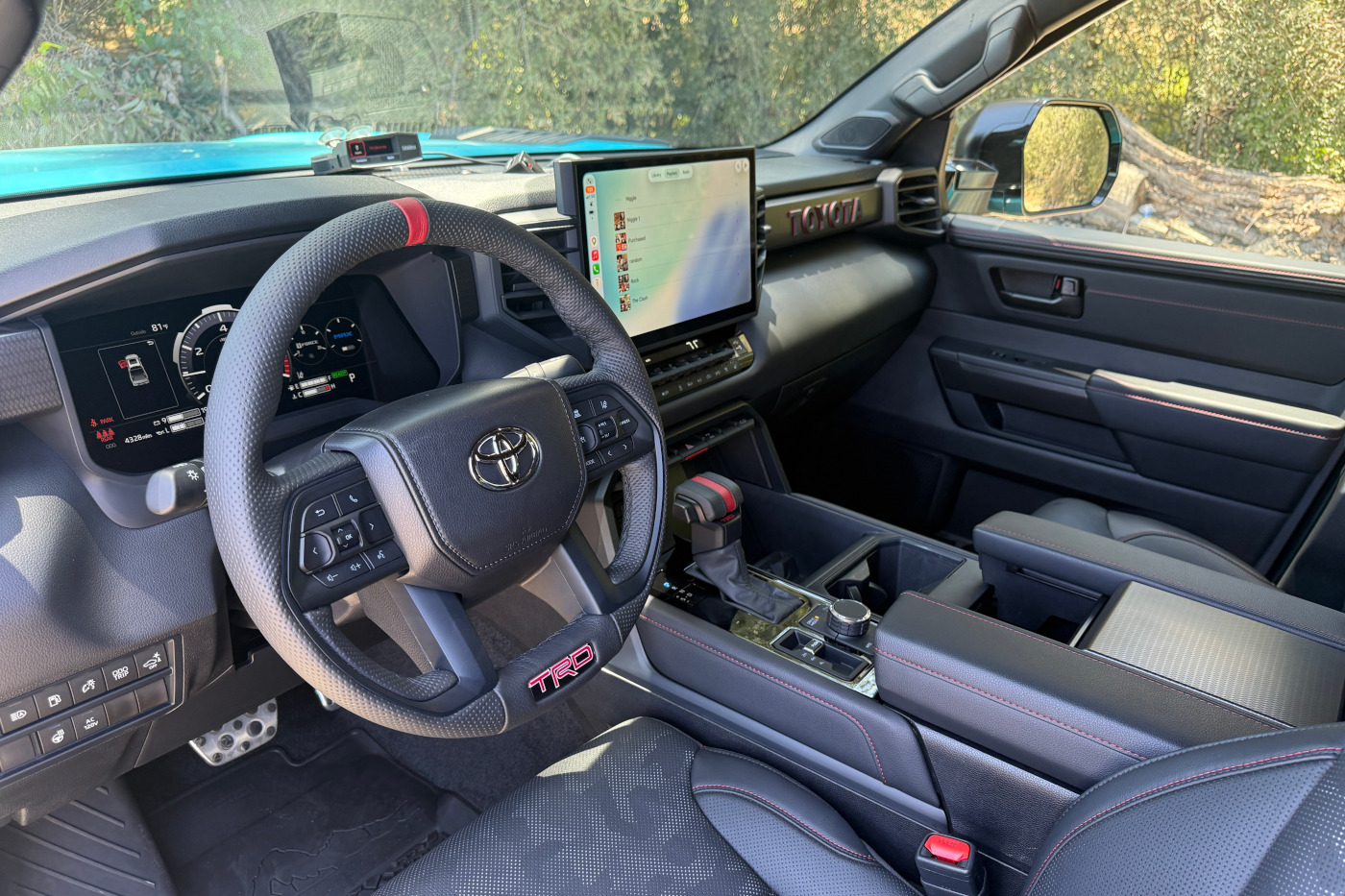
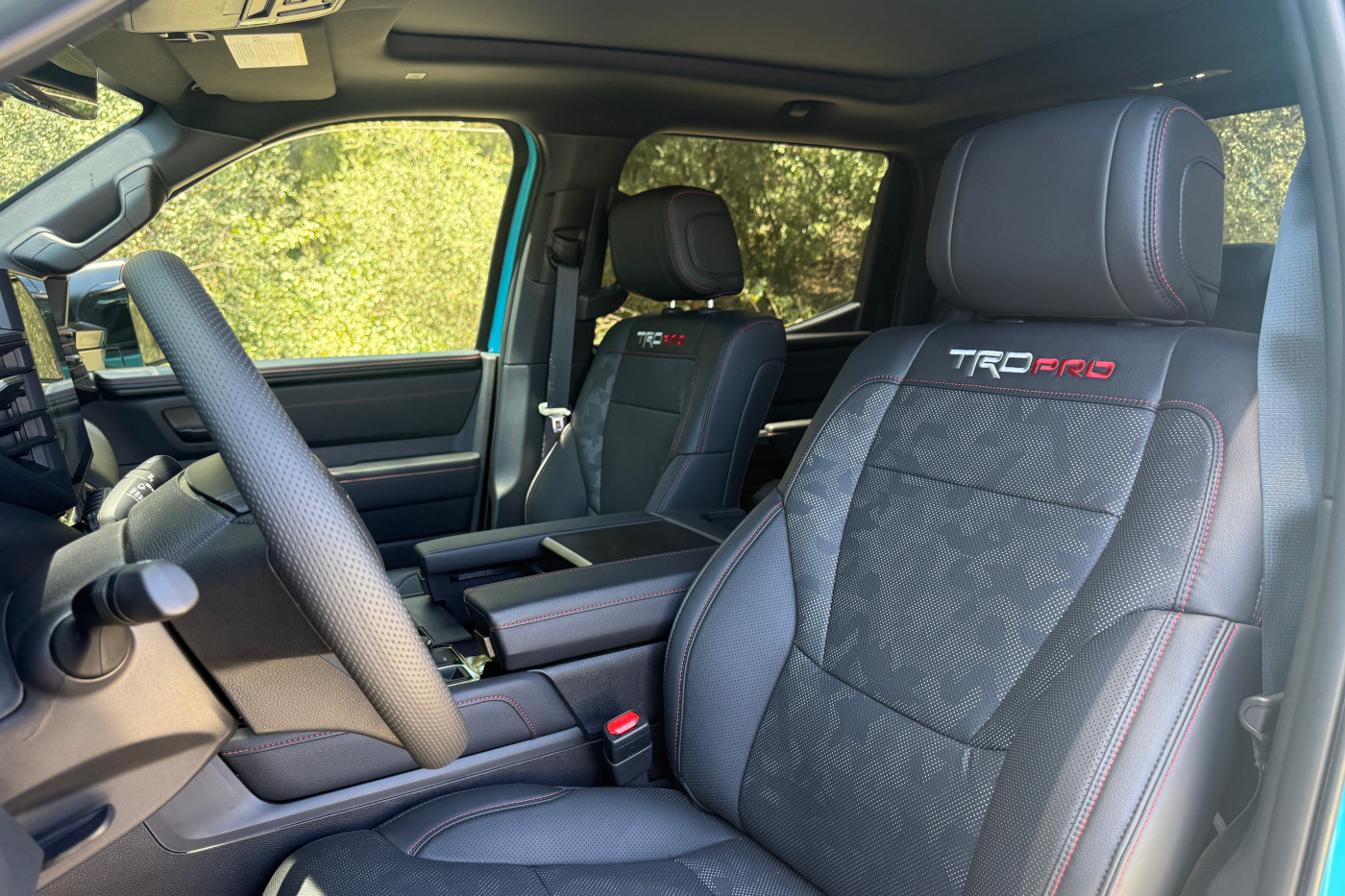
Step inside the TRD Pro and, at first glance, it looks like your eighty grand has been reasonably well spent. There’s a huge central touchscreen that actually works a booming JBL stereo, a crisp digital instrument cluster, heated and ventilated seats with enough electric adjustment to recreate your favorite armchair, and a panoramic sunroof large enough to make you wonder if Toyota accidentally fitted a conservatory. Even the perforated synthetic leather hides a subtle camouflage pattern that only appears from certain angles. It’s the sort of detail nobody asked for, but everyone secretly enjoys discovering.
The SofTex seats, complete with bright red accents, look as though they belong in something that laps the Nürburgring rather than hauls a trailer full of bricks. The urban camouflage trim is delightfully over-the-top, because apparently even your dashboard needs tactical gear these days, while the contrasting red stitching reminds you that this isn’t the sort of Tundra bought by people who think excitement is reorganising the garage. Best of all, the materials actually feel expensive. Even the plastics have a reassuring solidity instead of that hollow, budget-bin clatter you find in so many trucks. Throw in the TRD logo on the steering wheel and aluminium pedals, and you get the unmistakable impression that Toyota wanted this pickup to feel every bit as special as it looks. And, rather annoyingly for the competition, they’ve succeeded.
Wireless Apple CarPlay and Android Auto are included as standard features, and the overall experience is on par with the top competitors in the market. The controls for switching between 2- and 4-wheel drive, along with the drive mode knob and buttons for Multi-Terrain Select and Crawl Control, are conveniently located just behind the sturdy TRD shift knob. The digital instrument cluster offers an extra level of customization, displaying everything from navigation instructions to off-road information at a glance. It’s all easy to read, and we actually prefer this classic analog style over the more flashy, complicated graphics that prioritize looks over usability.
Rear Seats
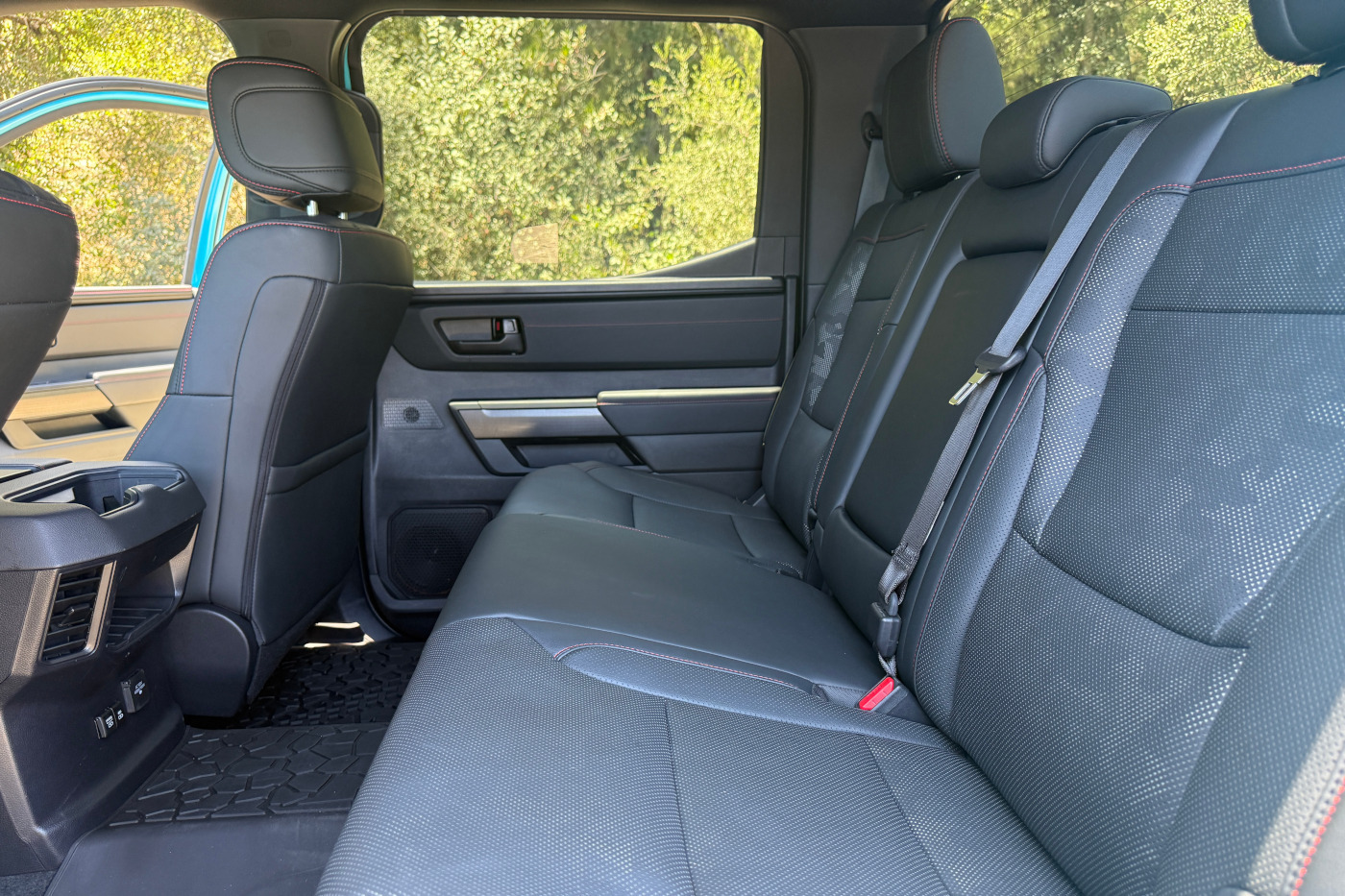
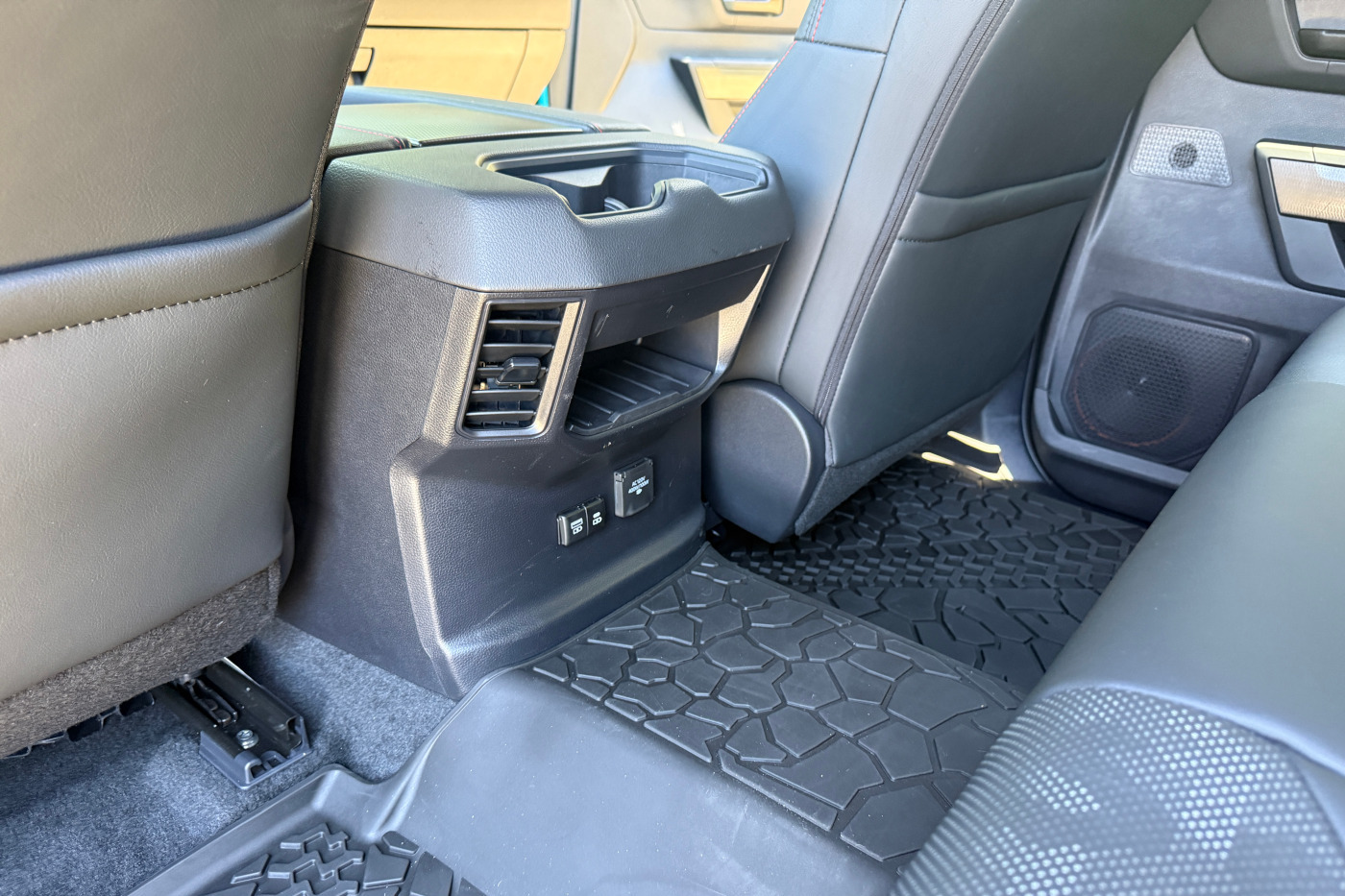
There is one gloriously bonkers addition, though. The IsoDynamic seats, borrowed from the Tacoma TRD Pro, now make their way into the Tundra as an option. They look as though someone bolted mountain-bike suspension to the backs of the front seats. Rear passengers spend the journey wondering why there are bicycle pumps sticking out of the chairs, while the driver wonders why every truck doesn’t come with seats this clever.
Price
At $2,999, the TRD Performance package isn’t cheap. What you’re really buying is a little more urgency, a lot more noise, and the satisfaction of knowing your Tundra now announces its arrival from three counties away. Base price is $72,565, and my tester had Wave maker paint for $695, a bed mat for $224, and Rock Rails for $625, which takes the total price to $79,517.
VIDEO REVIEW
Verdict
The Tundra is one of those infuriatingly competent machines that gets almost everything right. The infotainment system actually works without requiring a degree in computer science, and there are so many cameras that you could probably direct a nature documentary from the driver’s seat. However, the optional TRD Performance exhaust turns every cold start into a neighborhood announcement and every highway journey into an endurance event. Which is a shame, because underneath all that unnecessary shouting is one of the best full-size pickups you can buy.
2026 Toyota Tundra TRD Performance Numbers
BASE PRICE: $72,565
PRICE AS TESTED: $79,517
VEHICLE LAYOUT: Front engine, all-wheel-drive, 7-passenger, 4-door truck
ENGINE: 3.4L Twin-turbo DOHC 24-valve V-6, plus front electric motor
POWER: 466 hp @ 5,200 rpm (gas), 48 hp (elec); 466 hp (combined)
TORQUE: 583 lb-ft @ 2,400 rpm (gas), 184 lb-ft (elec); 583 lb-ft (combined)
TRANSMISSION: 10-speed auto
0-60 MPH: 5.6 seconds
CURB WEIGHT: 6,015 lb
TOWING CAPACITY: 11,175
PAYLOAD: 1,600 lbs
FUEL ECONOMY Combined/city/highway: 19/18/20 mpg
OUR OBSERVED: 15.5 mpg
PROS: A beast off-road, Huge power.
CONS: Noisy cat-back exhaust
2026 Toyota Tundra TRD PRO with TRD Performance Pack Review
