
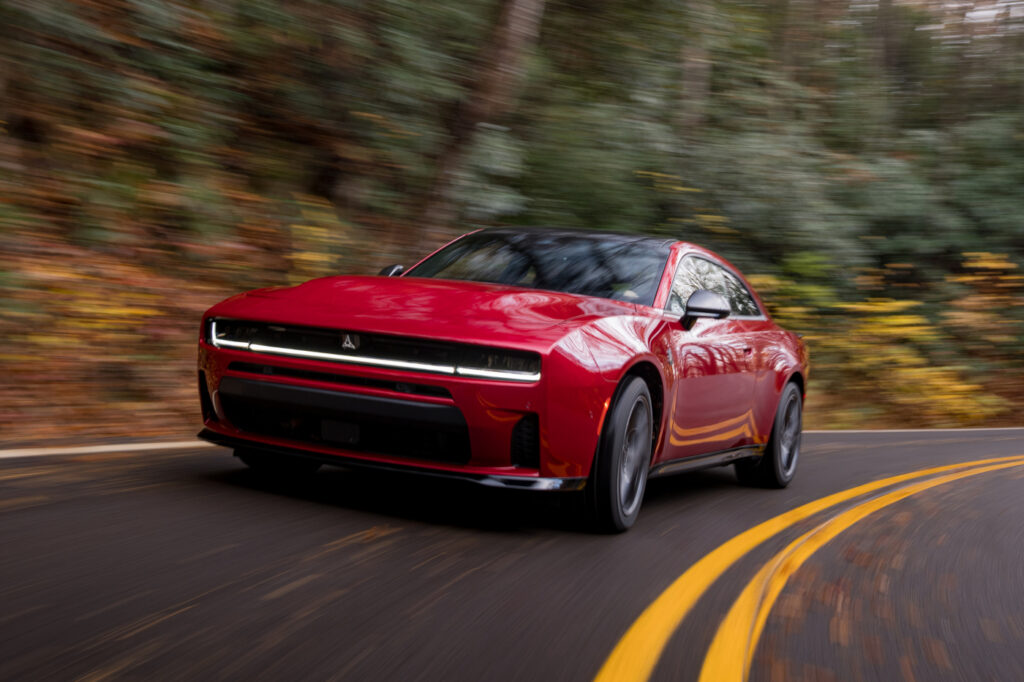
The Dodge Charger used to be America’s king of tire smoke and bad decisions. Then Dodge ripped out the HEMI, plugged it into the wall, and wondered why muscle car fans reached for their pitchforks. But here’s the twist. The gas-powered 2026 Dodge Charger R/T isn’t half bad. It’s quick, surprisingly good to drive, and still looks like it wants to pick a fight. So, has Dodge saved the Charger… or has it committed the automotive equivalent of serving tofu at a Texas barbecue? Let’s find out.
The Dodge Charger has spent the last couple of years doing something normally reserved for drunken unicyclists—it rode confidently off a cliff. For decades, the Charger stood proudly as America’s answer to subtlety. It was a great, thunderous lump of V-8-powered bad decisions wrapped in enough sheet metal to terrify Prius owners. Then Dodge decided that what this automotive caveman really needed was… batteries. The result was about as well received as replacing Jack Daniel’s with kale juice. Sales didn’t merely decline—they were mugged, beaten unconscious, and left in a ditch. From nearly 76,000 cars in 2023 to fewer than 10,000 a year later. That’s not a downturn. That’s an extinction event.
The Sixpack
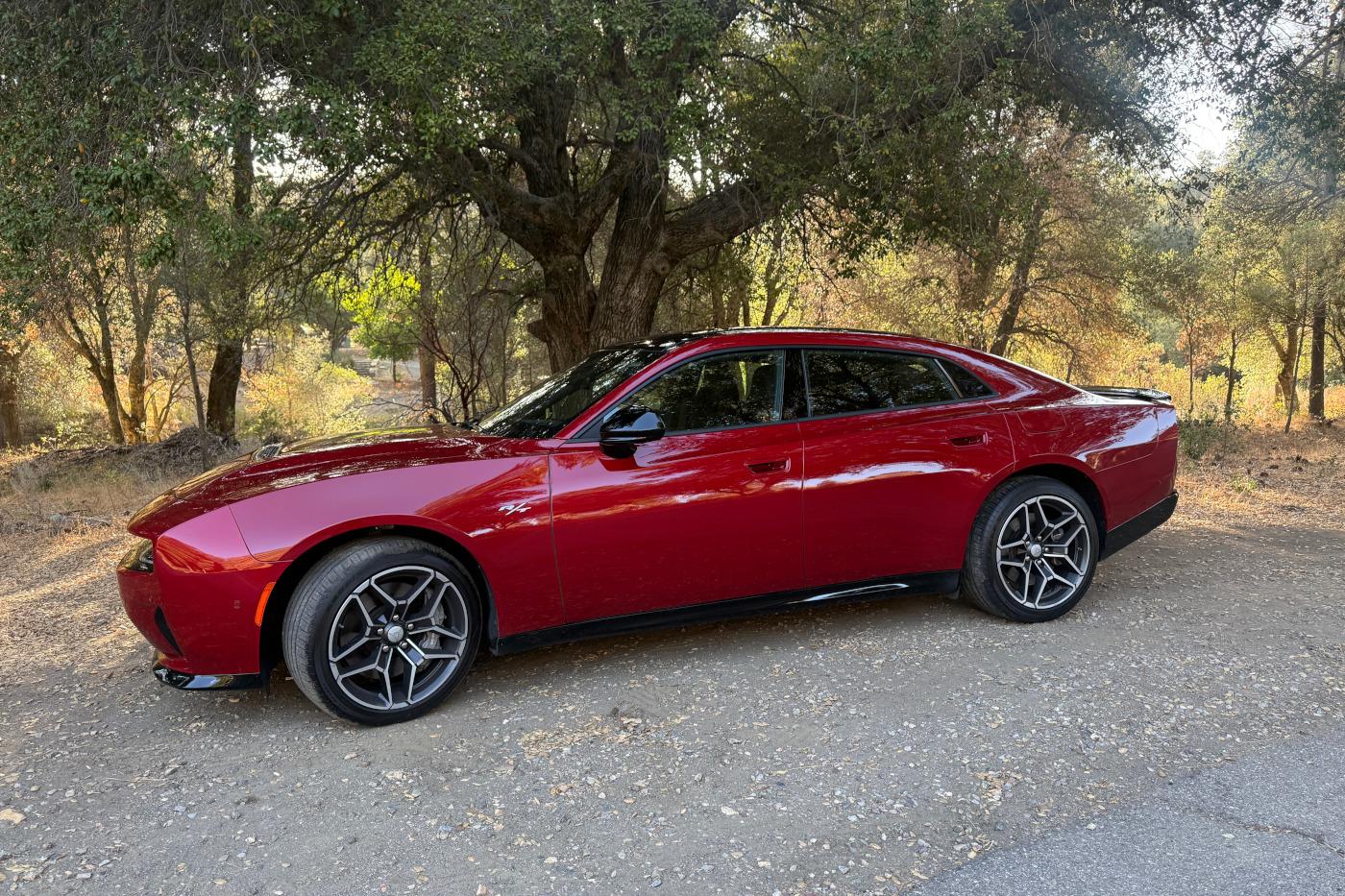
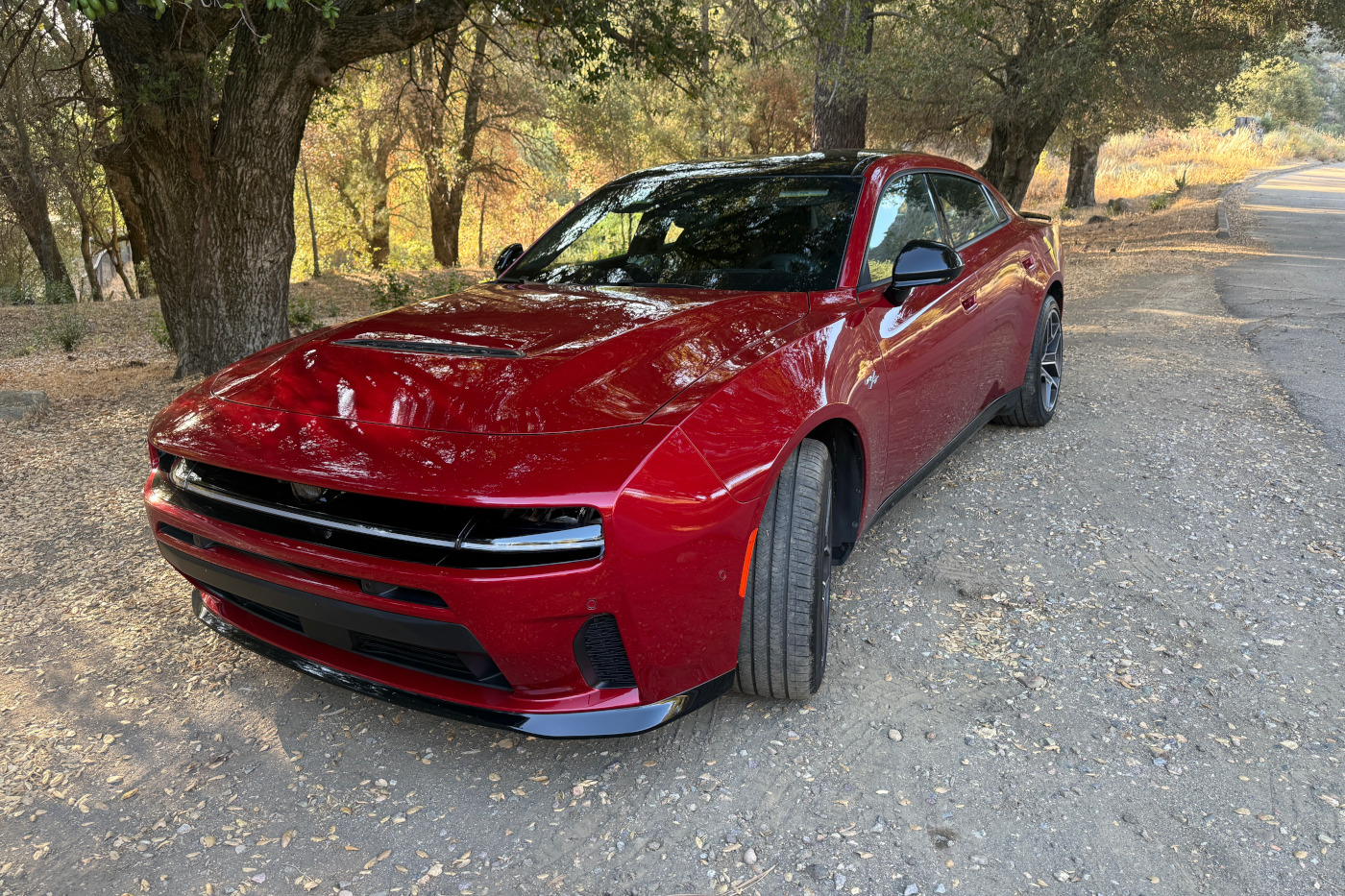
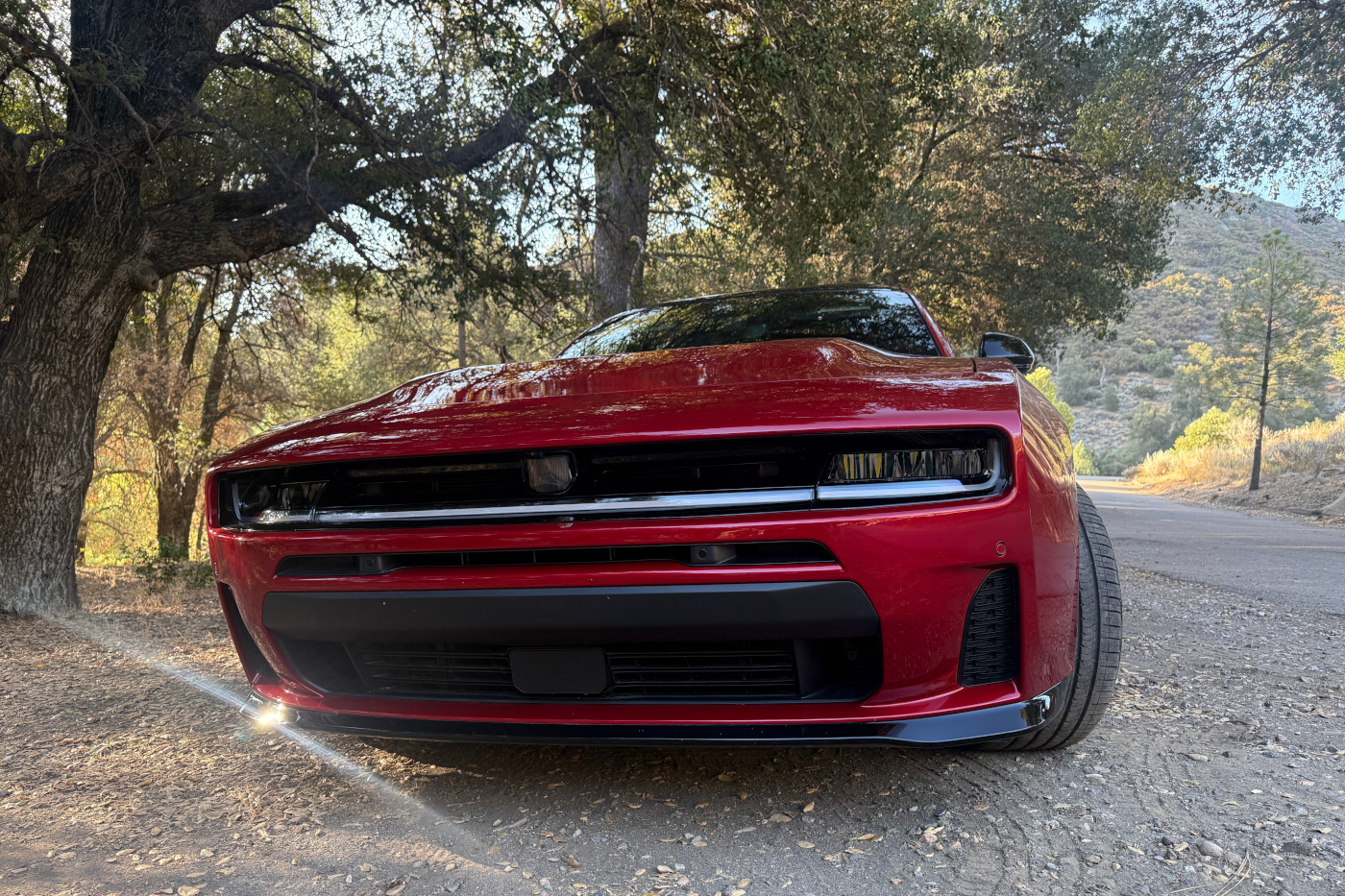
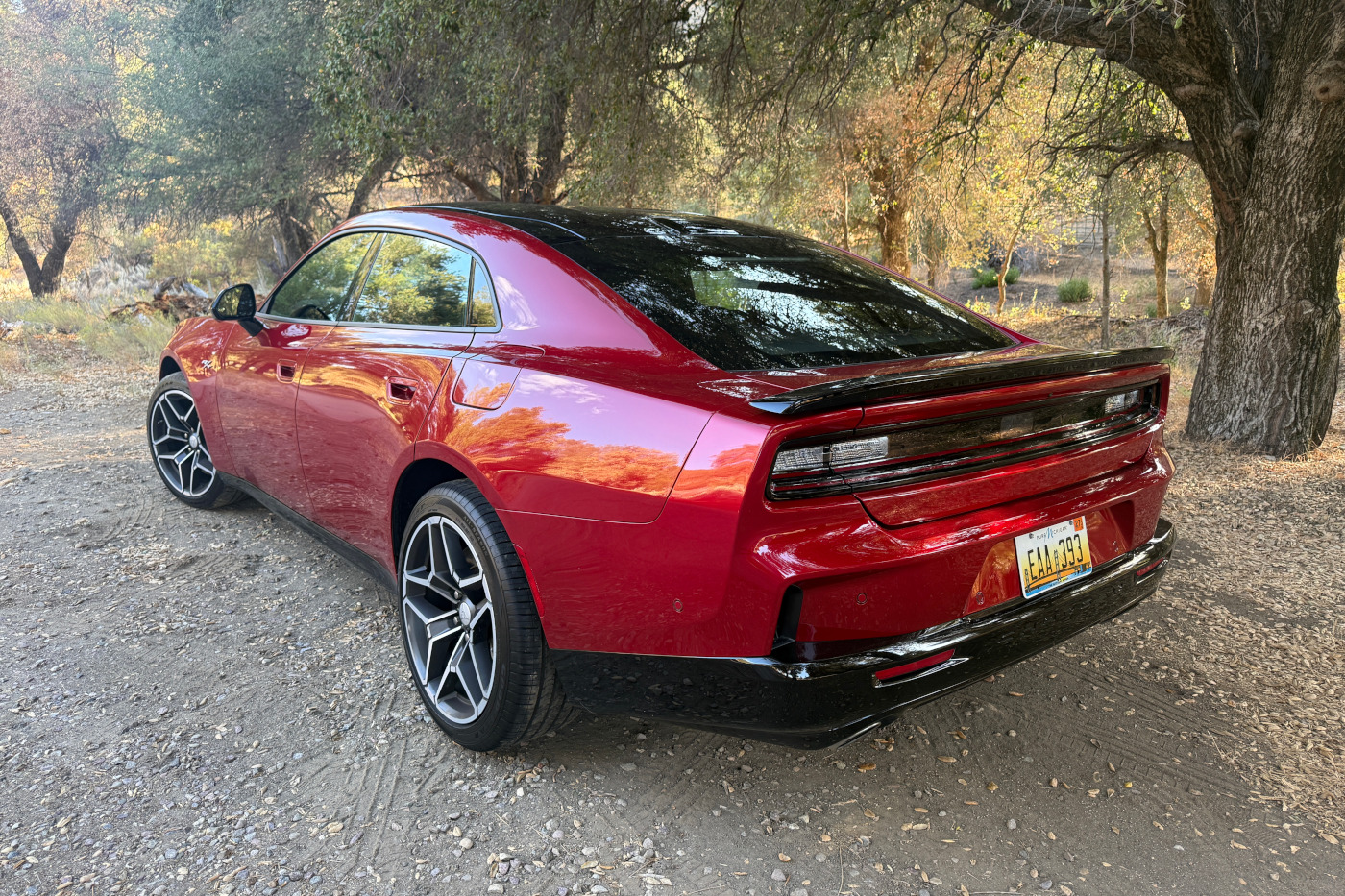
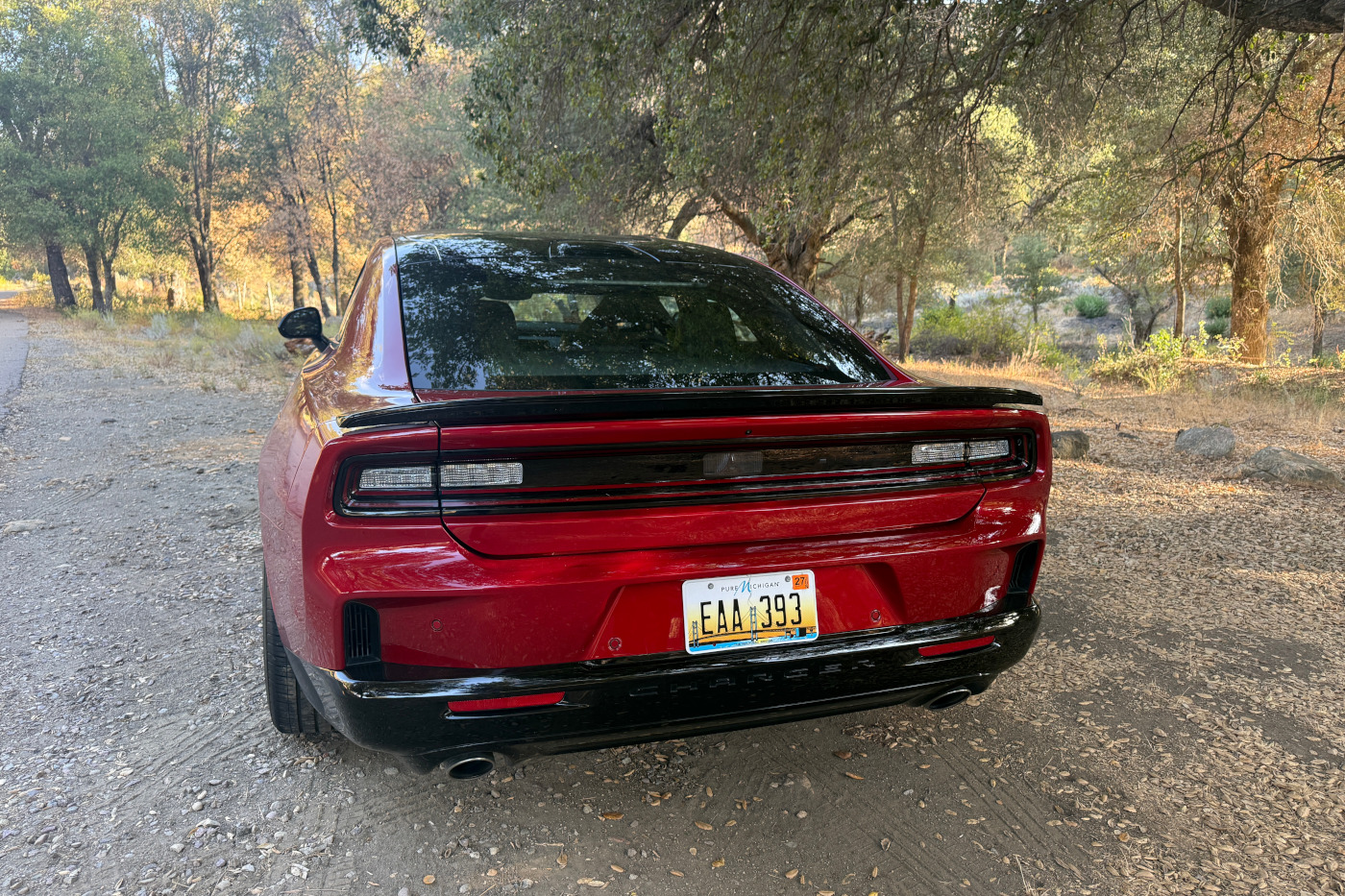
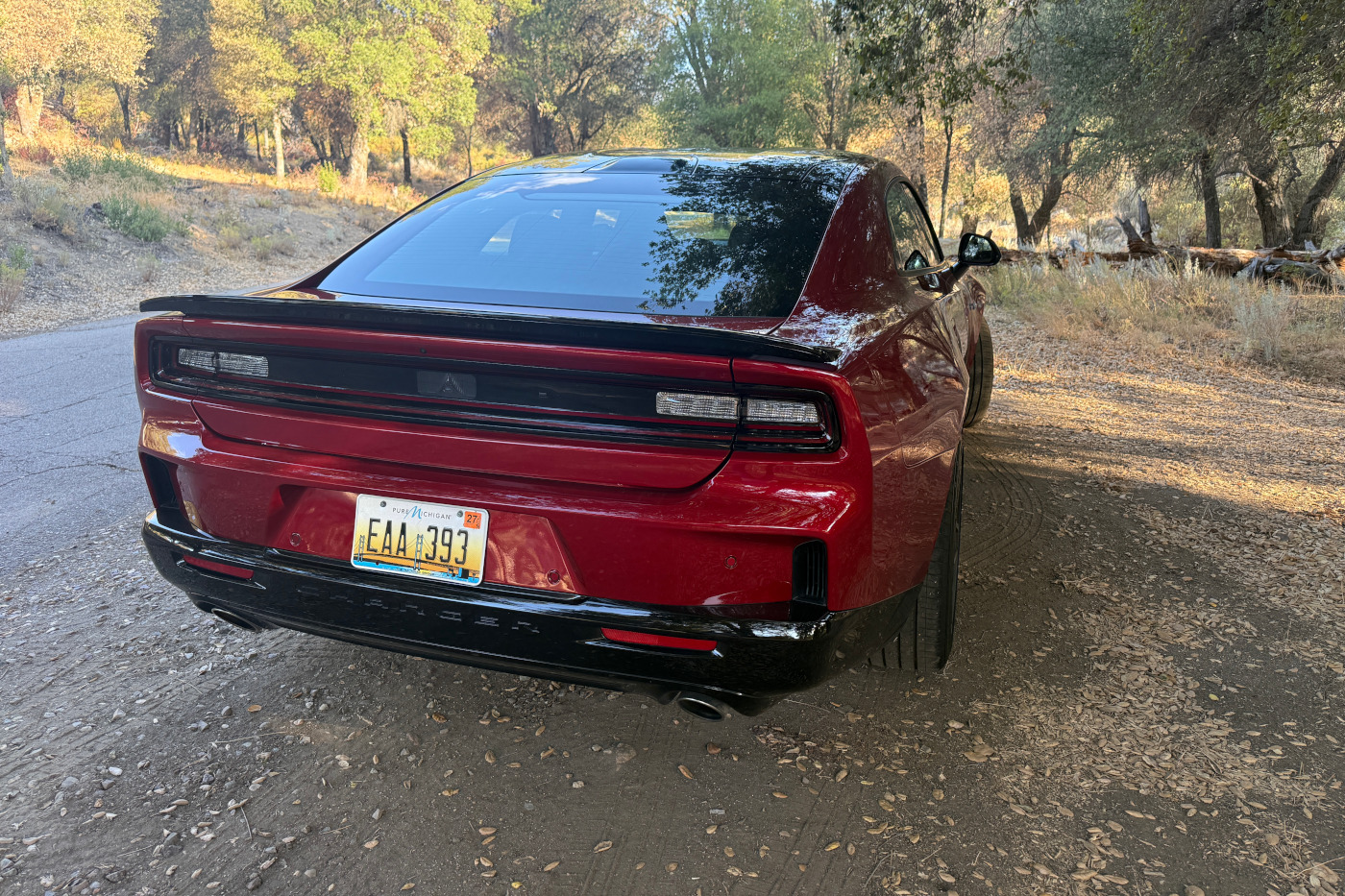
Which brings us to this, the 2026 Dodge Charger R/T six-pack, which I think looks really cool. But it has put on some weight. The Charger is no longer merely big; it’s continental drift with headlights. The wheelbase stretches over 121 inches, while the body has grown by more than eight inches in length and almost five inches in width. Park it next to some midsize SUVs, and you’ll wonder which one’s supposed to be the SUV. It now tips the scales at a frankly absurd 4,921 pounds; that’s nearly two-and-a-half tons. It’s over 500 pounds heavier than the old V-8 Charger R/T.
Under the hood
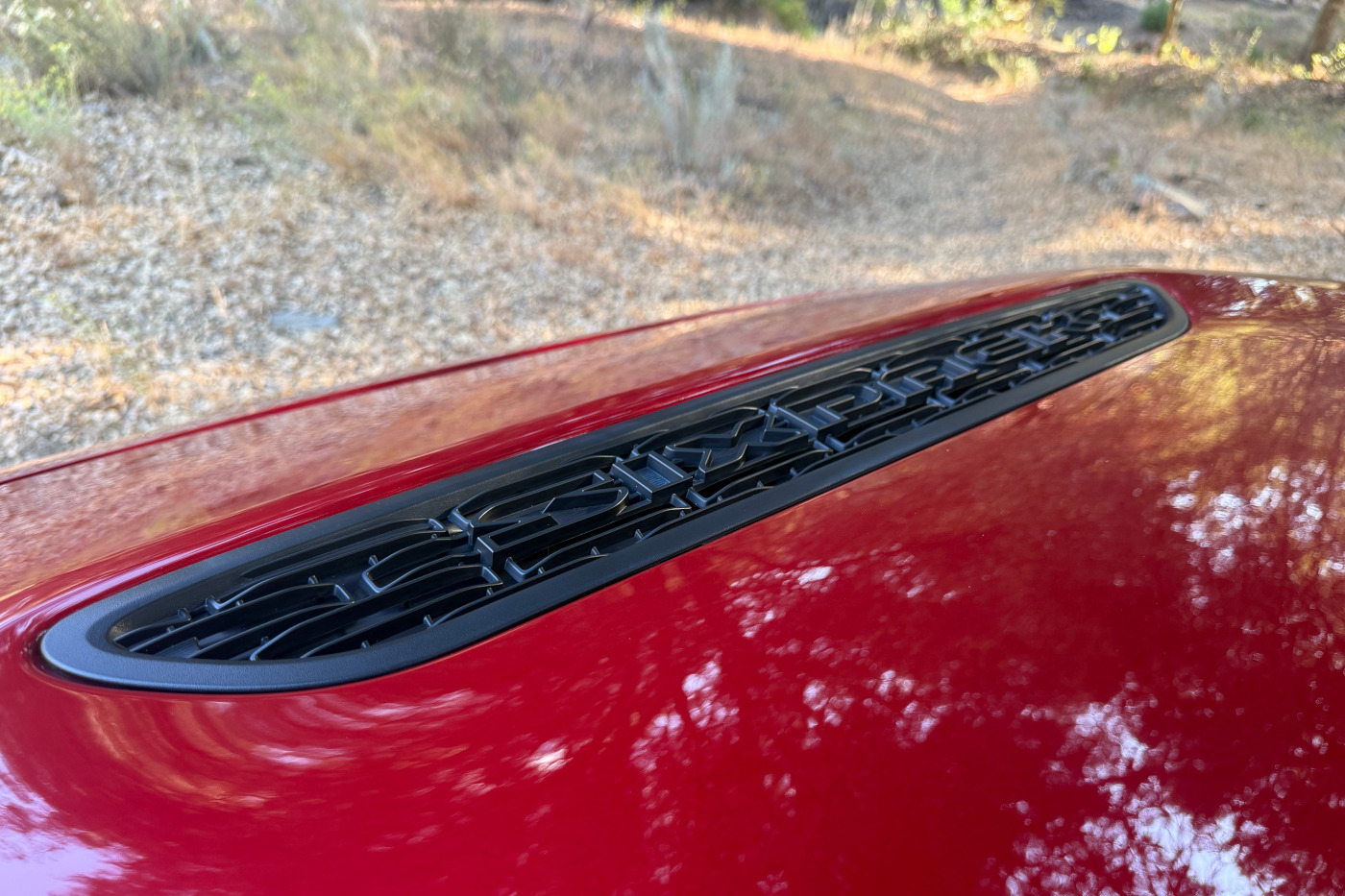
Under that absurdly long hood sits Stellantis’ 3.0-liter twin-turbo Hurricane straight-six. In the R/T, you get the Standard Output version, which produces 420 horsepower and 468 lb-ft of torque, which is 130 horsepower shy of the Scat Pack. Why? Because this one gets smaller turbochargers, less boost, and gives up the ghost much earlier in the rev range.
It even sounds different. The Scat Pack gets a clever valved sports exhaust that bellows like an angry grizzly with a megaphone. The R/T? Not so much. Its simpler exhaust growls with enough enthusiasm to let the neighbors know you’ve arrived, but it never quite delivers the glorious, chest-thumping soundtrack that made the old Hemi feel like it was trying to start a small earthquake.
Power goes through an eight-speed automatic and, unlike Chargers of old, every R/T comes with all-wheel drive as standard. But flick it into Sport mode, and you can send all the power to the rear wheels, allowing the Charger to indulge in the sort of smoky, sideways antics that would make tire manufacturers positively ecstatic. Dodge claims it’ll sprint from 0 to 60 mph in just 4.7 seconds. That’s properly quick—quick enough to embarrass plenty of so-called sports cars, and more than enough to rearrange your passenger’s facial expression.
Wheels and tires
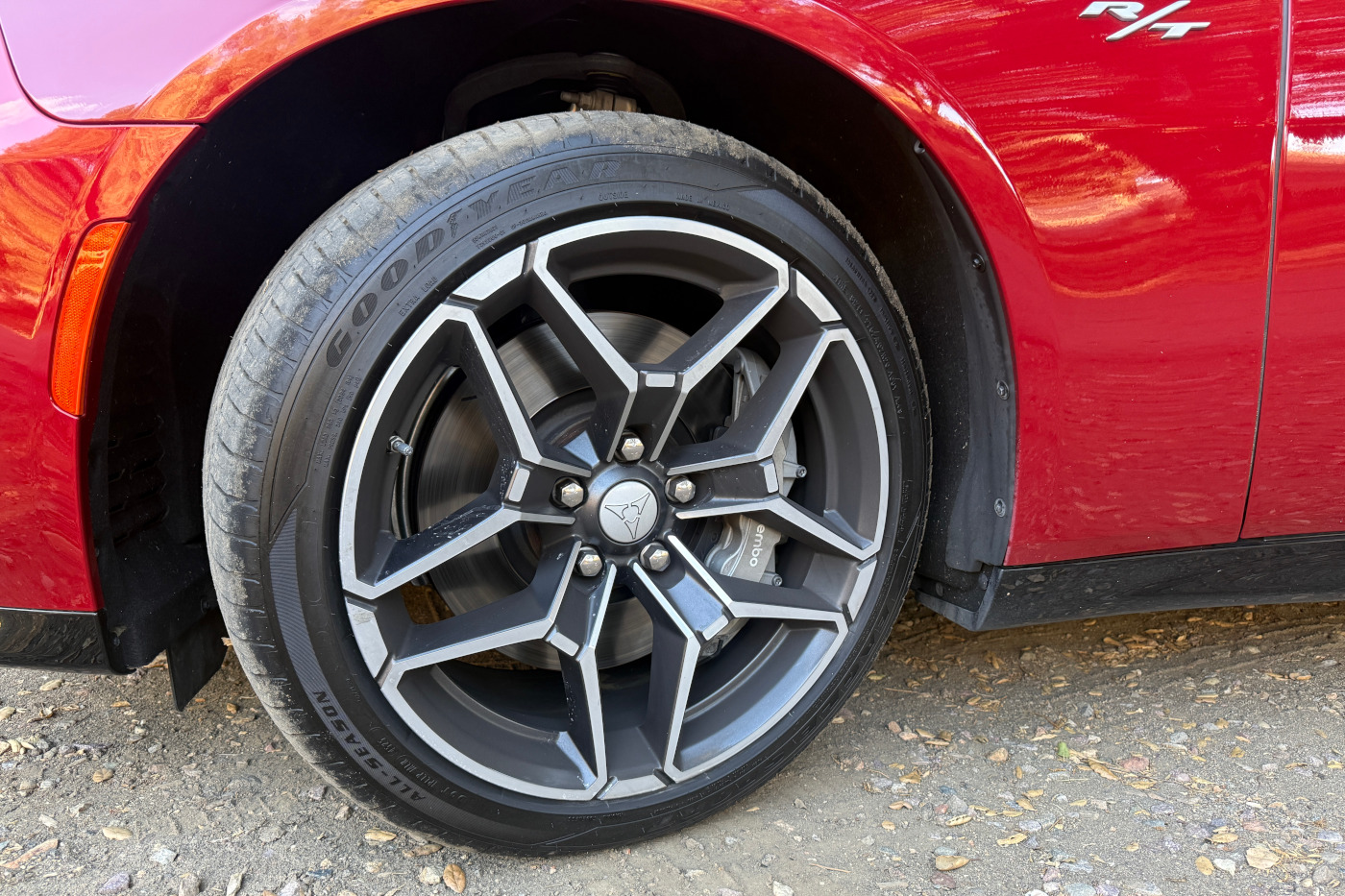
This one gets the optional 275/40 all-season tires wrapped around these rather enormous 20-inch wheels, rather than the standard 245/55s. And because this one has the Performance Package, you also get Brembo brakes—because apparently Dodge decided that if you’re going to make a big, heavy muscle car, you might as well give it the stopping power of something preparing for war.
Driving
Thanks to its smaller turbos, it actually feels more eager when you first prod the throttle. The bigger engine pauses for a brief committee meeting before unleashing all hell. This one simply gets on with it. It sounds pretty good too. No, it’s not the chest-rattling, window-shattering soundtrack of a Hemi V-8, but it’s got a muscular growl that’s entirely fitting for a modern Charger. You won’t confuse it with a BMW straight-six, but neither will you spend your journey wishing you’d brought earplugs.
The eight-speed automatic is another pleasant surprise. Left to its own devices, it quietly goes about its business with the competence of an experienced butler. The paddle shifters, however, are laughable. Instead of proper paddles you can grab with enthusiasm, Dodge has fitted tiny little buttons that feel like they were borrowed from a budget video-game controller. And despite giving the car a wonderful old-school pistol-grip shifter, they forgot to let you manually shift it from the lever itself. That’s rather like fitting a castle with a drawbridge that doesn’t actually lower.
There are several drive modes, and unlike many modern cars where changing modes is about as noticeable as rearranging the cushions in your living room, these actually make a difference. Auto is relaxed, Wet mode turns the throttle into warm porridge, while Sport sharpens everything up and, more importantly, lets you send all 420 horsepower to the rear wheels. Which is exactly how a Charger should be driven.
The steering won’t have Porsche engineers losing sleep. It gains weight in Sport mode, but not feel. You never get that magical sense of the front tires talking to your fingertips. But honestly, I don’t care because this thing is unbelievably comfortable. You can smash through potholes, bounce over frost-heaved roads and generally abuse the suspension in ways that would have a BMW filing a complaint with Human Resources, yet the Charger simply shrugs and carries on. It’s a proper grand-touring muscle car, happy to devour hundreds of miles without rearranging your spine.
Push harder, though, and you quickly remember you’re asking nearly 4,800 pounds of Detroit iron to change direction. It’s big. It’s heavy. It’s not a sports car, and trying to hustle it around a tight circuit feels a bit like entering an elephant in the Olympic gymnastics competition. But that’s missing the point.
Turn off the electronic nannies, leave the all-wheel-drive system to work its magic, and the Charger suddenly becomes exactly what every Dodge should be—a giant, smoke-producing hooligan. It’ll hold glorious, controllable donuts almost indefinitely, balancing on the throttle with surprising ease. And really, if you’re not occasionally drawing perfect circles in an empty parking lot… why did you buy a Dodge Charger in the first place?
Interior
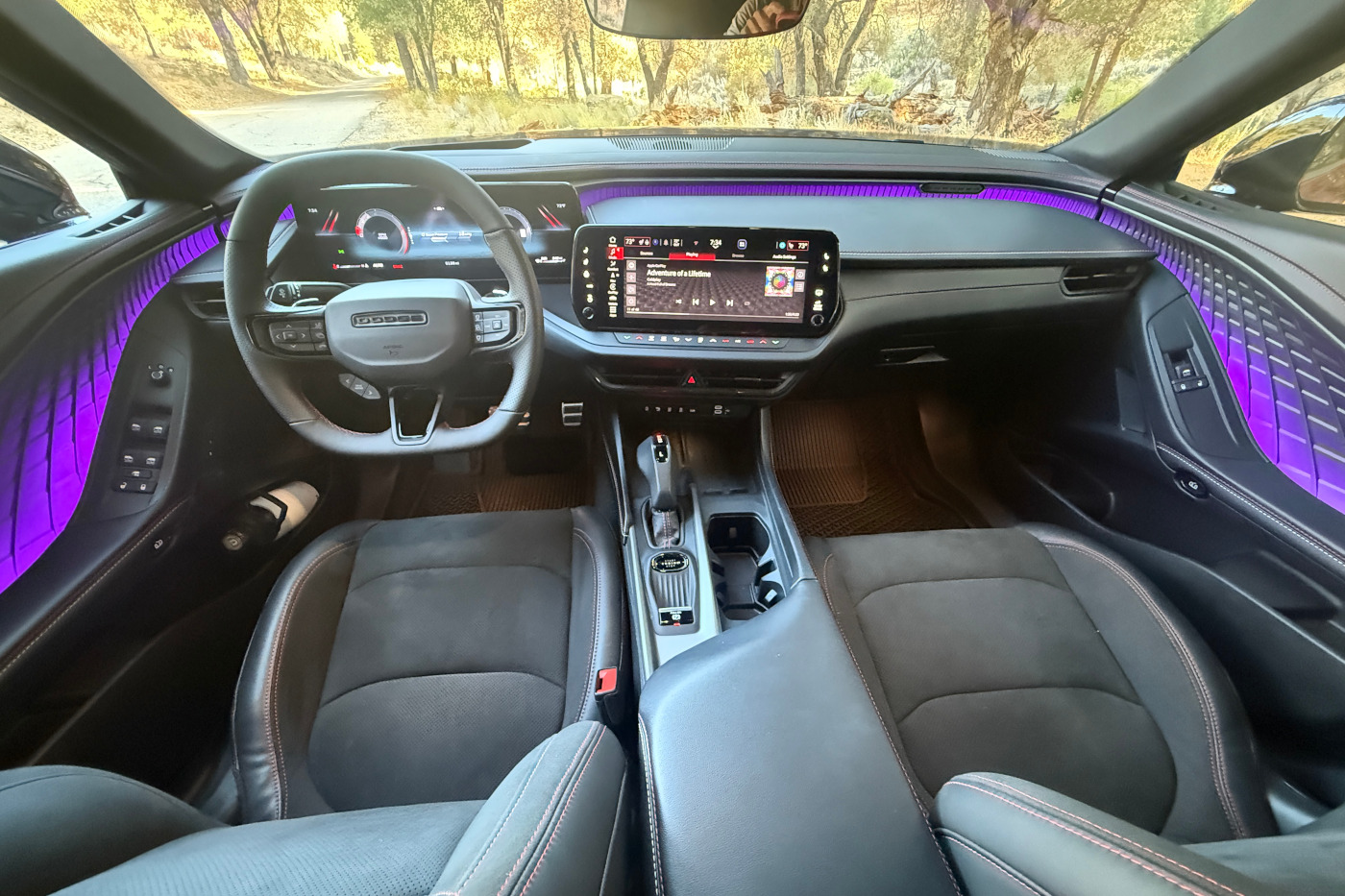
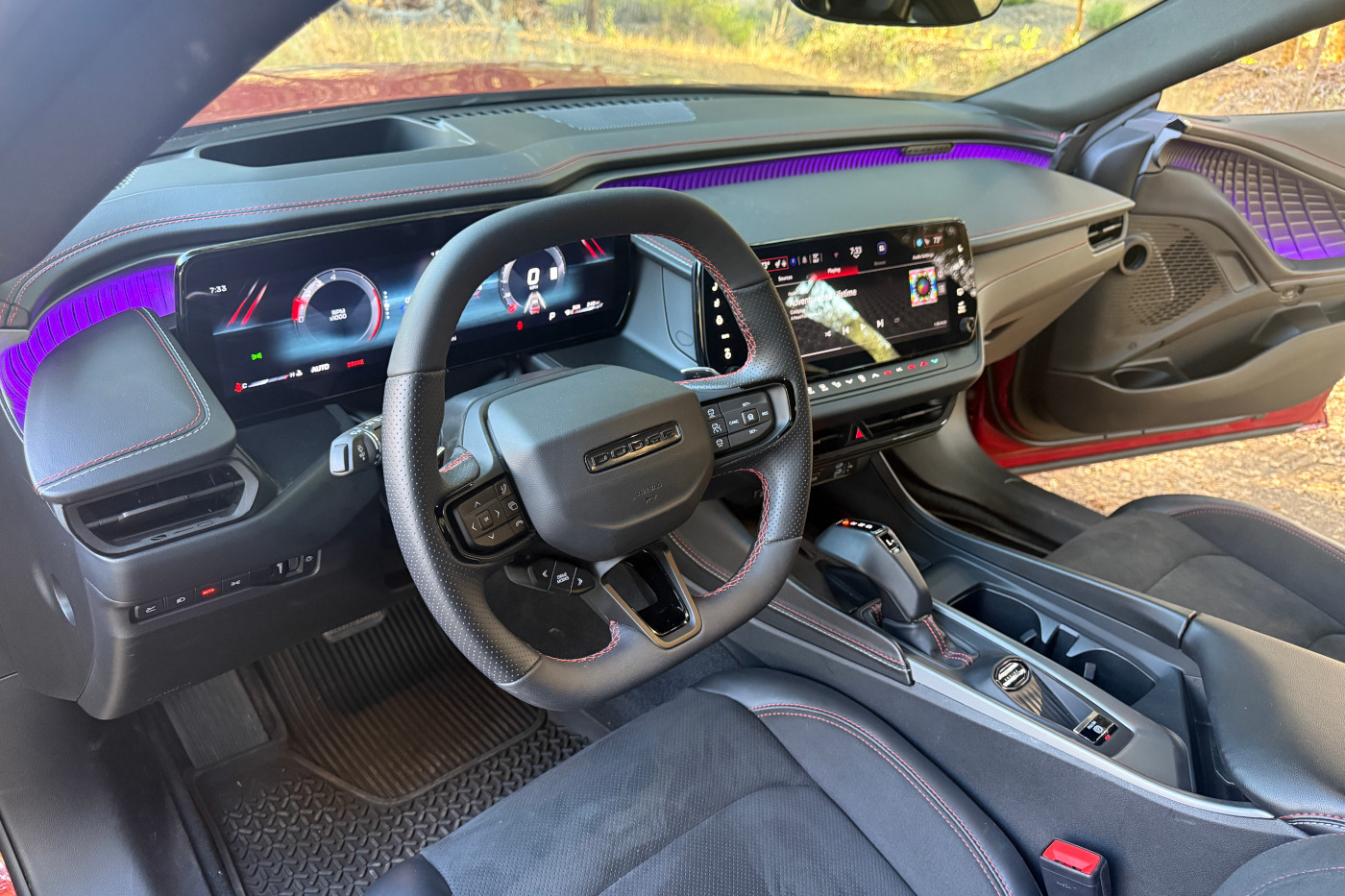
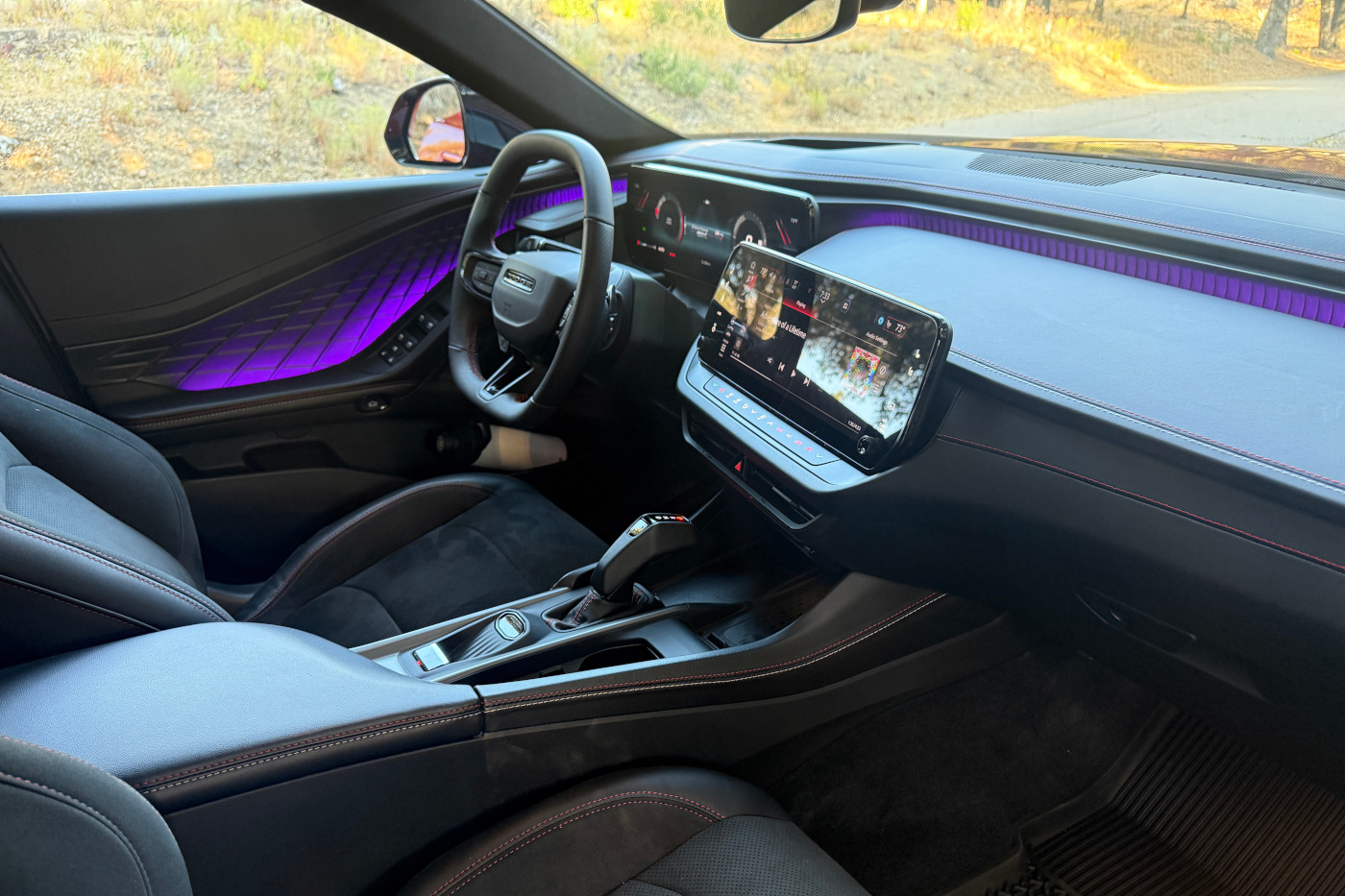
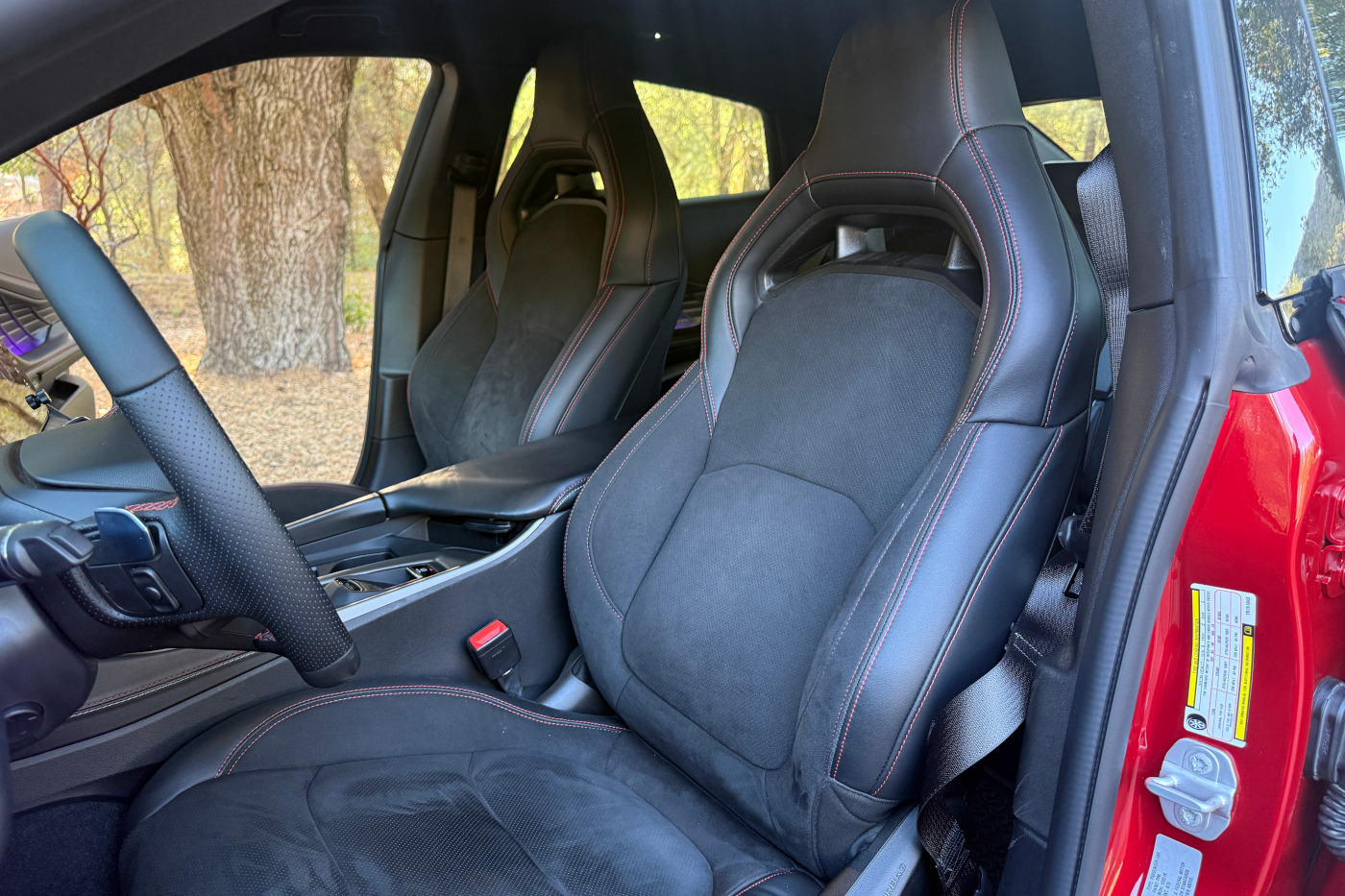
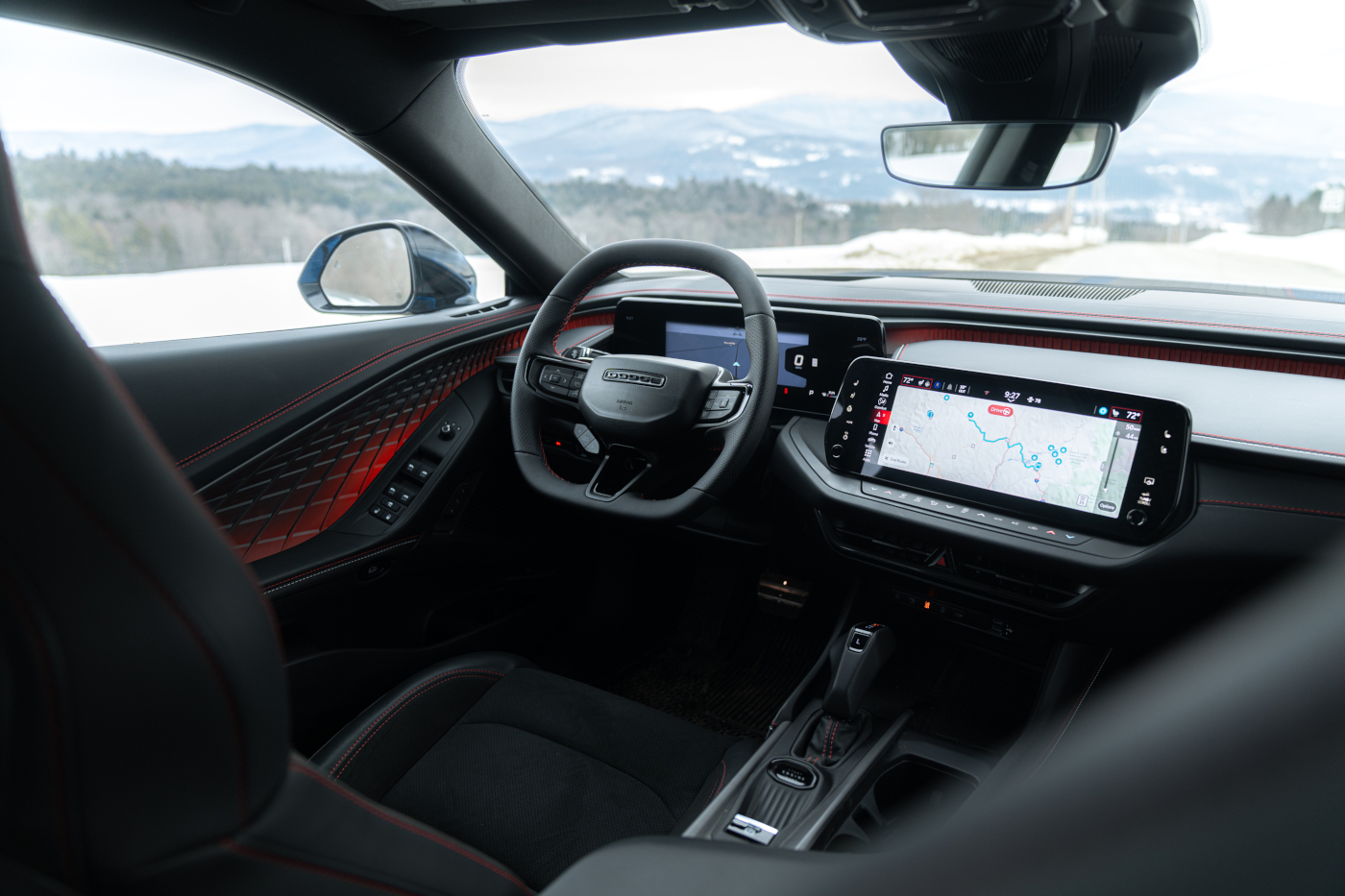
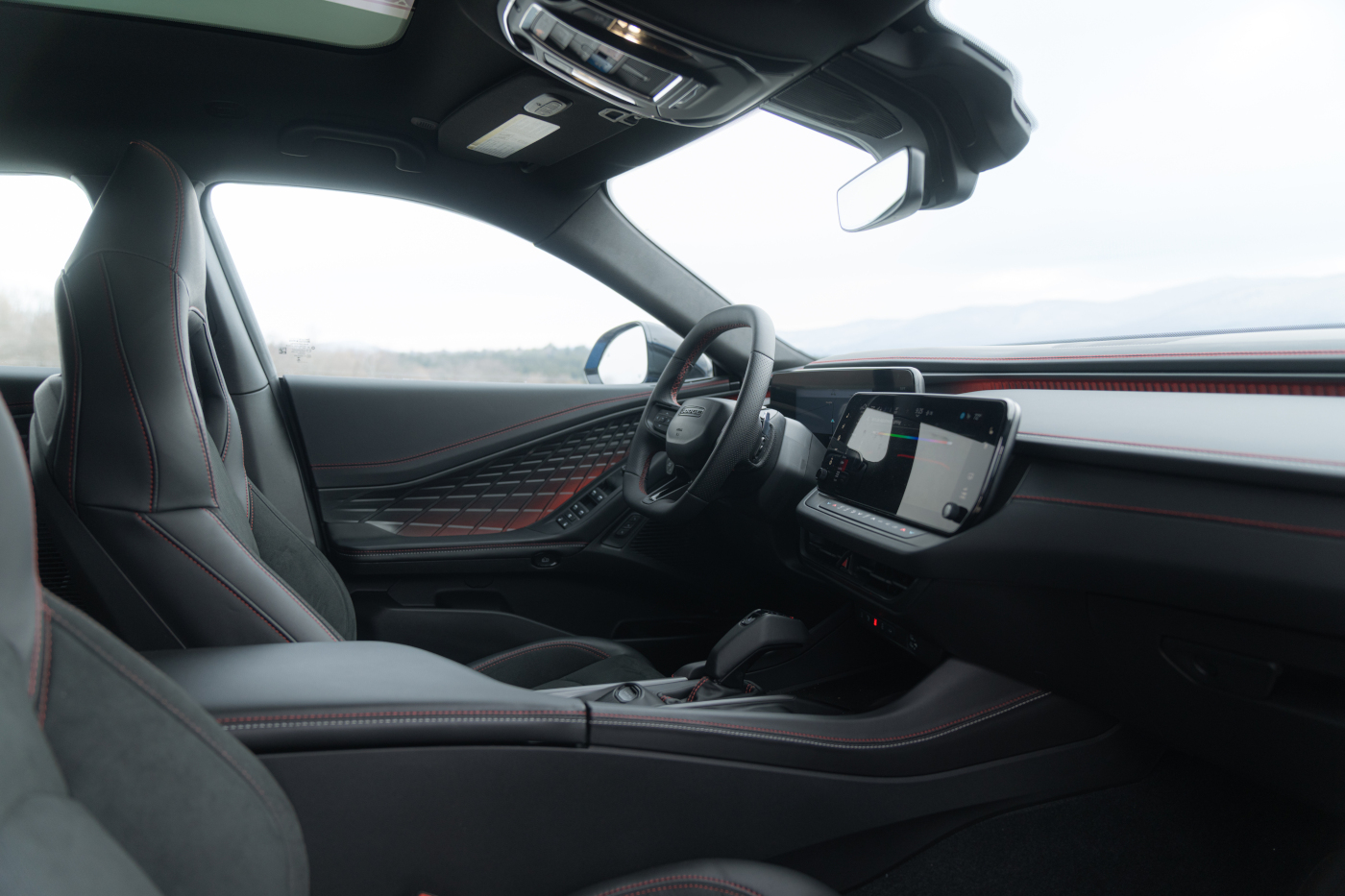
Step inside the Charger, and it’s immediately clear that Dodge’s designers have been working harder than the accountants. The dashboard is genuinely impressive—layered, interesting, and just complicated enough to look expensive without resembling the flight deck of a nuclear submarine. It flows neatly into the doors, especially with the carbon-fiber trim, giving the cabin a sense of occasion that previous Chargers could only dream about. Not everything is a home run, mind you. The steering wheel is excellent. Its flattened top and bottom look a bit odd at first, but after a few miles it feels completely natural, and wonderfully chunky in your hands.
The pistol-grip shifter is another lovely nod to Dodge’s muscle-car heritage, although it has a slightly flimsy feel, as if it were built to survive enthusiastic gear changes rather than an actual bar fight. Meanwhile, some of the soft-touch materials on the doors feel a bit loose, like they’ve already started planning their retirement.
Where Dodge absolutely nails, it is the technology. Unlike some manufacturers who seem determined to hide basic functions inside seventeen different menus designed by escaped software engineers, the Charger’s infotainment is refreshingly sensible. Everything is exactly where you’d expect it to be, the menus are intuitive, the screens are large without looking like someone glued an iPad to the dashboard, and there’s enough performance data to keep even the most obsessive horsepower addict entertained for hours. It’s clever, easy to use, and best of all, it remembers that a car is supposed to be driven—not programmed.
Cargo Space
The 2026 Dodge Charger 4-door provides 22.8 cubic feet of cargo space behind the rear seats and a maximum of 37.4 to 38.5 cubic feet with the rear seats folded down, thanks to its wide-opening hidden hatchback design.
Rear Seats
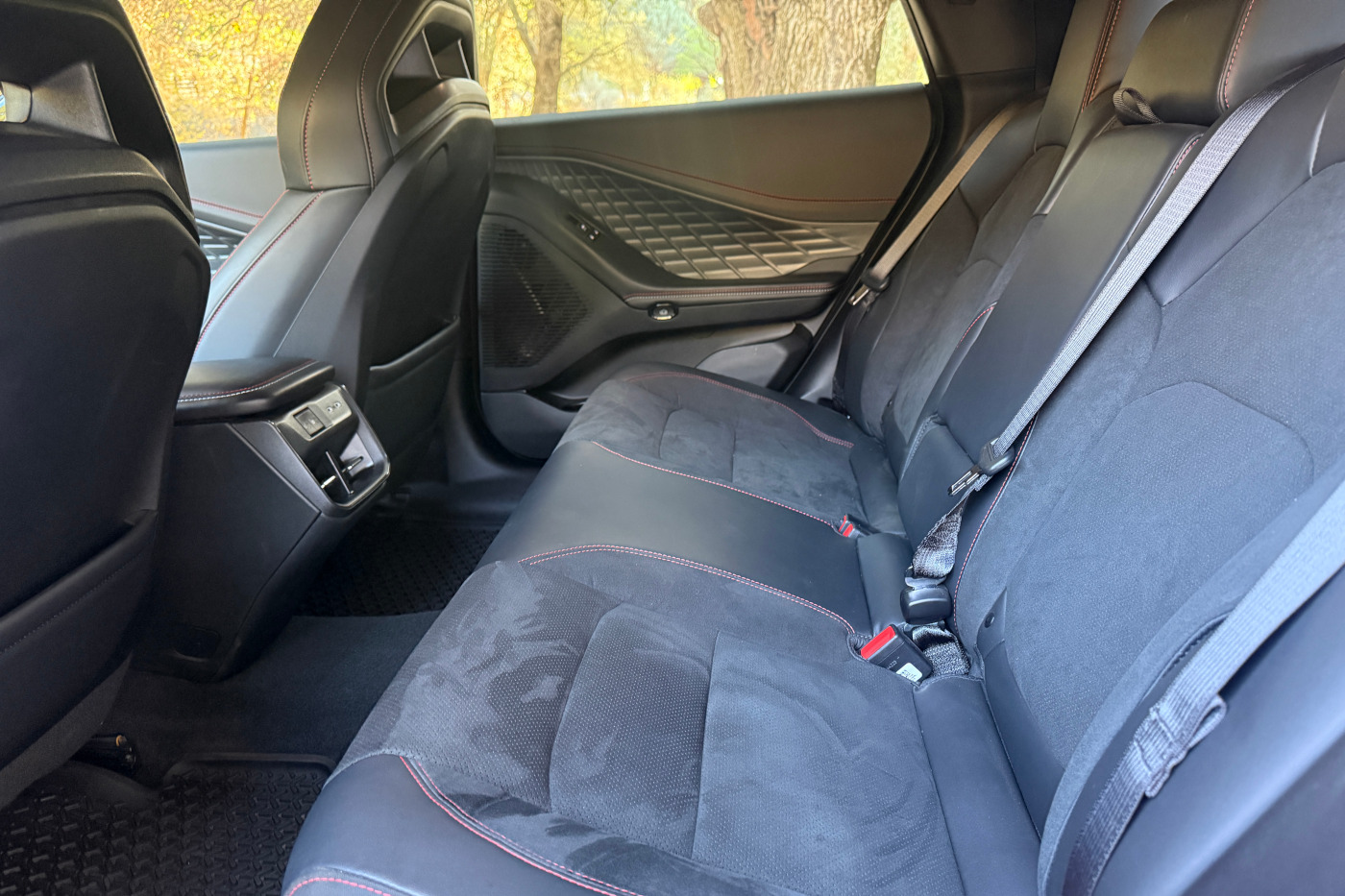
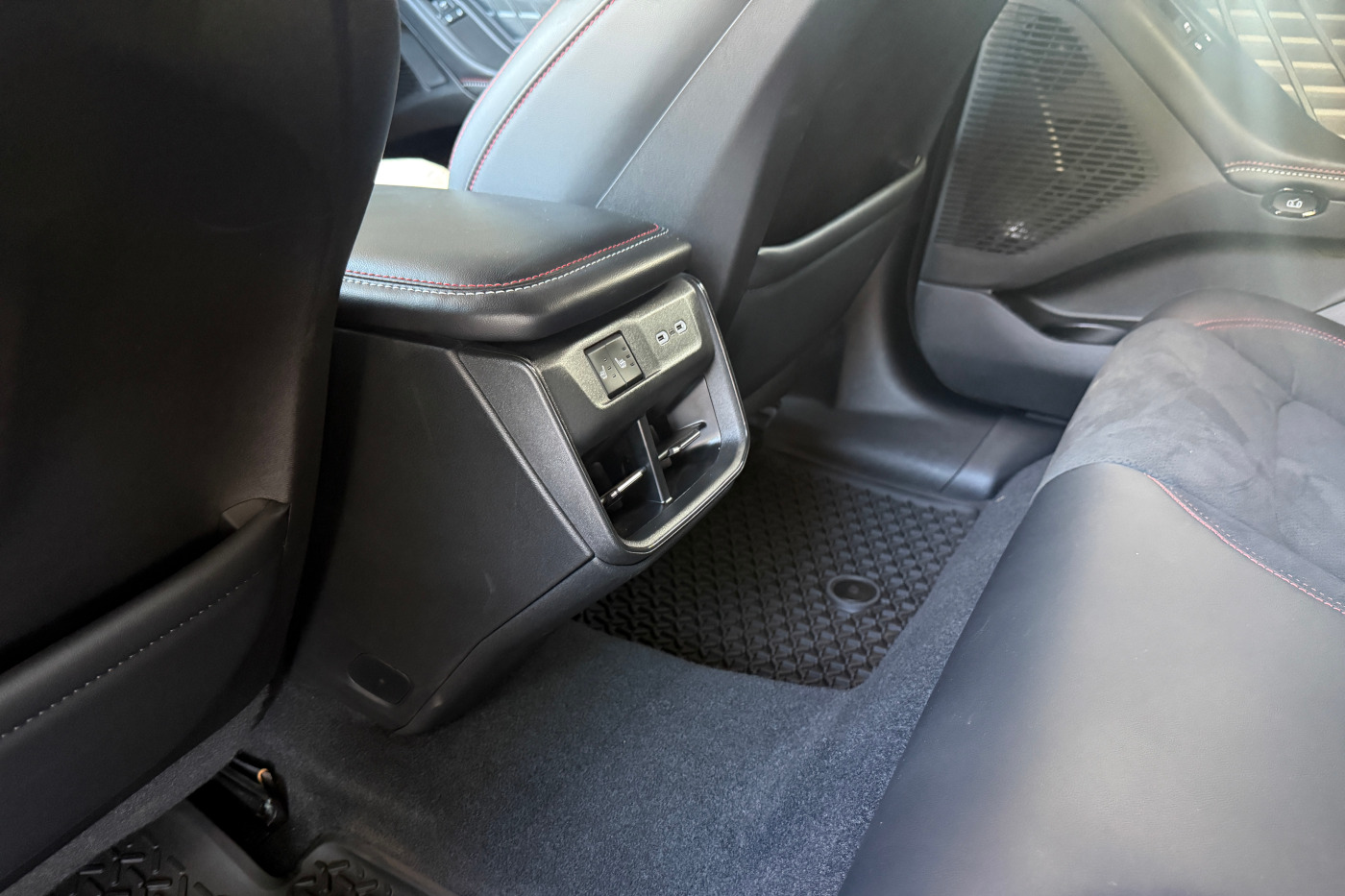
While Dodge says it added four inches of rear legroom versus the outgoing car, it also had to raise the floor to accommodate the Daytona model’s battery, which this non-EV variant doesn’t even have. As a result, I had to cram myself into the back seat like I was about to make a cannonball splash into the pool, with my knees just a little too high and my head too low.
Price
The R/T is now the lowest-priced entry point to the new-gen Charger lineup. Pricing starts at $51,995. This one has the Performance pack for $2,995, which includes line lock, launch control, performance suspension, and those Brembos. It also has the Preferred package, which adds ventilated and heated front seats, performance pages, and Uconnect 5 with navigation. Total price including destination is $62,675, which in my mind is quite a lot.
VIDEO REVIEW
Verdict
The new Dodge Charger R/T isn’t perfect. It’s heavier than it should be; you can feel that weight in the corners, and however hard the Hurricane six tries, it can’t replace the glorious soundtrack of the old Hemi. Would it be better with a Hemi? Of course it would. In fact, it would transform this from a very good muscle car into something truly unforgettable. Until then, the Charger R/T remains a wonderfully flawed, unapologetically American machine. It’s loud, brash, and gloriously unnecessary. And thank goodness for that.
2026 Dodge Charger R/T Plus Numbers
BASE PRICE: $51,995
PRICE AS TESTED: $62,675
VEHICLE TYPE: Front-engine, rear-wheel-drive, 4 door, 5 passenger sedan
TOTAL POWER: 420 hp @ 6000 rpm
TOTAL TORQUE: 468 lb-ft @ 4200 rpm
TRANSMISSION: 8-Speed auto
0-60 MPH: 4.7 sec
TIRES: Goodyear Eagle Sport All-Season 275/40ZR
CURB WEIGHT: 4,950 lb
EPA: Combined/City/Highway: 20/17/26 MPG
PROS: Looks cool, plenty quick, nice interior
CONS: Oh boy, it’s heavy, pricey versus rivals
2026 Dodge Charger R/T Sixpack Review
